An epic 1,000km bike ride around Taiwan

 Getty Images
Each year, thousands of Taiwanese ring the island as a rite of passage. Now, a growing number of tourists are cycling it, and experiencing a side of Taiwan few outsiders see.
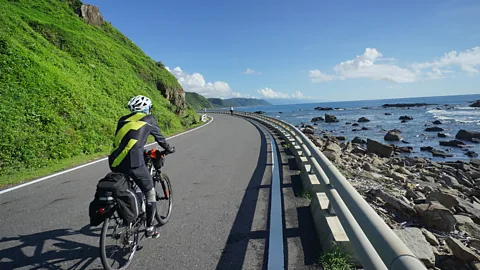
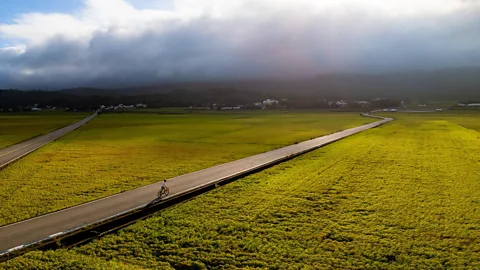
Recently, a Taipei-based cyclist named Ethan pedalled along a lonely road clinging to the side of a cliff along Taiwan's remote eastern coast. After cutting through a lush forest, he eventually reached the top of the Seaboard Mountain Range, where the glassy expanse of the ocean spread out before him and stretched towards the horizon.
"Some people say if you don't do the Huandao at least once in your lifetime, you're not really Taiwanese," the cyclist joked.
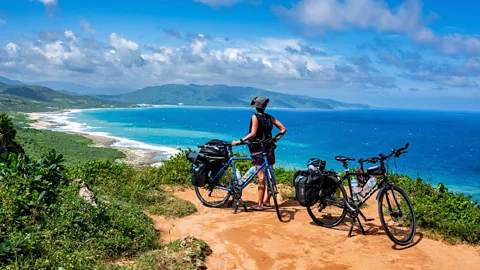
Literally meaning "around the island", the Huandao is a beloved journey for many Taiwanese residents. Each year, thousands of people ring the island on a nearly 1,000km (621-mile) route clockwise from Taipei. Along the way, they pass the north coast's dramatic rock formations and rugged fishing villages, venture down its sparsely inhabited eastern shore, ride through the southern tip's white-sand beaches and pedal up its heavily urban western coast.
While the Huandao can be done by car or motorcycle, many Taiwanese cycle it as a rite of passage while in school or before starting university.
 Alamy
AlamyEthan said he's cycled the Huandao four or five times. "Every time I go a different way, in bigger or smaller circles," he explained. "Taiwan is so beautiful and there's always something new to see."
The birth of a 'national' cycle route
Long-distance biking has been popular in Taiwan for more than 50 years and the island is known as one of the world's great cycling destinations. But the idea of circumnavigating Taiwan by bike entered the national imagination following the release of the 2006 film Island Etude, in which a college student spends seven days cycling around the island.
In the film, the student visits historical sites connected to Taiwan's past Japanese occupation, hears ancient Indigenous folk songs and meets strangers in the countryside who are quick to offer a bed or meal. Ever since, real-life students have followed his path, hoping to similarly discover a different side of their island home.
As more Taiwanese cyclists set out on the Huandao, the Taiwanese government inaugurated the circular route as Taiwan Cycle Route No 1 in 2015 – creating a sort of "national" network of cycle paths and roads.
 Alamy
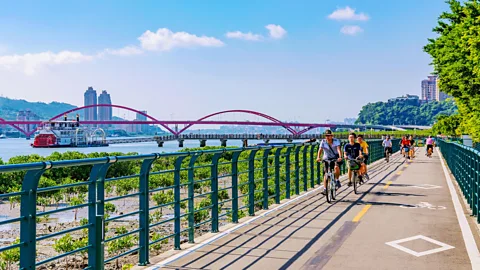
AlamyWhile most cyclists begin and end their journey in Taipei, the beauty of the Huandao is that you can start anywhere – or just tackle portions of it, like I did.
On two previous visits to Taiwan, I had largely stayed in the populous north and west. This time, I set out to cycle 500km (311 miles) along the island's lonely eastern coast, from Taipei to Taitung, to see a side of Taiwan few travellers experience.
Leaving the capital, I followed designated bike lanes below the overpasses towards the port city of Keelung, stopping for soup dumplings and braised eel at its famous night market. But the real biking fun began some 30km (18.6 miles) east in the seaside town of Fulong. There, the Old Caoling Tunnel, a historic 2.1km (1.3-mile) railway tunnel, has been converted into a bike path. I cruised through the stone passageway under flickering lights before emerging in the northern edge of Taiwan's eastern coast – and what felt like a different world.
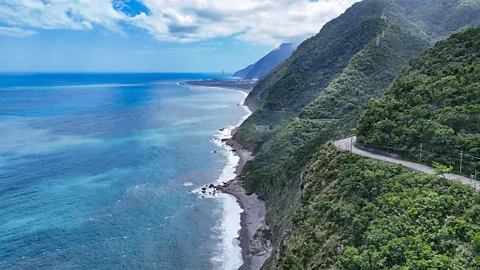
While the island's north and west are dominated by modern, sprawling cities, the east is rooted in the island's Indigenous culture. Because central Taiwan is marked by an impenetrable mountain range and there isn't much flat land in the east, most 20th-Century Chinese settlers and developers remained in the western flatlands, which has helped preserve the island's Indigenous culture in its isolated east.
 Alamy
AlamyThis cultural and geographical divide remains visible today. Taiwan's high-speed rail can't pierce its central mountains, so it only shuttles tourists up and down its western cities. In the east, there is a sensation of open space. The mountains are bigger, the palm trees taller. Because it faces the vast Pacific rather than the narrow Taiwan Strait, the water is deeper and darker blue. Carved wooden totem poles, geometric mosaics and Indigenous food traditions all testify to the fact that long before Han Chinese and Japanese settlers arrived, Taiwan was home to Amis, Truku and Puyuma Indigenous people.
Plan your trip
The Huandao website has practical tips for those wishing to cycle or drive the route. The best time to cycle is from March to April or October to November, avoiding extreme temperatures as well as the summer monsoons. One of the world's biggest bike brands, Giant, is headquartered in Taiwan; travellers can rent bicycles and drop them off at Giant locations across the island. Convenience stores like 7-Eleven and Family Mart are ubiquitous, offering much-needed hydration and snack breaks as well as bathrooms and wi-fi.
Cycling south, these layers of history and identity gradually revealed themselves. Today, the majority of Taiwanese are Buddhist, Taoist or practice Chinese folk beliefs. Yet, Christianity, which was introduced by European missionaries in the 1600s and is only practiced by about 5% of Taiwanese today, still survives in these isolated villages.
Roughly 100km (62 miles) south of the Old Caoling Tunnel, I spotted my first church in the village of Heping. Marked by a white cross against a towering mountain range, it primarily serves the area's Truku residents. Nearby, crosses sit atop traditional horseshoe-shaped tombs in Chinese cemeteries.
Rural hospitality
I mostly stayed at family-run guesthouses during my 11-day journey: a treehouse on a mountaintop, a hut in the mouth of a marble gorge, and a bed and breakfast by an empty shore.
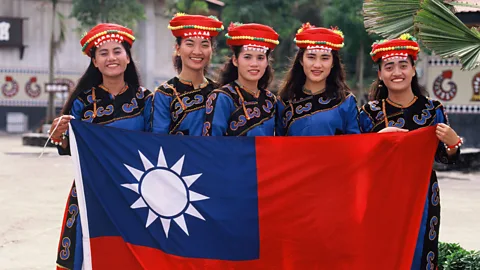
Siloko Akila, an Amis resident who manages the WaGaLiGong guesthouse in Dulan, where I spent one night, said that even though the Huandao has taken off in recent years, few travellers spend much time immersing themselves in the Indigenous cultures of the island's east.
 Alamy
Alamy"We still need to draw [more] people in," she added. When I asked Akila what the main attraction is in Dulan, she said: "The people [here] are friendly, warm and helpful. It simply has the human touch."
In the guesthouse, a documentary highlighting the Amis peoples' close relationship with nature was playing behind the bar. More than 95% of Taiwan's residents have Han Chinese ancestry, but there is a growing desire to learn more about the island's original residents. One young Taiwanese guest explained that he'd chosen to learn one of the island's Indigenous languages in high school. By the end of the night, Akila and her friends were singing haunting Amis folk songs accompanied by a guitar.
This familial-like hospitality extended across the island. When I got a flat tyre on the north coast, a Taiwanese cyclist stopped to help me patch it up. When I arrived in the eastern village of Ruisui at dusk, the owner of a fully booked guesthouse called every other hotel until she found me an inn to stay at. When I arrived, a family staying there insisted on feeding me stir-fried noodles and pork soup.
A coming-of-age ritual
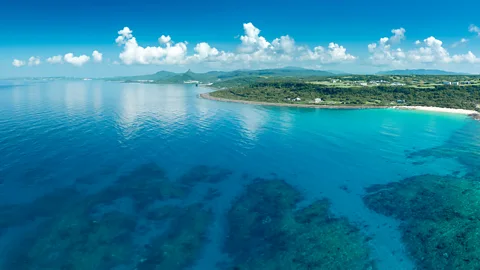
Though I finished my half Huandao in Taitung, many cyclists continue their journey back to Taipei by first passing Kenting, Taiwan's oldest national park, where wild deer brought back from the brink of extinction roam free in evergreen forests, and white-sand beaches line the island's only tropical national park.
 Alamy
AlamyNow 30, Yafan Chang set out on her first Huandao journey as part of a school trip in 2012 when she was 16 years old. Like many cyclists I met, she told me her favourite portion of the route was a mountain pass just north of Kenting National Park.
"It's like 12km [7 miles] uphill, and then after that you just glide all the way down," she recalled. "You're in a field of grass but you can also see the glimmering ocean at sunset."
More like this:
After 12 days of cycling and with fewer than 100km to go, Chang ran into a typhoon outside Taipei and was unable to complete the full Huandao. A few years later, she set out again with her brother and uncle because they felt it was important to see the full island.
"It's a very rewarding feeling," she said, explaining that people all over the island encouraged her to keep going when she grew tired. I experienced this myself, as passers-by frequently leaned out of their car windows to flash a thumbs up, or shout "jiāyóu!" (literally: "add oil!").
 Alamy
AlamyBesides not completing the full Huandao, my only regret was not building in more rest days to fully immerse myself in Taiwan's seldom-explored countryside. One day while I was cycling along the east coast, I met Doris and her friend Jessie from Taiwan, who told me they had actually completed the full Huandao on foot.
When I asked why they'd chose to walk and not bike or drive the Huandao, Doris told me something that still rings true: "Taiwan is simply too beautiful not to take your time."
--
If you liked this story, sign up for The Essential List newsletter – a handpicked selection of features, videos and can't-miss news, delivered to your inbox twice a week.
