Starting uni? What you need to know about the meningitis B vaccine in Scotland
 Getty Images
Young people in Scotland are being encouraged to take up a free meningitis B vaccine.
Drop-in clinics are being set up by health boards around the country to deliver the time-limited programme.
It will be offered to older teenagers and new college and university students who are at higher risk of exposure to meningococcal group B bacteria.
Earlier this year two students died following an outbreak of meningitis in Kent.
What is meningitis B and how is it spread?
MenB is a bacterial infection that can cause serious, life-threatening illness including inflammation of the lining of the brain (meningitis) and blood poisoning (sepsis).
It can lead to life-changing disabilities such as amputations, hearing loss and brain damage, and is fatal in about 10% of cases.
It is spread by close contact such as kissing, sharing vapes, sharing drinks or living in close quarters with a person who has the disease.
What is the vaccine?
The vaccine offers protection against MenB that caused the outbreak in Kent.
It does not contain any live bacteria and cannot cause meningitis.
Two doses are essential for full protection and and where possible, should be completed before starting further or higher education.
It is common to get some swelling, redness or tenderness where you have the injection. You may also get a mild fever, nausea, headache or muscle aches but these symptoms should disappear after one or two days.
More serious side effects are rare.
Who can get the MenB vaccine in Scotland?
- Anyone born between 1 March 2008 and 28 February 2009
- Anyone who was in S6 during the 2025-26 academic year
- Undergraduate university entrants under the age of 25 who are starting for the first time in the academic year 2026-27, including international students
- College entrants under 25 starting for the first time in the academic year 2026-27 while living away from home in shared student accommodation, including international students
Why are students advised to get the vaccine?
Although many young people will already have received the separate MenACWY vaccine, they may still be at risk of meningitis and sepsis caused by other meningococcal bacteria, including group B.
Students in their first year of university have a risk that is about seven times higher than that of young people of a similar age who do not go to university.
UK health officials say the risk to 18-year-olds or those entering university or a residential college for the first time is higher because of increased mixing of social groups and shared accommodation.
The meningitis outbreak that happened in Kent in March has been described as unprecedented and explosive.
Within weeks there were 29 confirmed or suspected cases and two deaths.
This vaccination programme is to help protect those at greatest risk and hopefully prevent something like this from happening again.
Why is this not aimed at all teenagers?
The MenB vaccine was added to the UK NHS childhood immunisation programme for babies born on, or after, 1 July 2015.
All babies are now offered it and as of December 2025, the MenB vaccination rate for babies under 12 months in Scotland was 93.9%.
But it means teenagers and young adults over the age of 11 have not received this jab.
Young babies are vaccinated because they are more likely to get invasive infections more often than other age groups, and their bodies are less likely to be able to fight them off.
However, research suggests the MenB vaccine does not necessarily prevent transmission of the infection from person to person, does not target all the different B bacteria strains and does not provide long-term protection.
UK vaccine experts have therefore concluded that it is not cost effective to offer the MenB vaccine to all adolescents.
But they do want everyone who is eligible to come forward and get the vaccine because it can prevent serious illness.
Where can I get the vaccine?
All 14 health boards in Scotland are delivering the vaccine by appointment or drop-in clinic, or a combination of these, at health centres, universities, shopping centres or mobile units.
Anyone who is eligible is encouraged to get both doses of the vaccine as soon as they can (noting that a minimum interval of 28 days is required between the two doses).
All those who are eligible for the MenB vaccine can continue to get first doses until 31 December 2026 and can get their second dose up to 31 March 2027.
For details on drop-in clinics check your relevant health board:
What do the experts say?
Scotland's chief medical officer, Prof Sir Gregor Smith said: "MenB can spread rapidly in shared living environments and can lead to serious disease.
"This targeted programme offers strong protection to those most at risk, and I would encourage everyone who is eligible to take up the offer, especially if you are heading to university or college for the first time."
Dr Daniel Chandler, consultant at Public Health Scotland, said: "Meningitis and meningococcal sepsis can be very serious and life threatening if not treated quickly.
"Immunisation is the most effective way of preventing illness from meningococcal disease."
Public Health Minister Maree Todd said: "Protecting the health of young people in Scotland is an absolute priority.
"We know that starting university or college – especially moving into shared accommodation – is one of the highest-risk periods for this disease, and we are acting now, ahead of the new academic year, following recent outbreaks.
"The MenB vaccine has a strong safety record and the evidence is clear that it works.
"I want every eligible young person in Scotland to come forward for both doses and take this important step to protect their health as they begin what is, for many of them, an exciting new chapter in their lives."
What about the vaccination S4 pupils get?
Currently, a separate vaccine covering different strains, the MenACWY vaccine, is routinely offered to 14-year-olds.
Coverage rates vary across the country. For example, 82.5% of female S4s in the NHS Forth Valley area have had the vaccine compared with only 67.6% of female S4s in the Highlands.
What about other types of meningitis?
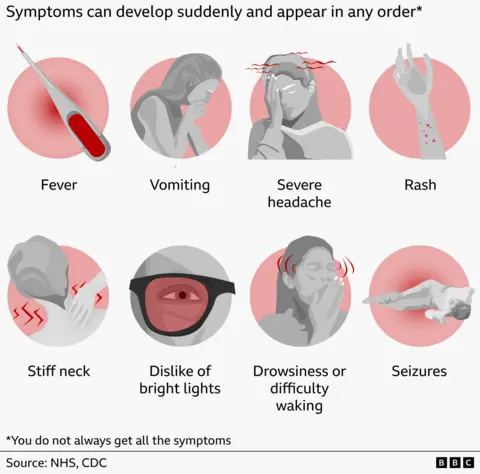
Meningitis can be caused by many different types of viruses or bacteria, which are spread through close contact with a person who has them.
Viral meningitis tends to get better on its own within seven to 10 days. It can often be treated at home with plenty of rest, painkillers and anti-sickness medicine.
Bacterial meningitis needs to be treated in hospital.
Outbreaks are rare.
Figures from Public Health Scotland show that the overall coverage of the pneumococcal vaccine among the eligible population, people aged 65 and over and those in the at-risk groups between the ages of two and 65, was 73.1% as of March this year. This is up from 71.2% on the previous year.
