Bullying pupils protected more than victims, parents say

 BBC
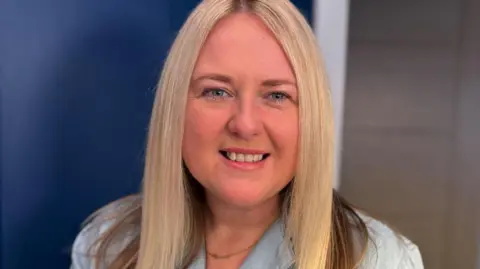
BBCIn late 2024 Lesley got a phone call from her eight-year-old son's primary school to tell her he had been kicked on the head while he was on the ground.
Over the next 12 months things got worse for her son as the bullying continued, Lesley told the BBC.
"There were numerous physical assaults, kicking him in the head, putting his head against the wall and throwing him on the ground," she said.
"Then the solution became to restrict my son.
"He wasn't allowed to go to the toilet on his own. I had to pick him up from the school office.
"Why is it not the bullies that are getting those restrictions?"
Lesley said: "The rights of the bullies were protected at all costs because of the inclusion policy."
The concept of inclusion has been adopted by the educational establishment since the turn of the century.
In practice it means that teachers focus on emotional regulation and understanding what a child needs rather than resorting to immediate discipline.
The introduction of inclusion policies has meant permanent exclusions from school are now very rare, with none at all recorded in 2024/25.
The number of children suspended from school has also fallen by 75% over the past 20 years.
Respect for All
Scotland's anti bullying policy, Respect for All, has existed since 2010 but councils and schools do not have to follow the guidance.
It says schools should set out clear expectations of behaviour which is acceptable and unacceptable and how they will respond - including the use of consequences.
However, Lesley is one of a group of parents who believe existing guidelines on bullying are not enough and that a law needs to be created so that every school knows how it should deal with the issue.
She believes her son's case would have been handled differently if the law had been in place.
"There would not have been a year of him feeling unsafe at school, getting physically attacked, being terrified to go to school, me getting phone calls almost daily," she said.
"He wouldn't have ultimately had to move school. I wouldn't have to change the hours of my work.
"I think at the minute, in my opinion, the inclusion policy is overriding everything else and that's not how it should be."
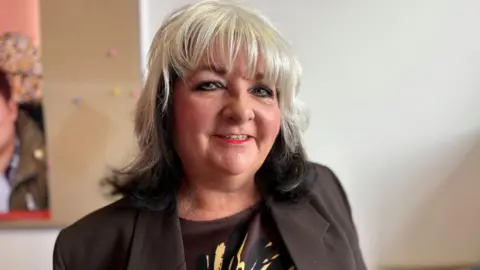
Lorraine Glass, the director of Respect Me, Scotland's national anti-bullying service, said there were already a number of laws to safeguard children in Scotland.
She said the effective response to bullying behaviour was not necessarily to "punish" someone.
"It's not an effective response for that type of behaviour," she said.
"A more relational, inclusive approach and having a conversation with the young person about what's lying behind that behaviour, what's driving it?"
Glass said: "There are consequences available to teachers and then exclusion, while it's a last resort, is still an option to keep everyone in the school safe.
But she admits the existing guidance is "not designed to respond to some of the types of extreme violence that we do see happening between children and young people".
Stuart Brown, assistant general secretary of the EIS teaching union, said there was a risk that creating a new law could lead to increased pressure and bureaucracy in schools without addressing the underlying factors that contribute to bullying.
He said: "Schools already face significant pressures from reduced staffing, increased levels of ASN (Additional Support Needs).
"There's a risk that if there are more statutory duties in the classroom then schools will have to move away from the early intervention measures that we know work."
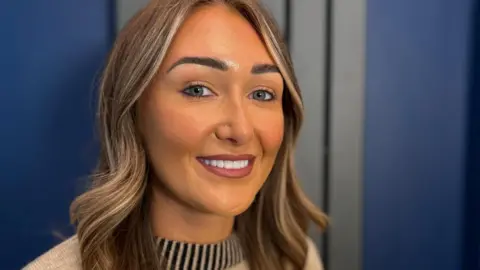
Ashley is also campaigning for a change in the law, wanting to ensure councils follow consistent bullying procedures throughout the country.
She said her seven-year-old son, Josh, had to spend playtime and intervals inside the classroom in order to avoid a child who had bullied him at primary school in East Ayrshire.
"It was just to keep him away from the bullying, which I felt wasn't really the right answer," she said.
Ashley said her son became a "shadow of himself" as the bullying continued and was even setting his alarm for the middle of the night so he could pretend to be unwell and miss school the next day.
During the school day, Josh was sharing a classroom with the other boy and getting hit by him, Ashley said, despite being separated at breaktime.
"I don't think they're allowed to send kids out of the classroom," Ashley says.
"I think because of inclusion policies they can't do what they used to be able to do.
"The teacher I was speaking to was amazing. I genuinely thought she'd done everything she could", she said.
Ashley's experience led her to research the rules which are available to teachers.
"When I found out that anti-bullying policy is only guidance in Scotland I honestly couldn't believe what I was reading," she said.
She wants consistency so schools and families across the country know how bullying should be dealt with, particularly around consequences.
"We still need to know right from wrong and I feel like children who are getting away with doing stuff like this at school just go on to think that they can do whatever they want and what chance have they got?," she said.
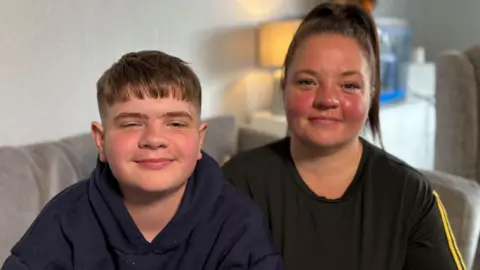
Kirsty's experience with her son's school led her to send a petition to the Scottish Parliament, calling for a law on bullying.
Last year she got a phone call to say her 14-year-old son was in hospital after being bitten on the knee and kicked in the head by a fellow pupil at school.
Her son Kyle was treated for a mild concussion, needed a course of antibiotics, and was off school for a week.
Kirsty said many of the powers teachers used to have to sanction children have been taken away.
"They can't do after-school detentions anymore," she says.
"They've taken away headteachers' rights to exclude children.
"Everything like that was all taken away."
She said a national policy which every council could adhere to would provide "some kind of safeguarding to head teachers because things at the moment mean that there is less support for them if they use consequences when children are bullied".
"Just now if they get it wrong the local authority is not backing them, the government's not backing them, that head teacher's left to stand alone and take the full the full force, if they get it wrong and that's wrong," she said.
"A bullying policy should be a national one."
'No bullying is accepted'
A spokesperson for Renfrewshire Council, where Lesley's son went to school, said: "Ensuring the wellbeing of all our pupils in Renfrewshire is a priority for every school and we take all reports of bullying extremely seriously, recognising the impact this has for those involved.
"We have strong support systems in place and provide pupils with a safe, welcoming learning environment."
A spokesperson for East Ayrshire Council, where Ashley's son went to school, said there was a clear process for reporting and addressing bullying, involving investigations, appropriate sanctions and restorative discussions.
They said: "The council can confirm that no form of bullying, whether this be physical, verbal or emotional is accepted under any circumstances within our establishments."
A spokeswoman for Glasgow City Council said of Kirsty's son's case: "This was an isolated incident involving vulnerable pupils and we are sorry that a young person suffered injuries as a result.
"The school is supporting the young person and their family.
"The appropriate action has been taken by school staff and in conjunction with the relevant authorities."
A spokesperson for the Scottish government said: "Last year, we published national guidance for education authorities and schools on consequences and risk assessments for violent, aggressive, and dangerous behaviour to support schools in responding to incidents.
"We are taking decisive action to tackle bullying including introducing laws to ban personal mobile phones in learning environments."
