MP opens up on 30-year fight for period healthcare

 UK Parliament
"It took 30 years before I got the treatment that I needed."
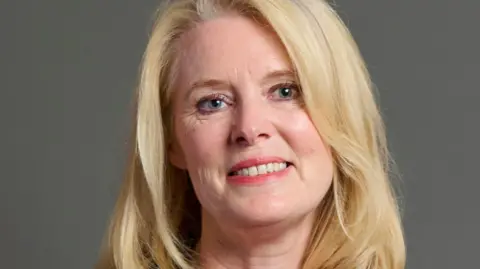
A Labour MP has opened up about her own battle with debilitating periods and blood loss, as she calls for endometriosis diagnosis and treatment waiting times to be prioritised by the NHS.
In an interview with Politics East Midlands, Bassetlaw MP Jo White revealed it took three decades before she got the help she needed and that, years on, similar delays continue to have a significant impact on women's lives.
A Department for Health and Social Care spokesperson previously said the government was determined to speed up diagnosis of endometriosis.
Endometriosis affects one in 10 women in the UK and is often a painful condition in which cells similar to those lining the womb grow elsewhere in the body.
But it can take an average of nine years to get a diagnosis.
White told the programme: "Women suffer every month, knowing that certain days of the month you're going to have to stay at home or you're going to have a very difficult time at work.
"For women to have to go through life like that is not good.
"I very much welcome the revised NICE [National Institute for Health and Care Excellence] guidelines that say that women who present with complaints regarding their periods should be referred to scanning very, very quickly."
 Getty Images
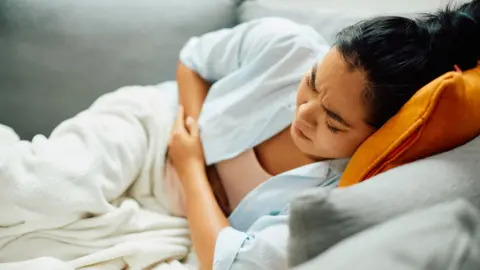
Endometriosis symptoms can be severe and wide-ranging - from very heavy periods to extreme tiredness and abdominal pain - often mimicking other conditions.
People frequently end up undergoing several tests, including ultrasounds and sometimes MRI scans, but these standard scans do not always pick up on the disease and mainly detect changes that often appear with more advanced cases, according to research by Oxford University.
White said she had never had a diagnosis but had issues which "dominated" her life.
She said: "I had very, very painful periods and with lots of flooding.
"I remember standing on a train station flooding and not knowing where to go, what to do about it.
"It was only when the doctor came and visited my home and saw how bad I was and got me in front of a consultant, and that took 30 years before I got the treatment that I needed.
"You have crises during those times where you can't tell people because of the social mores against it. You have to just get on with it and it's a very, very private thing you're suffering."
'You didn't talk'
But White said the government was working to improve education about menstrual health, tackle misinformation and widen access to support for girls and young women.
In May, £1m of investment in schools and community settings was pledged through the Women's Health Strategy.
White said: "We're investing so they know what is a healthy period and what's not, and that's so, so important for young people to know that - because at my age you just got on with it and you didn't talk about it.
"I feel that we need to give more support so that women feel confident about talking about it, but also so that they have the confidence that GPs will refer them very, very quickly to get the treatment they so need.
"It is a fertility issue as well and the quicker you're treated, the more likely you are to have children in the future if you want to."
Listen to BBC Radio Nottingham on Sounds and follow BBC Nottingham on Facebook, on X, or on Instagram. Send your story ideas to eastmidsnews@bbc.co.uk or via WhatsApp on 0808 100 2210.
