Can your garden recover after the hot weather?

 Sturti via Getty Images
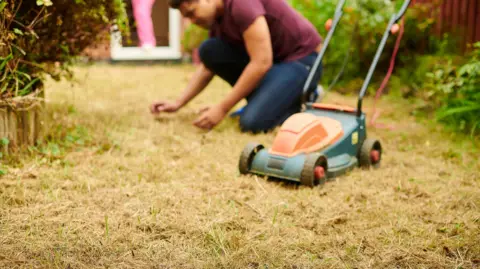
For many of us, one look out of our windows at home and there may well be a heartfelt sigh over our gardens, now with dry, brown lawns and wilting flowers.
Can they recover? Especially with hosepipe bans in place for thousands of households and only small amounts of rain expected in the next week or so.
Will my lawn recover?
 BBC Weather Watchers/Kibbo
With three heatwaves already this summer, a number of areas of the UK, including the West Midlands, East Anglia and Hertfordshire, have been edging towards drought conditions, according to the National Drought Group - and drought status was triggered this week in parts of Wales.
So for many lawns, the outlook appears bleak - but the word from experts is do not be discouraged: "It will recover when the rain returns".
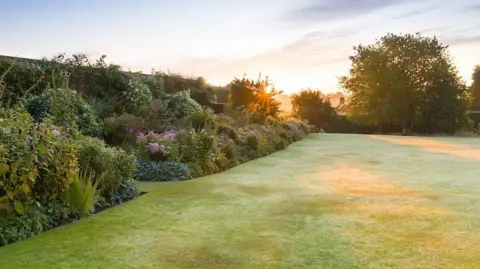
That's the view of John Cushing, who owns Goldstone Hall Hotel & Gardens in Shropshire, home of an award-winning garden.
"Grass is remarkably resilient and won't die because of a period of drought," he smiled.
Darren Rudge, a BBC radio broadcaster who is known as the Laughing Gardener, said lawns were asleep rather than dead.
"The roots are alive, it's totally OK and you do not need to worry about your lawn," he said from Bloxwich.
 Goldstone Hall Hotel & Gardens
Cushing added: "My advice is simple: do nothing.
"If you have some wild grasses going to seed, you can trim the seed heads to prevent them spreading, but otherwise leave the lawn alone.
"Let nature take its course. Once the rain arrives, you'll be surprised how quickly your lawn recovers.
One way to help your lawn in the future is to rake or scarify it which makes a "significant difference", Daniel Puicar, the head gardener at Middleton Hall and Gardens, near Tamworth, said.
Using a rake or scarifier in a criss-cross pattern across the lawn removes moss and dead grass and breaks up the soil crust, he added.
"The jagged edges of the broken soil crust will decrease water run-off, allowing more of the water to seep into the soil."
Should I water my lawn?
 Jon Norman Garden Design
Garden designer Jon Norman knows that appearances can be deceptive when it comes to lawns, as we all hold to the stereotype of a lush, green apron of grass.
"The first reassurance I would give people is that a brown lawn is not necessarily a dead lawn," he said, from his home in Coventry.
"Established grass often becomes dormant during prolonged dry weather and, given sustained rainfall and a little patience, it will slowly begin to recover.
But assuming some of us get that rain this weekend, Norman urged people not to get carried away with "drastic repairs".
"The soil will need to rehydrate and this will take a while after the fierce heat we've had," he urged.
"Avoid applying fertiliser to dry or stressed grass, and wait until the lawn is growing nicely before mowing."
As for that mowing, Norman recommended raising the blades on your mower "slightly higher than usual", to protect the grass and keep moisture in.
"I already know I have bare areas on my lawn, but I'll wait until early autumn to treat these once conditions are cooler and consistently moist," he added.
People could also consider using a garden fork to aerate their lawn, Daniel Puicar added, by pushing it into the soil about 12-15cm (5-6in).
"This creates avenues for water to work its way straight to the roots where it is needed the most", he said and also advised using a wetting agent "available at most garden centres" to help the grass recover faster.
What about my flower-beds?
 Four Seasons Garden
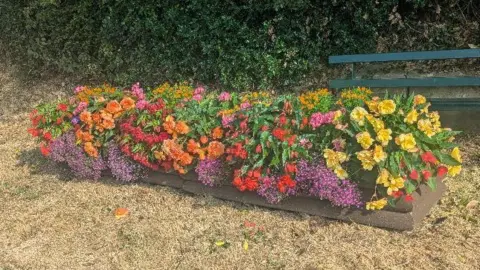
You may be looking out at wilting hydrangeas, suffering roses and many other plants not used to such long spells of hot weather.
But you can help them, according to Marie and Tony Newton, who own the award-winning Four Seasons Garden in Walsall.
The pair said the best time to be out with your watering was "in the coolest part of the day, either late evening or early morning".
"This allows water to reach the plant roots before it evaporates and avoids scorching of delicate foliage," the Newtons said.
Away from watering, the pair also advise on trimming any perennials and deadheading those plants in bloom, as this "helps them keep their strength and flower for longer".
"Don't transplant during a drought and consider moving some of the potted plants out of direct sun," they added.
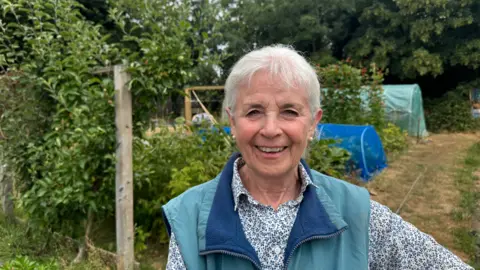
Darren Rudge said watering should be targeted towards new and young plants.
"Use a watering can, not a hosepipe, so you can see how much water you're using," he added.
But what if you're growing your own fruit and veg?
Maggie Bull has had an allotment in Telford for the past eight years and said looking after veg in the heat was difficult.
"It's a balancing act really, because you don't want to use or waste water, when we know we all should be cutting back a bit," she said.
"But if we don't water these things [vegetables] they will die and our whole years' work will have gone, really. So I just water sparingly, where I think needs it."
Can I protect my garden from future heatwaves?
 Four Seasons Garden
We are being warned to expect this to become the "new normal" - as scientists say climate change is making these heatwaves more common across the UK and hotter summers could become the norm.
Can you get future-proofing?
For a start, the Newtons, from their Walsall garden, said the tips of keeping lawns healthy during the heat could also be used at other times of the year.
"We've avoided cutting the lawn too low and allowed the grass to grow even longer when the hot weather was forecast," they said.
However, looking at the garden overall, Jon Norman admitted that we would all probably have to rethink what they will look like in the future.
"Future gardens will need to be designed with greater resilience in mind," he said.
"Notably drought resilient planting, the use of water conservation, and perhaps a less closely mown lawn."
One thing people could be doing now is taking stock of which plants are struggling, what is doing well - and what will not survive, Daniel Puicar added, saying "remember this next time you are buying plants".
However he said: "It is high time for a much broader conversation about creating more resilient gardens to face weather extremes like very wet winters and very dry summers."
Follow BBC Stoke & Staffordshire on BBC Sounds, Facebook, X and Instagram.
