'I know how people caught up in wildfires feel'

 Shaun Whitmore/BBC
As wildfires burn across Suffolk, the devastation is all too familiar for villagers in Ashill, Norfolk. In July 2022, dozens of people were left homeless when a fire in a field spread to homes. Four years on, how has the community recovered and do they feel safe?
 Shaun Whitmore/BBC
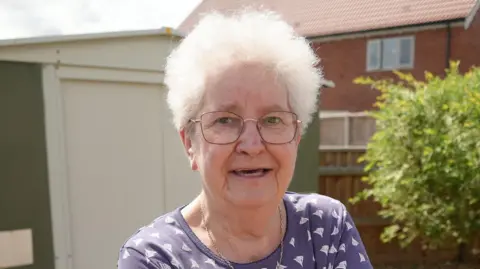
When watching TV at home with her husband, Eleanor noticed the air outside was a bit cloudy. She assumed it was dust from a combine harvester working nearby.
"I went upstairs to look out the bathroom window and I could see flames in the field," she says.
"My first thought was 'how do we get out?', because my husband is in a wheelchair.
"Somebody from one of the houses rang my daughters and said 'you need to get out, there's a fire coming'.
"We got my husband, the dogs, next door's dogs and cats, got them all in the car and we just moved out.
"I couldn't bear to stand and watch it burn - I had to get out."
That evening, 19 July 2022, was the last the couple would spend in their home in Ashill, near Watton, for two years.
 Shaun Whitmore/BBC
 Shaun Whitmore/BBC
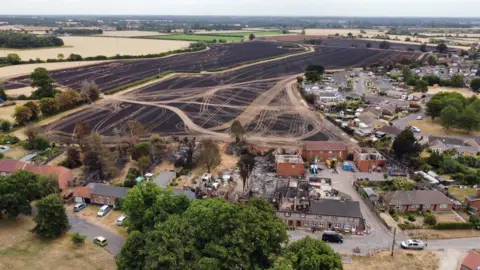
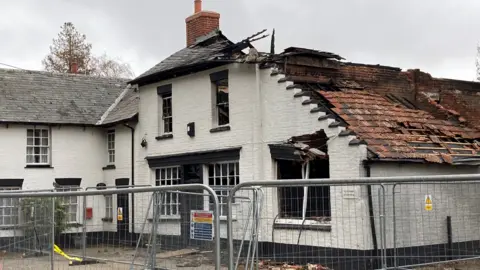
The fire encroached from a field to neighbouring homes, before spreading to Taylor's daughters' property and childminding business, known as the Old Post House, which was later pulled down and rebuilt.
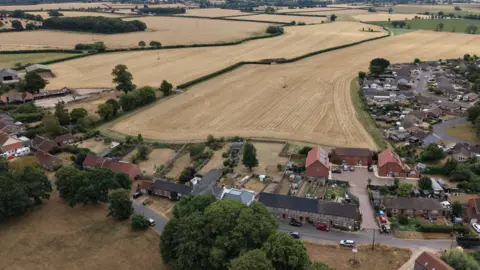
Remarkably, the Taylors' adjoining family home of more than 50 years survived, albeit with water and smoke damage which left it inhospitable for months.
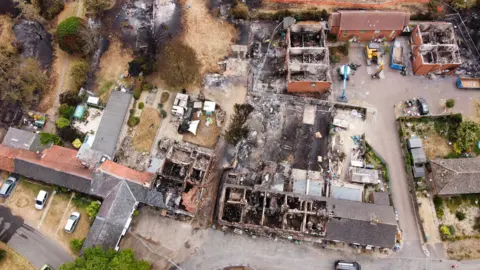
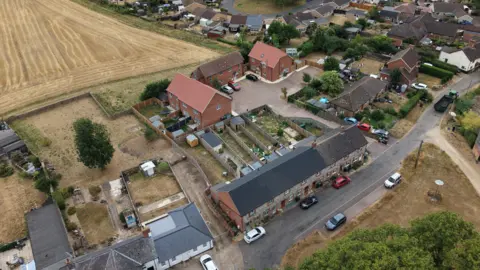
Drone images from the time show the jet black field where the fire started and the wrecked remains of a cluster of houses, reduced to roofless shells and ash. One councillor likened it to a warzone.
More stories from Norfolk
About 20 properties were either destroyed or badly damaged, leaving dozens of people homeless.
"It was absolutely horrible, because you kept thinking 'I've lived here all my married life, what are we going to do, where are we going to go?'," says Taylor, who rented a bungalow while her house was repaired.
Looking back, she counts herself "very, very lucky" and says the way the whole village pulled together was "unbelievable".
Emergency housing was arranged, the community centre was overflowing with clothes, food and other essential supplies, and funds poured in to help people.
 Shaun Whitmore/BBC
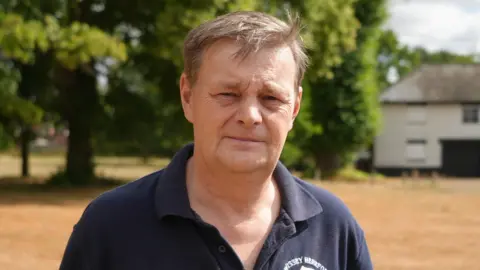
Fabian Eagle, who represents the village on Breckland District Council, remembers people being shocked and dazed.
"I was trying to explain to all the authorities that we need people out here to help with housing," he adds.
"I said 'if I send you a picture, you wouldn't believe it, it's just devastation'."
The village was "inundated" with help, he says, with neighbouring villages, such as Holme Hale, offering shelter when the community centre became too precarious.
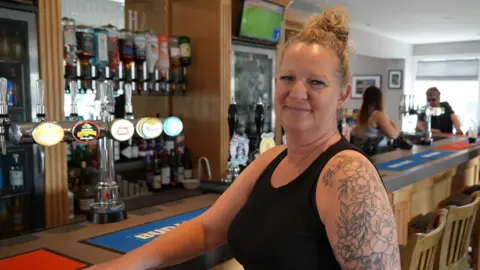
The White Hart pub was also a sanctuary for people fleeing their homes, with the bar "chock-a-block" and its four guest rooms put to good use.
 Shaun Whitmore/BBC
"It was scary because the smoke was filling up the pub; we had to shut all the doors and windows, which made it really, really hot," says manager Michaela Bollard.
"People were bringing their pets, and belongings if they thought that they were going to be lost in the fire.
"The community really did pull together and help everybody out that needed to be helped."
 Jill Bennett/BBC
Events of that day are never far from people's minds, especially during this summer's heatwaves and the spate of wildfires.
Taylor says she cannot rest easy until the crops at the end of her garden are harvested and no longer a fire risk.
She describes how the family are regularly convinced they can smell smoke and have to check the field to reassure themselves.
"We watched that crop grow through the last few weeks and every now and again you'd think, 'I wish they'd come and cut that field'.
"And then, bless them, the farmer down the road, he started cutting it one evening and he worked through the night... we thought, 'thank goodness for that'."
As well as hypervigilance, the fire created a lasting bond in Ashill.
 Shaun Whitmore/BBC
"We hear so much from people saying 'our communities are broken', says Eagle.
"But once something like this happens, that community sense of spirit just erupts and breaks through that crust, that lack of connection, to show what can be done.
"People realise the benefit of having that community instantly there."
Bollard believes the village now looks out for others, with the pub maintaining that feel of a community hub it had on the night.
"It really did bring the village together and that has stayed throughout the years since," she says.
"For the people that were involved, there's a connection," Taylor agrees.
"You very rarely talk about it, but if you do, there's always somebody who'll say, 'I remember that'.
When asked why the fire is not mentioned, she is blunt.
"Because it was so devastating, and sometimes you can't believe how lucky you were to get out alive.
"To be truthful, had it happened in the night, you wouldn't have got out."
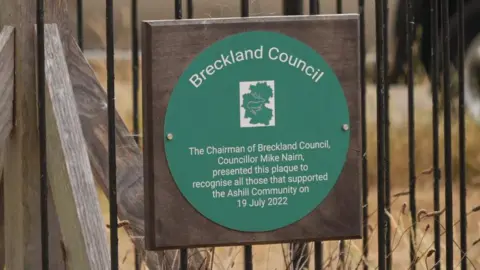
Should anything of this scale happen in Ashill again, a co-ordinator and band of volunteers are across an emergency plan, which was drawn up by the parish council after the fire.
Similar villages should take note, Eagle says.
"Make sure that you do have your sense of community and someone there who's going to contact [everyone]," he says.
"We all hope it never happens to another village, but there's so much you can do and it makes it easier for the authorities to come in and help you."
Four years on, and Ashill has moved on. While the fields and the memories remain, Taylor says she can now relax - most of the time.
"If you don't, that would haunt you - you'd never settle," she says.
"How can I put it? You look at things on the television with these fires now and you think 'I know just how these poor people feel'.
"But if they've got the right attitude and mentality, they will get through it."
Do you have a story suggestion for Norfolk? Contact us below.
Follow Norfolk news on BBC Sounds, Facebook, Instagram and X.
