In the Atacama Desert, astronomers live and work in a James Bond villain lair

 Eso/ Luis Calçada/ Herbert Zodet
Daniel Craig's James Bond battled a malign villain here. But Chile's futuristic Residencia is actually home to astronomers.
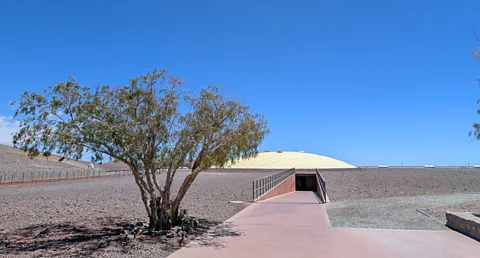
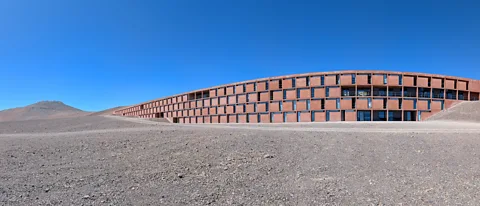
It's easy to miss the building known as Residencia in Chile. Designed to blend into the Atacama Desert, the entrance is behind a heavy, unlabelled door at the base of a shallow ramp. Mostly, all you can see is bare, rocky plains and mountains. Above, an occasional bird of prey drifts across the dry air.
 Richard Fisher
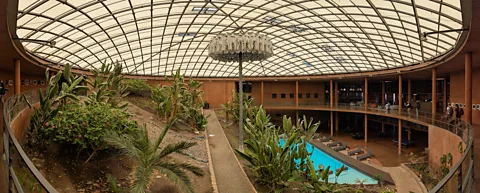
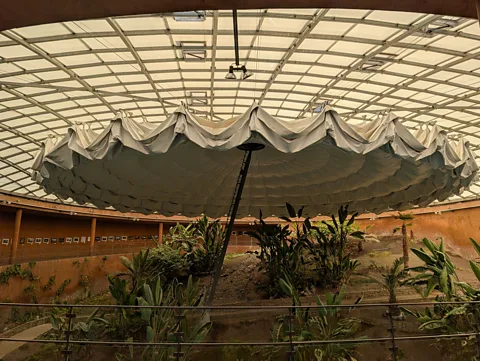
But step inside the Residencia, and you enter a verdant oasis. The first thing you feel is the moist air on your skin, produced by tropical trees and plants growing in the soil of the central atrium. Beneath a giant dome, there's a bright blue swimming pool.
 Richard Fisher
 Richard Fisher
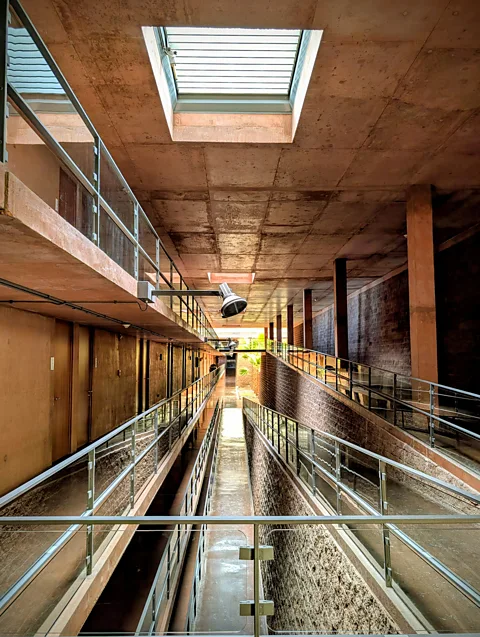
If it looks like it could be a Bond villain's lair, that's because it was. In 2008, a crew filmed the finale of the Bond film Quantum of Solace here, using the corridors, terraces and exterior as a backdrop. Spoiler alert: Bond (Daniel Craig) arrives, and there's a lot of explosions.
 Richard Fisher
The rest of the time, though, the Residencia isn't for movie stars, rather star gazers. It's a hotel – but not one that the general public can book. The 100+ rooms are taken by astronomers and engineers working in nearby star-gazing facilities such as the Very Large Telescope (VLT) which sits atop Cerro Paranal a few kilometres away.
Owned and operated by the European Southern Observatory (Eso), the Residencia was designed so that research can be conducted in one of the world's most extreme locations. The BBC recently visited for a few nights, and discovered what it's like to live and work as a scientist in this hidden desert oasis.
 Richard Fisher
Set amid the harsh conditions of the Atacama – two hours' drive from the nearest city of Antofagasta – the Residencia is a marvel of architecture. Indeed, back in 2009, the Guardian called it one of the "10 best buildings of the decade".
But what makes it particularly unusual is that it was designed with astronomy in mind from the start. As well as creating a comfortable, humid environment to provide relief from the desert, one of its key features is how it keeps its surroundings dark.
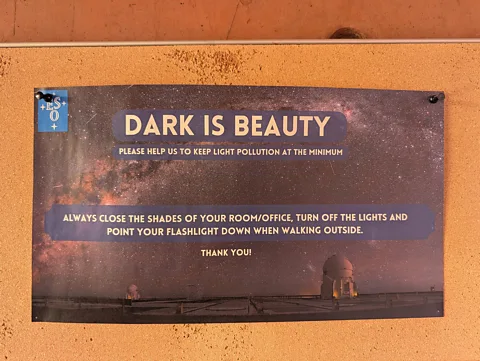
The ground telescopes here at Eso's Paranal observatory can be affected by the smallest amount of light, so various precautions exist to reduce light pollution. You have to be careful here when walking outside at night, because cars must switch off their main headlights as they drive. And there are no other sources of light outdoors, apart from the torch you carry yourself – and there are strict instructions to only shine those groundward. (Read more about the battle for darkness in Chile's Atacama Desert).
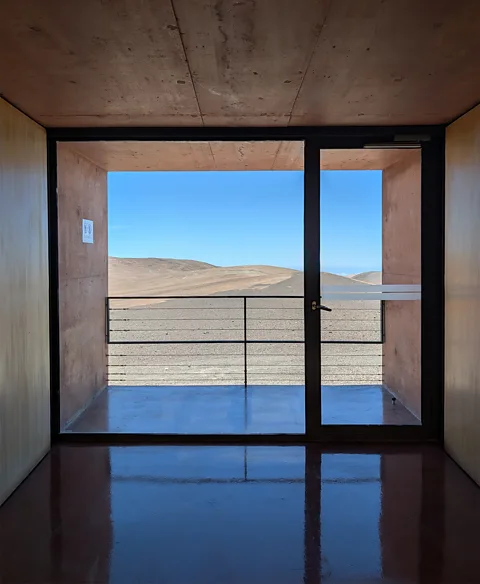
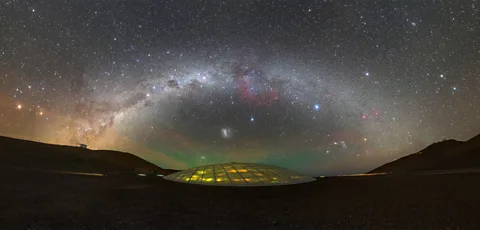
To ensure the Residencia stays dark too, the individual rooms where people sleep have minimal windows, and any other glass is shielded by solid shutters at night. In the atrium, the translucent dome that keeps the plants alive in the day has a canopy that extends each evening.
 Richard Fisher
 Richard Fisher
 P Horálek/ ESO
Despite its desert location, life at the Residencia is surprisingly comfortable: residents have access to abundant food and spaces to relax when off work, but one thing lacking is alcohol. It's banned, because of the altitude and risk of dehydration. The site is more than 2,000m (7,900ft) above sea level, with almost no air moisture outside, and safety briefings ahead of your visit warn of the risk of feeling groggy and nauseous.
For these reasons, and the punishing UV light, exercise outdoors is advised only with caution: it's not somewhere you'd go for a hard run without telling anyone beforehand.
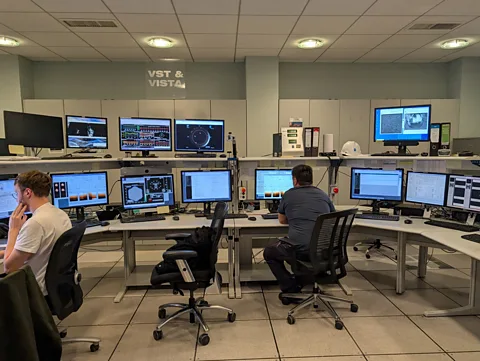
Life at the Residencia is also very much cyclical. As well as being keenly aware of the rotating positions of the stars in the sky they observe, the scientists also cycle between night and day shifts.
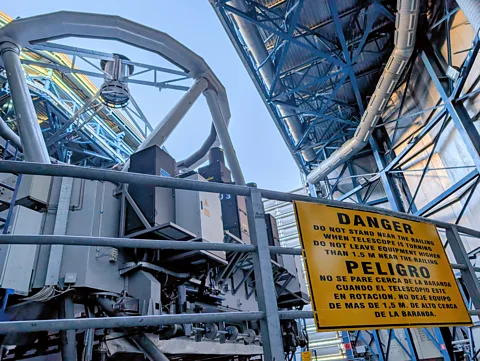
Every morning, the day-shift astronomers as well as engineers, drive up to the VLT to perform maintenance, calibrations, and prepare the telescopes for future observations. Meanwhile, some of the other engineers staying at the Residencia travel to the Extremely Large Telescope (ELT), an even bigger facility that they are currently building on Cerro Amazones around 20km (12 miles) away.
 Richard Fisher
 Richard Fisher
Later, as dusk arrives, it's tradition to watch the sunset over the Pacific as the astronomy shifts cross over and the night begins. In the dark, the telescopes can now fire up to gaze at the night sky.
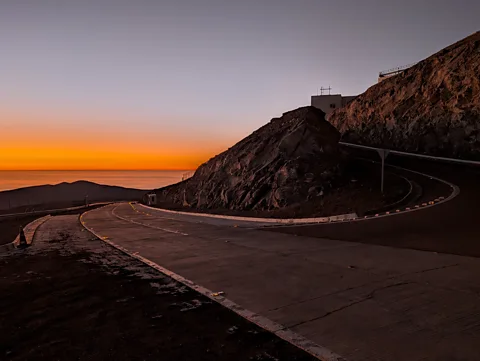 Richard Fisher
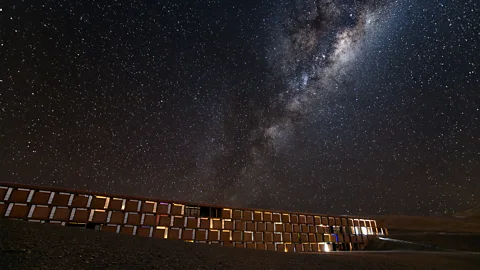 ESO/ N Schafer
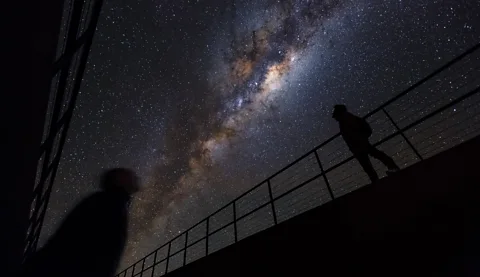
And what a night sky it is. If you happen to wake up at 02:00, and step outside the rear door of your room directly onto the desert floor, you will see a dazzling cornucopia of stars. Up on the mountain, you can see the VLT firing its four lasers up into the atmosphere, to guide its observations of objects far away in the cosmos.
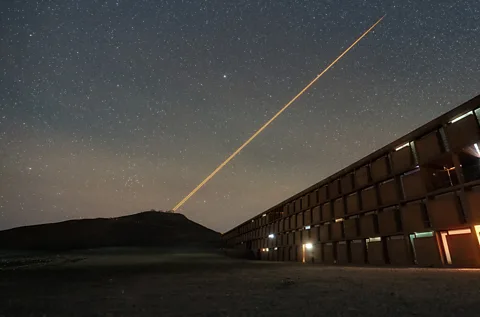 ESO/ N Schafer
With such a clear, dark atmosphere separating the ground from space, few night skies on Earth are quite so stunning, and it's one of the world's best locations for ground astronomy. On the nights when the BBC visited, a train of 20 or more linked satellites visibly passed above; little dots crossing the dense canvas, one after the other. You could even see other galaxies with the naked eye: the Magellanic clouds, daubed as green splodges on the black.
More like this:
The VLT has been behind many of the most important discoveries of the 21st Century so far, from the first image of a planet outside the Solar System to advancing understanding of the supermassive black hole at the Milky Way's centre.
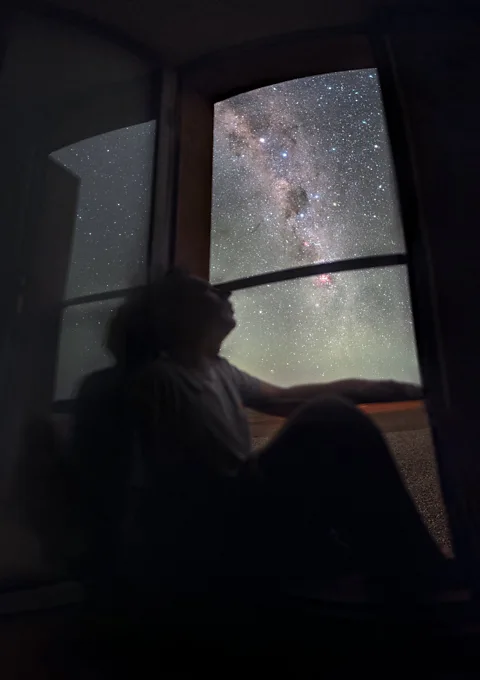 Eso/ P Horálek
When it's time to leave the Residencia, it feels like stepping outside a bubble. The moist air and verdant plants give way once more to the dry air and harsh sunlight, and on the journey home, the familiar hum of everyday life begins to resume.
After staying here a few days, though, you are left with the sense that humanity is just a moment in time and space. Beneath the building's foundations layers of desert rock have been folded over deep time into a mountain chain running the length of a continent, while in the sky above, photons of starlight have travelled across the cosmos to land on your retina. Few hotels could claim to offer this sense of awe-inspiring smallness.
The real difference between a Bond villain's lair and an astronomer's refuge? One plots to control the world, the other reveals how little of the Universe we'll ever control at all.
--
For essential climate news and hopeful developments to your inbox, sign up to the Future Earth newsletter, while The Essential List delivers a handpicked selection of features and insights twice a week.
