What the Middle Ages can teach us about preventing burnout

 Alamy
AlamyStress and mental exhaustion aren't new – in medieval times, they were prevalent. And the wisdom of the Middle Ages about how to deal with burnout still rings surprisingly true today.
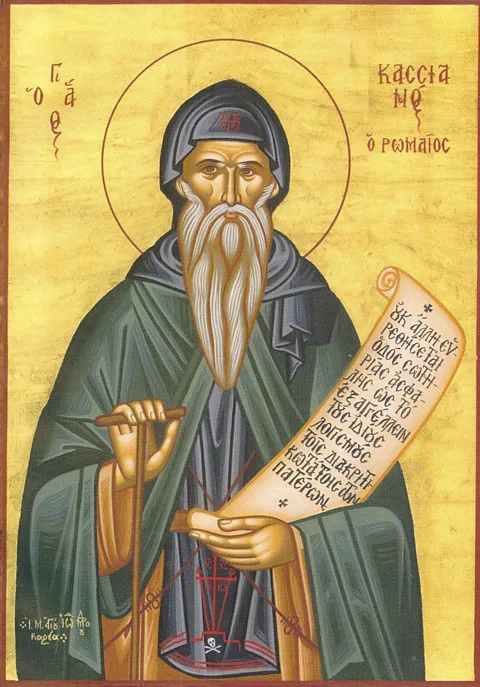
The symptoms, John Cassian noted, were always the same. Weariness and hopelessness, a longing to be anywhere but work, and brain fog – "a kind of unreasonable confusion of mind" that left his colleagues feeling idle and useless and longing for the "solace of sleep".
If you've ever suffered burnout, exhaustion or depression, you might be familiar with at least some of these feelings, and you may assume that these afflictions are unique to the pressures of the 21st Century. But Cassian was writing in the 5th Century AD, and his intended audience were not modern-day executives, but early Christians who had become exhausted by their spiritual labours.
Could such accounts shine a light on our modern malaise, and even suggest a cure? That's the argument of historian Peter Jones's new book, Self-Help from the Middle Ages: A Journey into the Medieval Mind, which offers a fascinating glimpse into the ways that "therapist priests" – Jones's term – would guide their flocks out of spiritual anguish.
 Alamy
AlamyHis research reveals just how common feelings of exhaustion have been throughout history – a recognition that may itself provide comfort for any of us facing a dark night of the soul. "There's so much wisdom in the Middle Ages," Jones says. We've already seen a proliferation of "lifestyle philosophy" books mining the works of the ancient Stoics, after all – maybe it's high time to take a leaf out of some medieval manuscripts.
Lost in Siberia
Jones was inspired to write the book after his own crisis – the "coldest winter of my life". For reasons that he still finds hard to fathom, he had accepted a role as Chair of History at the University of Tyumen in Siberia. The temperatures were so low that he lost all feeling in his legs after spending just 20 minutes outside. He was struggling with the language and desperately missing his family in Dublin. "I was supposed to be researching and planning my lessons, to be getting on with my life," he writes. "But I couldn't bring myself to do anything at all."
As he started formulating a new course on the Seven Deadly Sins, however, he started reading echoes of his own unhappiness in the medieval accounts that he was studying."You see that they went through exactly the same things that we do," he says. "The feelings have always been the same, and people have had the same crises."
 Alamy
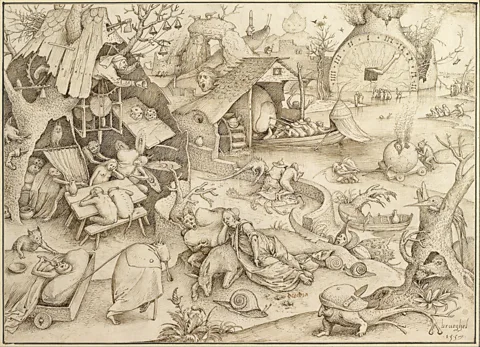
AlamyThe Deadly Sins, Jones explains, do not appear in the Bible but were formulated by early Christian thinkers such as Cassian. They were then refined by Pope Gregory the Great, who – as Jones writes in his book – "thought they would be the perfect tool for mapping out the troubles of the mind". This framework "ordering and processing all thoughts" comprised: Pride, envy, anger, sloth, avarice, gluttony and lust.
By the 13th Century, a series of popular manuals had emerged to guide the priest therapists in the best ways to help their parishioners overcome those issues during confession. "When you look at the materials, the picture looks a lot like therapy," Jones says. Rather than admonishing the congregation, "they encourage a conversation that's quite probing and nuanced – it gets under the skin."
Acedia – an absence of love, a vacuum of the spirit
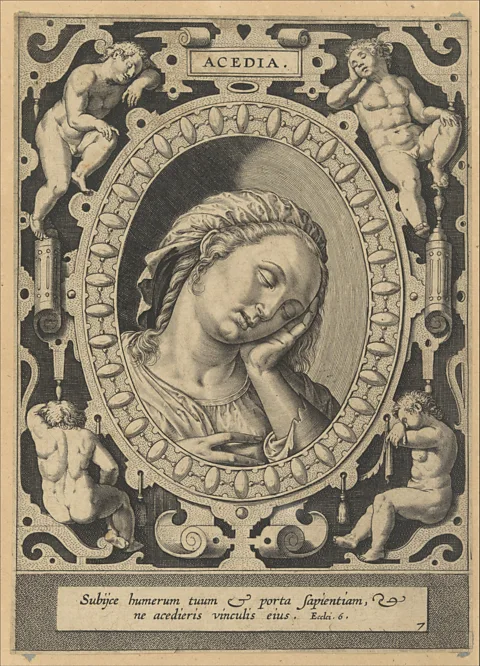
Sloth offered the best match for Jones’s feelings in Siberia. Today, we might associate the word with wilful indolence or laziness, but medieval writers recognised the emotional void at the heart of the affliction. Known at the time as acedia, it encompassed "an absence of love, a paralysis of care, a vacuum of the spirit" Jones writes. "It's when all the things that used to light up your day now leave you cold and indifferent."
 Alamy
AlamyJones reports finding great resonance in one 13th-Century text, known as MS 306 in Trinity College, Dublin. The author describes acedia as "standing in the middle of a rushing river, facing a current that froths and beats at my legs, but without the energy to move forward" – feelings of inertia that were all too familiar during his winter in Siberia.
Meanwhile the writings of the "Archpoet" – an anonymous author from 12th-Century Germany – detail the enormous frustrations of his job as a bureaucrat, with complaints that could resonate with any modern executive. "His poems were about working non-stop in a futile job that he feels is petty and pointless – giving everything while burning the candle at both ends."
Jones is by no means the only historian to find these parallels between medieval and modern ailments. In her book Exhausted, cultural historian (and executive coach) Anna Katharina Schaffner draws a direct connection between the acedia described by medieval Christians, and modern-day burnout – the symptoms of which included the tendency to comfort eat and pursue mindless distractions in place of meaningful work.
"It's a classic vicious circle: the acedic become ever less able to meditate and to contemplate things of a spiritual nature, while their ill-chosen strategies for restoring their energy aggravate their condition further," she writes. "In that sense, they are just like us – weary 21st-Century burnouts who engage in a host of similarly unproductive displacement activities."
Thorny fields and strong mountains
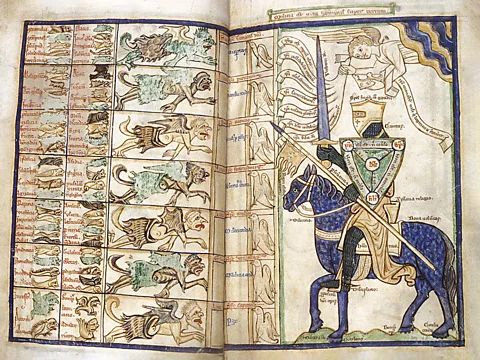
So what were the solutions? The author of MS 306 offers an elliptical biblical allusion. "Whether you like it or not, the Jebusites live within your borders," he wrote. "You can subjugate them, but you cannot exterminate them." The Jebusites, Jones explains, were an ancient tribe that had once invaded Jerusalem and were impossible to expel. In this way, the author is advising someone with acedia to learn to live with their feelings, without fighting them.
 British Library, Harleian MS. 3244, fols. 27-28
William Peraldus's Treatise on the Virtues and Vices take a similar tack. "He told us to remember that the field that grows over with thorns will one day bear fruit." To reorient our thinking, Peraldus suggests finding a "strong mountain" – some kind of higher purpose that will see you through the tough times. "You need the support and strength of somebody that you love or something that you love to get you through," explains Jones. "If you have faith in the things you love, eventually they'll come back to you. "
More like this:
Jones worries that, in conversation, without the gravitas of the original sources, "these things can sound trite", but his summaries are eerily reminiscent of today's treatments for burnout and other emotional issues. Acceptance and Commitment Therapy, for instance, encourages us to acknowledge our emotions without trying to change them. Besides learning to sit with those emotions, we are advised to identify our personal values and take meaningful steps to living by them. Add in a few medieval metaphors of thorny fields and strong mountains, and you have something very close to Peraldus's prescription from 800 years ago.
Perhaps most importantly, these medieval thinkers remind us of the power of self-forgiveness – another recurring theme in modern psychotherapy.
 Alamy
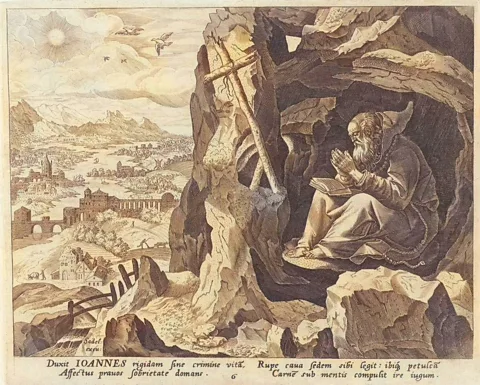
AlamyJones points to the 12th-Century writing of Bernard of Clairvaux – one of the co-founders of the Knights Templar. "He compared living a good life to running over a rough terrain, and says that anyone who runs for a long enough distance is going to fall down or stumble," explains Jones. "We will all have our moments of complete directionlessness."
There is great consolation, he says, in simply recognising that you are not alone in your suffering; whatever your affliction, people will have been feeling this way for thousands of years. "It's comforting to feel the company of people in history," he says.
David Robson is an award-winning science writer and author. His latest book, The Laws of Connection: 13 Social Strategies That Will Transform Your Life, was published by Canongate (UK) and Pegasus Books (US & Canada) in June 2024. He is @davidarobson onInstagram and Threads and writes the 60-Second Psychology newsletter on Substack.
--
If you liked this story, sign up for The Essential List newsletter – a handpicked selection of features, videos and can't-miss news, delivered to your inbox twice a week.
