'I never had the feeling that I was flush in cash': How J Paul Getty became the world's richest man

 Getty Images
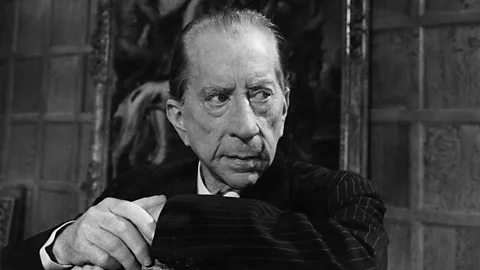
The US oil billionaire's 16th-Century English mansion was home to a stunning art collection and a lion named Nero. In 1963, the BBC visited him there to discuss his "great success".
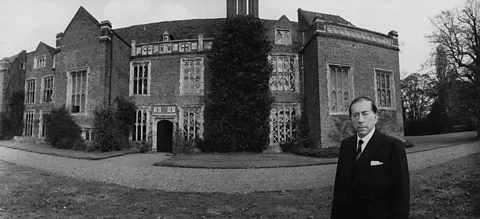
In July 1960, J Paul Getty hosted a £10,000 (£300,000 or $400,000 today) house-warming party at Sutton Place, the 16th-Century Tudor mansion in Surrey he'd bought a year earlier. More than 2,000 socialites, aristocrats and celebrities attended, and the event made headlines when a pushy press photographer was thrown into the swimming pool.
Afraid of flying or travelling by ocean liner, the US oil tycoon was to live there until his death in 1976 at the age of 83, installing coin-operated payphones for his house guests to prevent them from running up high long-distance bills. In 1963, the BBC's Alan Whicker interviewed Getty, who was famously elusive, in the manor house that had been Henry VIII's summer residence.
The archive footage reveals the billionaire's inner sanctum inside a heavily fortified mansion, as he roams past Old Masters and eats at a 16ft-long dining table, accompanied only by his Alsatian guard dog. And it was from that rambling British country house, rather than a skyscraper in Manhattan or a potentate's palace in the Middle East, that Getty managed his vast oil business empire in his final years.
Getty entered the Guinness Book of Records as the world's richest man in 1966: he'd made his first million at the age of 24, when a field he owned in Oklahoma struck oil. By the time of his death, his fortune was estimated at around $4bn ($23.5bn or £17.5bn today), and he earned more each day than the average man earned in a lifetime. One of the tycoon's maxims for success was "Rise early, work hard, and strike oil". In a series of articles for Playboy magazine that were later published as a book called How to Get Rich, Getty expounded on "the importance of having an independent view on things, not being influenced by what everybody else says".
Yet reflecting on his wealth in 1963, he was unable to determine exactly what had made him his billions. "The difference between a successful businessman and one possibly not so successful is that maybe 37 different qualities are required for a great success, and [if] a man has 35 of those qualities, he makes a more modest success. But just what those two missing qualities might be, I don't know."
When asked by Whicker why he'd succeeded when others had failed, he replied: "I really don't know of any quality I have that many others don't have." Naming elements that he shared with others, including work ethic, intelligence and imagination, he added self-deprecatingly: "I always wish that I had a better personality, that I could entertain people better, was a better conversationalist. I always worried I might be a little on the dull side as a companion."
In History
In History is a series which uses the BBC's unique audio and video archive to explore historical events that still resonate today. Sign up to the accompanying weekly newsletter.
Despite his reluctance to single out a key to success, he did credit his father as a crucial component. "It happened because my father had built up a very substantial business, a flourishing business. I was the only child, and I had to carry on the business."
Turning a manor house into a fortress
Getty's father had started from poverty, but in 1903 bought the lease to 1,100 acres of Oklahoma Indian Territory for $5,000 ($190,000 or £140,000 today) and struck oil. When he died in 1930 at the age of 74, he was worth $10m ($200m or £150m today). A Methodist and a more religious man than his only son, he left Getty only $500,000 ($10m or £7.5m today), displeased that he'd already been married and divorced.
During his five short-lived marriages, Getty had five sons, who went on to father 19 children. One of those grandchildren, John Paul Getty III, was kidnapped in Italy in 1973. Asked to pay a $16m ($120m or £90m today) ransom, his grandfather refused, saying, "I have 14 other grandchildren and if I pay one penny now, then I'll have 14 kidnapped grandchildren." Getty's 16-year-old grandson was held for five months and his captors cut off his ear, sending it to a newspaper. A ransom of $2.8m ($21m or £16m today) was eventually paid, but Getty's contribution wasn't disclosed.
The billionaire discussed his miserliness in 1963, including waiting outside a dog show for the entry fee to come down by two or three shillings, and eating late in restaurants to avoid paying the supplement for the orchestra. "I never had the feeling that I was flush in cash," he told Whicker. "If I ever sold out… then I might have some money."
Getty did surround himself with emblems of wealth, though – the Old Masters at his 72-room Sutton Place included paintings by Veronese, Gainsborough, Renoir, Rembrandt and Rubens. His collection of more than 600 items was also housed at his ranch home in Malibu, which was opened to the public in 1954 as the J Paul Getty Museum.
 Getty Images
And he felt sufficiently at risk to fortify his Tudor mansion after buying it in 1959, following years of running his business from hotel suites in London and Paris. Every room, including each of the 14 bathrooms, was wired up to an elaborate security system, and windows and doors barred. "No Trespass" signs were put up across the 700-acre, two-swimming-pool estate, which also featured 30 cottages and lodges, tennis courts and a trout stream.
Getty was evasive on exactly what it was that he feared, telling Whicker: "I wouldn't say that I'm frightened of anything in particular. Just, I suppose, a necessary precaution." When pressed, he explained that there could be "crackpots… dynamiting the place", adding, "I have the police dogs mainly because I like them."
More like this:
His grandson John Paul Getty III discussed those fears in a 1974 interview with Rolling Stone magazine, shortly after the kidnapping. "A lot of things scare him. That's why he stays in his castle all the time dressed up in his three-piece suits and stuffed shirts. He's got attack dogs patrolling his grounds and a pet lion named Nero stomping around and bodyguards and aides. The fences around the castle are electric with barbed wire on top of them."
Can money buy you happiness?
Apart from his entourage, the reclusive billionaire was a solitary man. Yet, he said in 1963, "I wouldn't say that I've ever felt particularly lonely. I've been too busy to feel lonely… like the squirrel in the cage. You race to stay where you are." He was not a particularly upbeat person, however, arguing that "large financial responsibilities are not any key to cheerfulness".
Told by Whicker that he often looked so miserable that people must believe his money had not brought him happiness, he replied: "Well, I suppose that's the effect of responsibility. I think that ever since my father died, and left me the responsibility of the business, that I haven't had quite the buoyant feeling that I had before."
On the burden of wealth, he explained: "I think some of the best times I ever had didn't cost me any money… down at the beach, on the surfboard, waiting for a big breaker to come in, ride it into shore, not spending any money there. The breakers are free. The sunshine is free."
--
For more stories and never-before-published radio scripts to your inbox, sign up to the In History newsletter, while The Essential List delivers a handpicked selection of features and insights twice a week.
