World War Two prisoner of war Bert Warne to get freedom of Southampton

 BBC
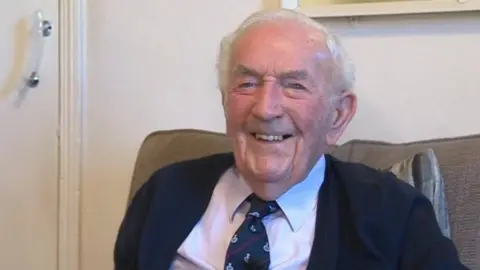
BBCOne of the last living survivors of the Burma Railway in World War Two is to be awarded the freedom of the city of Southampton.
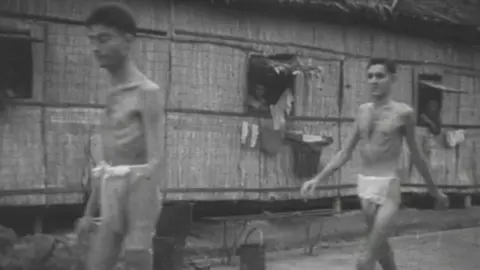
Bert Warne, 102, spent three and a half years as a prisoner of war and his weight at the time dropped to six and a half stone (41.3kg).
He worked on the Burma and Thailand line, also known as the Death Railway, while a prisoner of the Japanese.
He described it as "three and a half years of young life taken away".
Mr Warne, from Southampton, was taken prisoner in 1942 and was among 60,000 British and Commonwealth troops forced to build the railway.
About 16,000 of them died because of the harsh conditions and starvation.
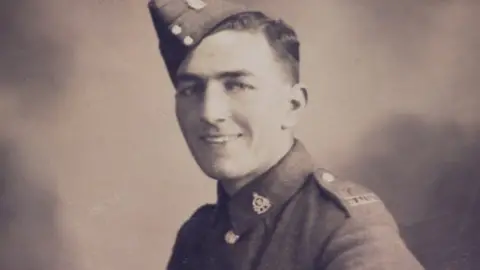
"We weren't being fed properly," Mr Warne told the BBC.
"If you've done something wrong a Japanese [guard] would come along and [hit you]. You stood there. You didn't retaliate, you took it."
He added: "At the time you don't realise how sick you are because most of the blokes around there are the same."
His captivity came to an end in August 1945, when he was told about the Japanese surrender by a sergeant at his camp.
 PATHE
PATHE"He came up and shook our hands and he said 'the war's over, you're free'," he said.
"And I'll always remember, I went back to the camp and did shed a tear actually. That was about the first time in many years.
"It took about two months to get back on my feet because you lost your confidence, and eventually the confidence built up."
The honour is being awarded to Mr Warne because of his "commitment to ensuring that those who served in the Far East theatre of war are remembered", Southampton City Council said.
Mayor Alex Houghton said bestowing the honour was a "great privilege" and the highest the city council could give to someone.
He added: "His own story of survival and his continued work to support prisoners of war is both inspiring and incredible."
Previous recipients have included footballers Francis Benali and Matthew Le Tissier, and former Lord Lieutenant of Hampshire Dame Mary Fagan.

Follow BBC South on Facebook, Twitter, or Instagram. Send your story ideas to south.newsonline@bbc.co.uk.
