Pets and pools: How are people coping with the hosepipe ban?

 Laurence Coss/BBC
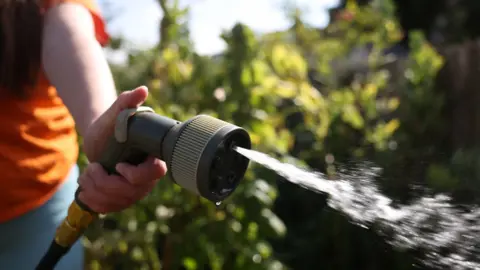
People in the driest part of the UK are adapting to a hosepipe ban for the first time in a decade, after a series of heatwaves and lack of rain left the region on the edge of drought.
Anglian Water, Affinity Water and Cambridge Water, who supply much of the East of England, are implementing "temporary use bans" to protect customer supplies and the environment.
"Dry weather depletes our water, and hot weather means we use more of it," the Environment Agency pointed out.
So at a time when the temptation is to use more water than usual, how are people responding to the regulations?
'I'm keeping my dog cool'
 Sandra Davis
Rescue dog Lili is 16 years old and finds the high temperatures challenging.
"Each morning, in this heat, I put her cooling coat on her and slowly sprinkle water on her from the hose," says her owner Sandra Davis, from Haddenham, Cambridgeshire.
People are allowed to continue using a hosepipe if it is needed "for animal welfare, including the care of pets, livestock and fish", according to Anglian Water's list of exemptions.
"Even if it wasn't allowed, I would probably do it anyway, to keep her body cool," Sandra says.
She adds she is using the method four or five times a day, as Lili's coat dries out.
Ban turned into 'opportunity'
 Beach Babies
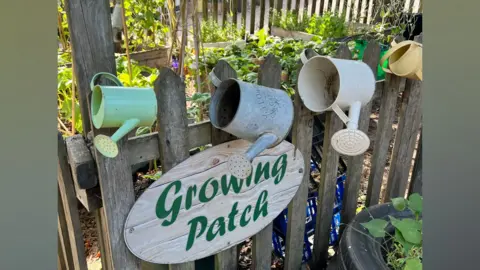
Watering the vegetable patch and orchard is a daily task for children at Beach Babies nursery in Landbeach, Cambridgeshire.
Michelle Rodbourne, the nursery's manager, says they "used this [hosepipe ban] as an opportunity to talk to the children about sustainability, and how there is little water".
"The hose pipe will obviously be removed, and the children will see that process happening.
"The children will be taking care of their growing patch by using their small watering cans to get water from the water butts if there is any left, or from the taps inside the nursery."
Rodbourne says they also spoke to the children about being mindful of water use at home.
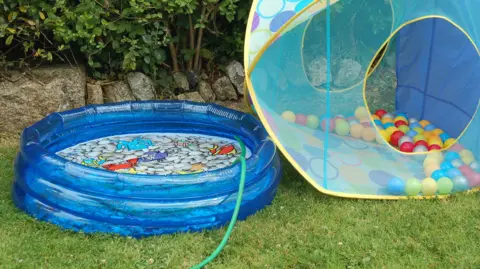
"I did say that we would need to be filling our paddling pools with watering cans and that might take much longer," she adds.
'My cat's leftover water goes on the garden'
 Getty Images
Joan Sampson from Tolleshunt Darcy, Essex, is working hard to conserve water.
"We have a large, lovely garden. We have water barrels, but at the moment they're coming to empty," she says.
"We will just have to use a watering can and do what we can. Everything I have, it goes into a bowl and out into the garden.
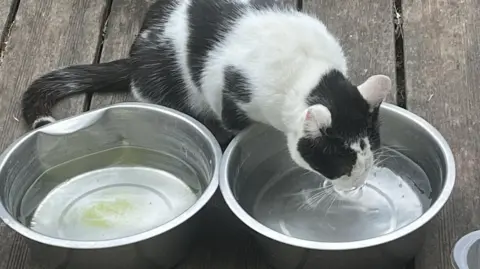
"Even the cat's water that she doesn't drink goes out into the garden," she says.
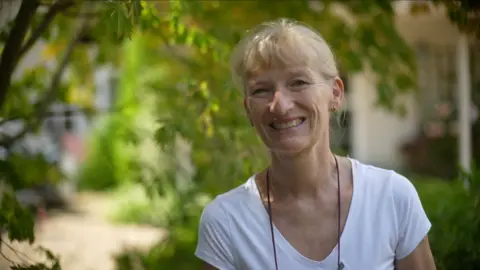
Joan was visiting Green Island Gardens near Colchester, run by Fiona Edmond.
"Everything we do here is about maximising water, conserving it in any way we can," says Edmond.
 Jamie Niblock/BBC
Green Island Gardens has a borehole which means the 20-acre site is not affected by the hosepipe ban, but Edmond is still being sparing with the water.
"We concentrate on things that are newly planted. It's a question of watering plants at the base to keep them alive."
Her advice to the public was to let the grass "go brown", and not plant annual bedding plants but focus on more resilient shrubs and perennials that require less water.
"Any water, don't waste it, save it: bathwater, anything you can siphon off, the plants won't mind," she says.
Are splash parks open?
 Willen Lake
The hosepipe ban only applies to domestic use, not businesses or public facilities.
Locations such as Splash n' Play at Willen Lake in Milton Keynes use a recirculating water system, meaning the water is filtered, treated and reused.
Robert Wood, the executive director at Willen Lake, says: "In response to the temporary use ban, we don't currently plan to close Splash 'n' Play at Willen Lake.
"As things stand, Splash 'n' Play will continue to give local families a safe, affordable, and fun way to stay cool during the current hot weather."
Norwich City Council confirms its splash pad at Waterloo Park will remain open over the weekend "as one of our most popular venues for families to enjoy during the warm weather".
Peterborough City Council says Central Park paddling pool will remain open with Bretton Water Park due to open on 18 July.
"These will not be impacted, as such facilities fall into different water usage categories," a spokesperson says.
 EPA/Shutterstock
Cambridge Water, which announced its hosepipe ban on Thursday, says the early response from customers had been "hugely encouraging", with a "slight reduction" in water demand.
However it adds this was "only a start" as water use this year has reached "record levels" with 30% more being consumed than usual for this season.
Elena Karpathakis, the company's managing director, says: "We know asking people to use less water isn't easy.
"Many customers have simply got on with doing their bit, putting away hose pipes, watering plants less often, taking shorter showers and thinking carefully about how much water they use."
Do you have a story suggestion? Contact us below.
Follow East of England news on X, Instagram and Facebook: BBC Beds, Herts & Bucks, BBC Cambridgeshire, BBC Essex, BBC Norfolk, BBC Northamptonshire or BBC Suffolk.
