Who won the local elections in Westminster?

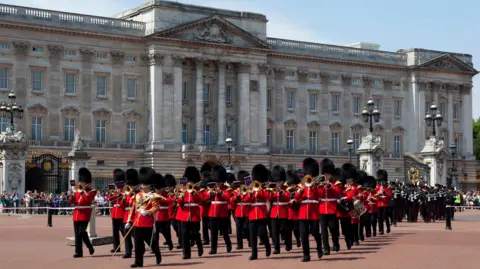 Getty Images
What happened in Westminster in the 2026 council election, and who won?
The Conservative Party won the election on 7 May 2026 and took control of Westminster council from the Labour Party.
The results were:
Conservatives: 32 seats (+9)
Labour: 22 seats (-9)
When were the 2026 local elections in London?
More than six million Londoners were eligible to vote in the council elections on Thursday 7 May 2026.
All 32 London boroughs were up for election.
There were also elections for the mayor in five boroughs: Croydon, Hackney, Lewisham, Newham and Tower Hamlets.
 Getty Images
Where is Westminster and who lives there?
Where is it? The City of Westminster is in central London and is bordered by Brent, Camden, Kensington and Chelsea and the River Thames.
What's it like? The political and historic heart of the UK, Westminster combines world-famous tourist landmarks with a transient, highly international population. It extends from the river into the north London suburbs.
Neighbourhoods: Mayfair, Belgravia, Knightsbridge, Soho, Covent Garden, Fitzrovia, St John's Wood, Marylebone, Paddington, St James's, Pimlico, Queen's Park, Lisson Grove.
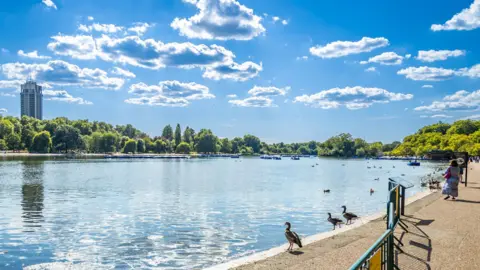
Places of interest: Palace of Westminster, National Gallery, Westminster Abbey, Hyde Park, Covent Garden, Oxford Street, Abbey Road, Lord's Cricket Ground, Downing Street, Whitehall, Hyde Park, and many more.
Pub quiz fact: Westminster has been a centre of royal authority for more than 10 centuries and was declared a city by King Henry VIII in 1540 upon the establishment of the Diocese of Westminster.
Population (2024 estimate): 209,996.
Demographics: According to the 2021 census 55.2% identify as white,16.8% as Asian, 8.1% as black, and 13.5% other ethnic groups.
Westminster Council said 85 languages were spoken in the borough and 26% of residents did not have English as their main language.
Average property price: According to the Office for National Statistics (ONS), the average house price in Westminster in December 2025 was£888,000.
Average monthly rent: The ONS reported that the average monthly rent in January 2026 was £3,181.
Council tax: Band D council tax in the borough for 2026/27 is £1,047.
Transport: There are 32 Tube stations, three Elizabeth line stations and about 500 bus stops and four piers run by Transport for London in Westminster.
You can find more information about Westminster here.
 Getty Images
What is Westminster's history?
The origins of Westminster date back to an Anglo-Saxon settlement west of Roman London that developed in the 5th Century.
In the mid-11th Century, Edward the Confessor began the construction of an abbey at Westminster, only the foundations of which survive today. Between the abbey and the river he built a palace.
The City of Westminster and the City of London were separate - then beginning in the 16th Century, houses and commercial buildings were built on roads linking them. This urban spread became densely populated.
There was also building in parishes to the north and west, including Marylebone and Pimlico.
Despite having city status since the 16th Century, Westminster was not incorporated as a borough for local government purposes until 1900.
What is Wesminster's electoral history?
What is the borough's electoral history? Westminster City Council was a Conservative-controlled borough from its formation in 1965 until the last election in 2022.
Labour had always had a presence on the council, and in the 1970s and 1980s there were one or two residents' councillors elected.
Listen to the best of BBC Radio London on Sounds and follow BBC London on Facebook, X and Instagram. Send your story ideas to hello.bbclondon@bbc.co.uk
