'New treatment melted my bowel cancer away'

 BBC
BBCAll 32 patients with bowel cancer who took part in a groundbreaking UK trial have seen no return of their disease three years later, researchers say.
The patients all had stage two or stage three bowel cancer and shared a specific genetic profile that affects about 10–15% of people diagnosed with the disease.
The treatment involved immunotherapy before surgery and removed the need for chemotherapy.
Experts say this could mark a significant shift in how some bowel cancers are treated. BBC South has been looking more closely at the results and what they could mean for the future.
'It had completely disappeared'

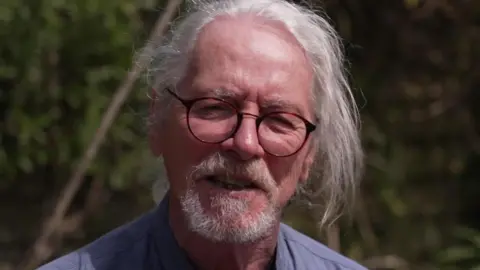
Chris Burston, 73, from Portland in Dorset, was among those to take part in the trial.
He was given three doses of the immunotherapy drug pembrolizumab over nine weeks before undergoing surgery.
Like all the other participants, his tumour shrank significantly.
Now, three years later, he remains cancer-free.
"I'm old enough to remember when cancer was basically a death sentence for most people," he said. "Now we can see you can treat cancer in a way that destroys it and makes people healthy again."
Chris said the impact of the treatment only became fully clear after his operation.
"I was told after I went under the knife that it actually made the cancer melt away effectively, that it had completely disappeared, its amazing that was the effect."
Trial results 'extremely encouraging'
The trial, known as NEOPRISM-CRC, focused on patients with a form of bowel cancer called MMR-deficient or MSI-high, which accounts for about 2,000 to 3,000 cases a year in the UK.
Among the key findings:
- 59% of patients had no signs of disease after receiving pembrolizumab ahead of their planned surgery
- None of the 32 patients have experienced a recurrence after nearly three years of follow-up
Dr Kai-Keen Shiu, chief investigator from the UCL Cancer Institute and a consultant medical oncologist at University College London Hospitals, said the results were "extremely encouraging".
"Seeing that no patients have experienced a cancer recurrence after almost three years of follow-up is extremely encouraging and strengthens our confidence that pembrolizumab is a safe and highly effective treatment to improve outcomes in patients with high-risk bowel cancers," he said.
He said the research could also help doctors better predict who will benefit most from the treatment.
"What is particularly exciting is that we now may be able to predict who will respond to the treatment using personalised blood tests and immune profiling.
"These tools could help us tailor our approach, identifying patients who are doing well and may need less therapy before and after surgery versus patients at higher risk of disease progression or relapse who need additional treatment."
'Immunotherapy won't touch my cancer'
While researchers hope this treatment will become available on the NHS in the coming years, experts stress it will not benefit everyone with bowel cancer.
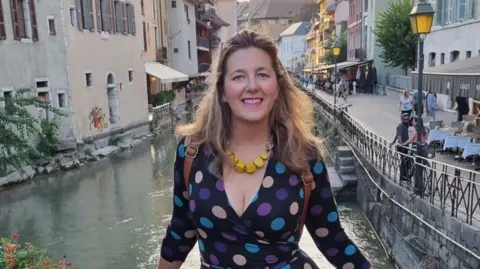
Elise Sargent, 45, from Rowlands Castle near Portsmouth, has stage four bowel cancer with a genetic mutation that does not respond to immunotherapy.
"Every time I hear a patient has been successfully treated with immunotherapy my heart just leaps," she said.
"I am so pleased that there has been these advances but unfortunately nothing has been found that would treat my genetic mutation and there are many other genetic mutations out there that immunotherapy just won't touch.
"I live in hope that more drugs will come on the market that will help people like me."
Elise was diagnosed before she was eligible for routine bowel cancer screening – something she believes urgently needs to change.
"I would like to see the FIT test (Faecal Immunochemical Test) which is essentially a test for blood in your poo sent out to people as soon as they hit 40," she said.
"At the moment it's 50, recently lowered from 55.
"But we are seeing such a huge surge in bowel cancer in younger people that I think it's vital that we start testing at 40 now because it would catch so many people before they enter stage four, which is where I am in my cancer journey."
Surgery and science must go hand in hand
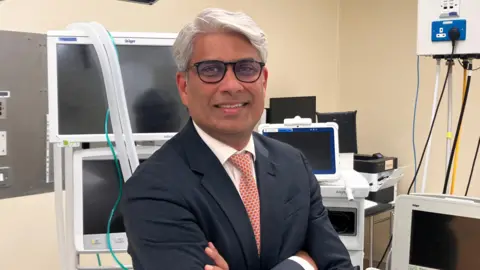
At nearby Queen Alexandra Hospital in Portsmouth, surgeons are also pushing forward with advances in robotic bowel cancer surgery.
But Prof Jim Khan, a consultant colorectal surgeon, said progress in the operating theatre must be matched by a deeper understanding of cancer biology.
He said it was important to better understand tumour biology and the genetic make-up of these tumours.
He added that a more tailored approach to newer drugs, such as immunotherapy and different chemotherapy combinations, was needed so patients could be given a clearer idea of how likely their tumour was to respond to the proposed treatment.
For patients like Chris, the trial has already changed everything. For others, like Elise, it offers hope that science is moving closer to more answers.
You can follow BBC Dorset on Facebook, X (Twitter), or Instagram.
