Beatrix Potter's 160 years of Lake District legacy

 National Trust/Frederick Warne and Co Ltd
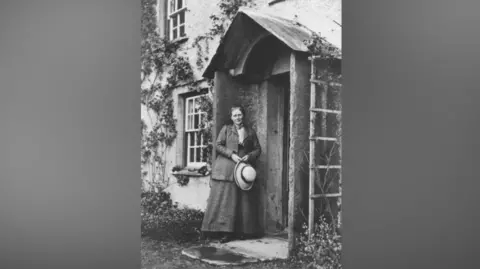
From Taylor Swift to William Wordsworth, the beauty of the Lake District has been an inspiration for writers and poets for centuries. But for many, the first description of this landscape comes from the beloved Beatrix Potter books. As we mark 160 years since her birth, we look at the children's author's legacy in her cherished Cumbria.
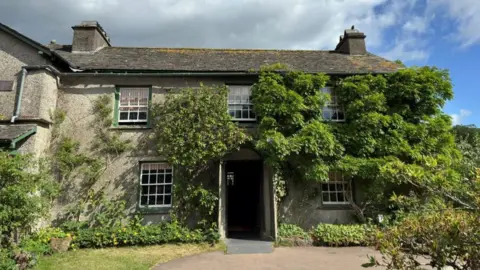
Hundreds of thousands of visitors every year flock to the five main attractions dedicated to the author in the county, including The World of Beatrix Potter in Bowness-on-Windermere and her nearby home, Hill Top, at Near Sawrey.
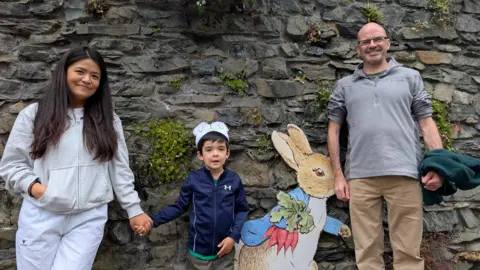
"We wanted to come and see the Lake District in general because it was described really well in the Peter Rabbit stories," says Mark Lamberton, who is visiting from Nottingham with his family.
"Everybody knows Beatrix Potter," he says.
Potter was born in London and spent many long summers in the Lake District, from Wray castle to Lingholm, before buying Hill Top farm.
But the scenery is not simply a backdrop to the adventures of Peter Rabbit, Benjamin Bunny and Jemima Puddle-Duck, they were a true inspiration.
"There's this kind of scientific underpinning to her work," says Dr Penny Bradshaw, associate professor of English Literature at the University of Cumbria.
"She really changes the talking animal genre which has become incredibly popular at the end of the 19th century."
Bradshaw is a leading expert on the author and has written the book An A to Z of Beatrix Potter.
While Peter Rabbit undoubtedly made Potter famous across the globe, she was "much more than that", Bradshaw says.
"For me one of the most important areas of her work is in environmental writing for children and in our current global environmental crisis that's more important than ever."
And 160 years after her birth, her popularity has not faded.
"We're big fans of Beatrix Potter, it's definitely one of the big appeals about coming to Cumbria" says Sufia Mills, who is visiting the county with her partner Stuart Mills.
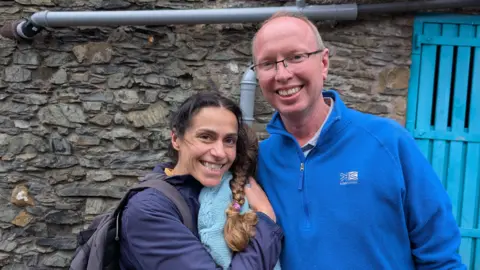
"She was an amazing woman, a pioneer," he says.
"Considering what she went through to get that work published, working against what was expected of women of the day - she was a feminist pioneer."
Saba Nur, 20, originally from Bangladesh, said Peter Rabbit had a worldwide reach.
"We don't know [Beatrix Potter] by name, we just know Peter Rabbit, we know the toads - they're iconic characters back home."

Bradshaw says while the world celebrated Potter's legacy on the 150th anniversary of her birth with the issuing of 50p coins with classic Peter Rabbit characters, this anniversary was a chance to re-evaluate her wider work.
Potter worked to help the National Trust acquire land and manage farms to ensure their preservation.
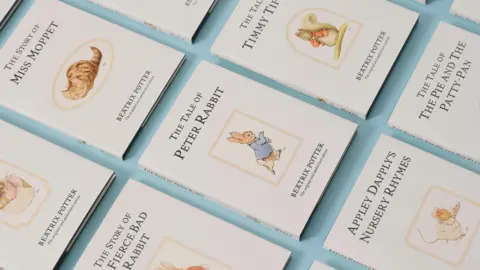
Bradshaw said: "She was a pioneering mycologist when she was younger, [she's known for] her conservation work in the Lake District, but also she was a writer all through her life."
 Penguin Random House UK
Her favourite book by Potter is Fairy Caravan, which tells the story of a troupe of circus animals.
"It's one of her less well known books, but for me this is the culmination of her environmental writing," Bradshaw says.
"It's quite unusual, the stories don't follow an actual plot, they just go together because of the connections with the animals, but it's beautifully written."
 National Trust
To mark the anniversary, several activities are taking place.
Hill Top Farm, now a National Trust property, is exhibiting new displays including Pets to Page: The Tale of Two Bad Mice, featuring original artworks and Potter's dolls' house.
The Lanes shopping centre in Carlisle has unveiled a series of murals celebrating the author.
And Newcastle Cathedral is also hosting a book bench on the theme of Beatrix Potter: A Love-letter to the British Countryside' next month.
Follow BBC Cumbria on X, Facebook, Nextdoor and Instagram and listen to Radio Cumbria on BBC Sounds.
