'Our differences don't matter,' say school children

 Aisha Iqbal/BBC
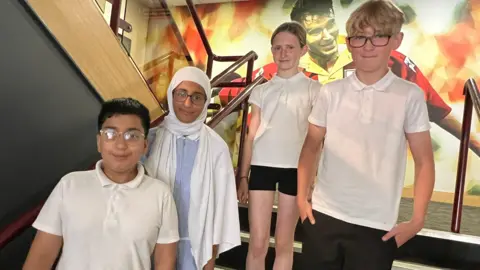
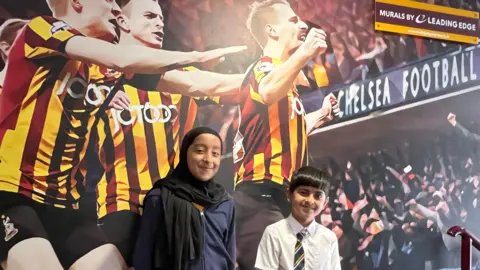
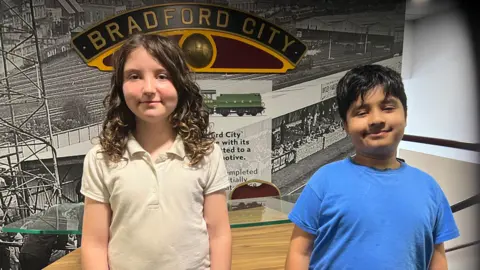
More than 600 school children have gathered at Bradford City's Valley Parade stadium to share ideas about how communities can overcome division and live well together.
The Year Six pupils from 16 schools across Bradford came together as part of The National Conversation, a UK-wide initiative exploring community cohesion.
The youngsters were tasked with answering the question, "how do we live well together?".
"Our differences don't matter," said 11-year-old Sharoon. "We get to know each other and we get to be friends. We can all be as one."
The National Conversation was launched last month by the Independent Commission on Community and Cohesion, which was set up in the aftermath of the riots in summer 2024.
Co-chaired by former government minister Sir Sajid Javid, it is examining the forces driving "disconnection and division" across the UK.
 Aisha Iqbal/BBC
The Bradford event brought together children from a wide range of backgrounds, encouraging them to reflect on friendship, belonging and the importance of understanding people whose lives may be different from their own.
Alishba said meeting children from other schools had shown her that differences should be celebrated rather than feared.
"If we're all the same, it's not going to be much fun," she said.
"It's fun to get to know each other. We can do more activities together and know more people."
Teddy agreed, saying adults could learn from the way children approached difference.
"Lots of people nowadays think we're all different just because we look different," Teddy said.
"But if you make kids spend time with different people, they'll start to learn that they're the same, even though they might look completely different."
Others spoke about the importance of listening and working through disagreements.
Azaan said solving problems often began by "talking to each other" and "working it out with another pupil", while fellow pupil Rayan said meeting new people helped children "connect and learn about other people".
Several children also challenged the idea that young people should simply be observers in discussions about society's future.
"I want them to listen to me and listen to everyone else," said Sharoon.
"You have to trust people and listen to what they say. It doesn't matter what age they are."
 Aisha Iqbal/BBC
Organisers say the event comes at a time when concerns about social division remain high across the UK.
Research published by the British Red Cross found that 75% of adults believe the UK is divided, while VotesforSchools reported the figure rises to more than 81% among children and young people under 16.
It was hoped the conversations taking place in Bradford and elsewhere would offer a new template for how connections could be built across different communities.
The gathering also formed part of a wider three-year linking project organised by the Bradford Diocesan Academies Trust (BDAT) and The Linking Network, which brings together children from different schools and backgrounds to build friendships and break down barriers.
Kathryn Young, deputy director of primary education at BDAT, said the programme had helped children develop confidence, resilience and a belief that they could make a difference.
"They believe they can change the world," she said.
"They believe they can make a change, and for me that's really important."
Becky Earnshaw, from The National Conversation, said the lessons being learned by the children were relevant far beyond the classroom.
"There's always space for human connection and there's always space for us trying to listen and understand before we put over our own views," she said.
"I think these young people have been a testament to the power of that coming together. Everyone can learn from that, and I'm sure there's plenty in Westminster [for whom] that could be a very powerful lesson."
Sir Sajid said: "How we live well together is one of the defining questions of our time - and children and young people must be a core part of answering it.
"They are not just future citizens; they are living in, shaping and experiencing our communities right now."
Listen to highlights from West Yorkshire on BBC Sounds, catch up with the latest episode of Look North.
