Rochdale bids to be UK Town of Culture

 Rochdale Council
The town known as the birthplace of the modern co-operative movement has entered the fray to be named 2028 UK Town of Culture.
Rochdale has its eye on a £3m prize from the Department for Media, Culture and Sport (DCMS) to fund a year-long cultural programme.
The competition invites towns across the UK to showcase their cultural story. The bid - currently at the Expression of Interest stage - is led by Rochdale Council and Rochdale Development Agency, in conjunction with cultural groups, education providers and community organisations.
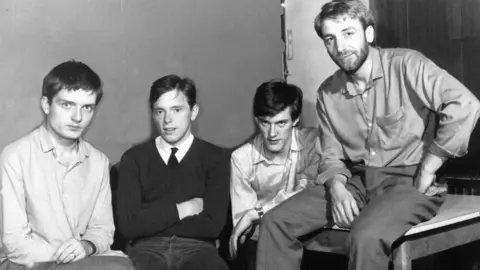
In its bid, Rochdale cites the town's legacy to UK political and social history, alongside its musical heritage as the home of the influential Cargo Studios.
The Rochdale Pioneers were a group of 28 working-class individuals who founded the town's groundbreaking co-operative society.
In 1844, they created a member-owned shop based in Rochdale's Toad Lane.
The shop was run according to ethical principles, such as democratic control and profit-sharing, and was intended to counteract poor food and high prices elsewhere.
Those principles, which became known as the Rochdale Principles, went on to provide the foundation on which co-operatives around the world operate to this day.
The Town of Culture bid also cites the role Rochdale has played in the UK's democratic history, highlighting the achievements of figures such as Samuel Bamford and John Bright.
In 1819, Bamford, a poet and activist, led reformers from Rochdale to St Peter's Fields, witnessing the Peterloo Massacre and helping galvanise national movements for parliamentary reform.
Some 20 years later, Rochdale native John Bright MP, co-founder of the Anti-Corn Law League, spearheaded free trade.
Bright, an MP for Durham from 1843 to 1889, promoted free trade, electoral reform and religious freedom. A powerful speaker, his parliamentary work was implicit in encouraging the government to take the first steps towards Free Trade (1845) and in the eventual decision to repeal the Corn Laws in 1846.
Listen to the best of BBC Radio Manchester on Sounds and follow BBC Manchester on Facebook, X, and Instagram. You can also send story ideas via Whatsapp to 0808 100 2230.
