'Beekeeping really helped me after I left prison'

 Nathan Wylam
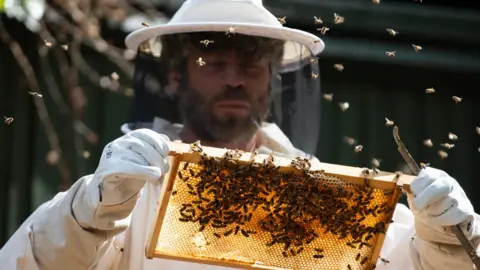
A man who turned to beekeeping after coming out of prison says looking after the insects and teaching others about them has been "therapeutic".
Nathan Wylam, from Cheltenham, runs community project Please the Bees, and teaches people about the importance of the insects while looking after his own hive.
Wylam was introduced to beekeeping by a friend following his release from prison eight years ago, and said it was "one of the reasons he keeps going" after closing his business following lockdown and a stage four bowel cancer diagnosis.
"It mentally and physically really, really helped me," Wylam said of his passion.
After growing up in foster care, Wylam said he began running a smoothie bar at festivals in 2015.
But, in 2017, he was sentenced to six months in prison after his dog bit a four-year-old child on the face and a 17-year-old shop worker on the hand in the space of two weeks.
"I had no direction when I came out of prison, I was very unwell mentally and physically. [The dog incident] has had an effect on me.
"I wanted to give back to the society and the community I live in," Wylam said.
"I couldn't pick up my business like I had it before, so then my friend Sam asked me to help her do beekeeping."
 Nathan Wylam
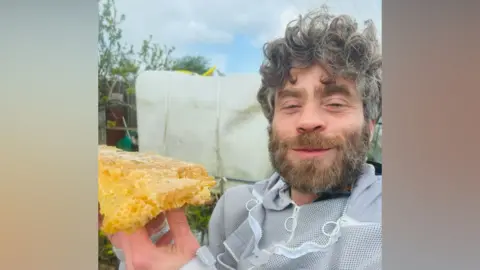
Wylam said he loved learning about bees and looking after them so much, he decided to get his own hives and start a community project.
"I realised how therapeutic the bees are and how important they are for our ecosystem," he said.
"Because if we don't have bees, we don't have insects, and if we don't have insects, we don't have the oxygen to breathe and the most nutritious food on our plates."
Bees pollinate 75% of the crops we eat so their survival is hugely important.
Georgina Rannard, BBC climate and science correspondent, said: "Put simply, without bees we wouldn't have any food."
Wylam said he wanted to "heal people with bees" in the same way they had helped his mental and physical health.
"They told me I had months to live. That was three years ago and I'm still here," he said. of his cancer diagnosis.
"I want to share my story for other people in similar situations - so they can understand what they need to do to heal, and that it is 100% possible."
Wylam is now offering a Human Hive project, saying people can be "fully immersed" in the life of a hive and learn more about bees.
He is asking for tradespeople to help set up the project, while he runs open days at the Honey Pot on the Honeybourne Line on Saturdays from 10:00 to 13:00 BST.
Follow BBC Gloucestershire on Facebook, X and Instagram. Send your story ideas to us on email or via WhatsApp on 0800 313 4630.
