Why traditional British newsagents are on their last legs

 Leon Neal/Getty Images
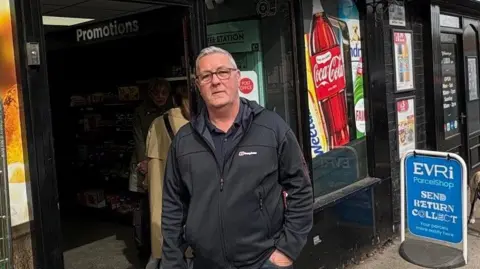
"If we'd have stayed a newsagent, we'd have been long gone," said Chris Hopkinson from his stockroom, where crates of food and drink now occupy space once taken by stacks of newspapers.
He bought Elloughton News, in a thriving village in East Yorkshire, in 2011 but says he was forced to change course due to falling demand for newspapers and magazines.
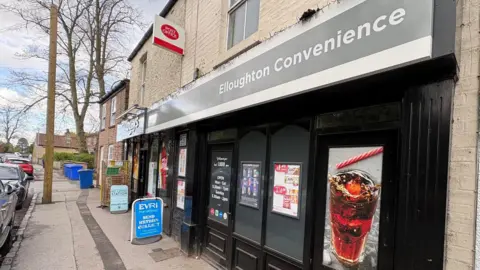
The sign above the door now reads Elloughton Convenience.
"We sell more fruit than we do papers," he said. "I really don't know how traditional newsagents are making a profit these days."
His business is one of many newsagents that have faced having to diversify or die. According to latest figures from data analysis firm Statista, there were 4,597 stores in the UK specialising in the sale of newspapers and stationery in 2011. By 2023, that number had slumped to 2,285.
Suki Walker, the fifth generation owner of Walkers Newsagents in Hoyland near Barnsley, has kept with tradition but admits it is a daily struggle.
"Newsagents were once thriving businesses," she said.
 Suki Walker
Hetal Patel, the president of the Federation of Independent Retailers, warned newsagents are "disappearing".
The organisation can trace its roots back to 1919, but appeared to have seen the writing was on the wall five years ago when it changed its name from the National Federation of Retail Newsagents.
Patel, whose journey into retail began at a newsagents in South Wales in 1998, said a number of factors are to blame for the decline.
"A decline in sales of printed news and the shift to online, along with publishers reducing profit margins and wholesalers increasing carriage charges, has meant that purely dealing in news and magazines is no longer viable for independent retailers," he said.
"Therefore, the move to more convenience-style shops, while maintaining a news element, has been a natural progression for many in order for their businesses to survive.
"It is a shame that traditional newsagents are becoming a thing of the past."
 Kevin Shoesmith/BBC
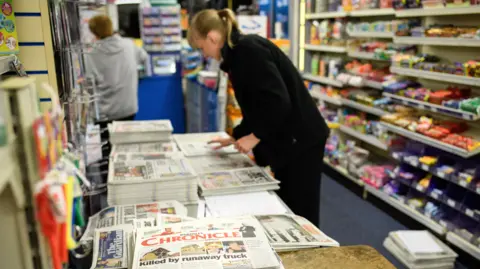
In Hopkinson's store, newspapers are displayed on a small shelf, while magazines are consigned to a corner next to a chiller selling fresh desserts, pastries and sandwiches.
"Newsagents are a British institution," said Hopkinson, lamenting a bygone era. "Growing up, pretty much every street corner had a newsagent.
"But demand has gone. The amount we get paid for selling papers has halved in the last five years.
"We also get charged £80 to get the papers delivered to us. There isn't a lot of profit left at the end of it all. In fact, I'm sure a lot of businesses must even be running at a loss."
Hopkinson reveals he employed about 40 paperboys and girls 15 years ago. Now he has 10 on his books.
"After the [paper] rounds, there will be 40 to 50 papers on the shelves. About 30 of them won't be sold and they will be returned."
 Kevin Shoesmith/BBC
Customer Margaret Pattle, a retiree, is confident accessing news content online, but has popped in to buy a newspaper.
She said she still enjoys "turning pages while enjoying a coffee", but concedes: "Traditional newsagents have probably had their day."
Shaun Richardson came in to buy a packet of bread rolls for his lunch.
"It's definitely convenient being able to buy groceries more locally," the 65-year-old said. "I've friends coming over and I was able to quickly walk to the shop and pick something up.
"But I do think we are losing yet another British tradition, just like we have butcher shops and greengrocers."
 Kevin Shoesmith/BBC
Terry Rockett, 83, another customer, added pubs to that list.
"Not many pubs can get by just selling alcohol. They have to sell food. It's the same with newsagents. You'd be hard-pushed to make a living just from selling magazines and newspapers.
"We live in a changing world and sometimes, at my age, that's hard to accept."
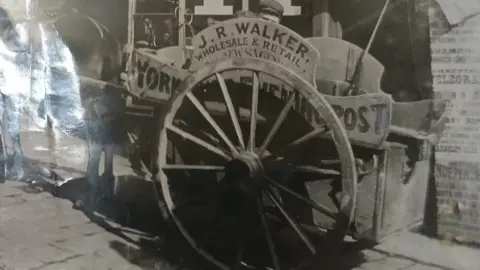
In Hoyland, Walker's business can trace its lineage back to the 1870s, when her great-great grandfather, JR Walker, sold newspapers and other items from a horse and cart.
She admits she can "totally understand" why newsagents are increasingly becoming convenience stores.
"We wouldn't become one because of the history – we have a lot of customer loyalty and they wouldn't stand for another convenience store."
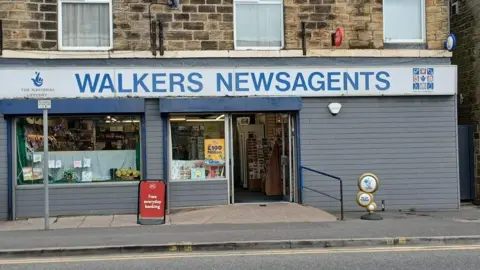 Suki Walker
In more recent times, Walker added a post office facility to the newsagents.
For now, she believes there is still demand for newspapers, insisting "not everyone is online".
But there will not be a sixth generation.
"I don't have children and my nieces and nephews are not interested in taking it over," she says.
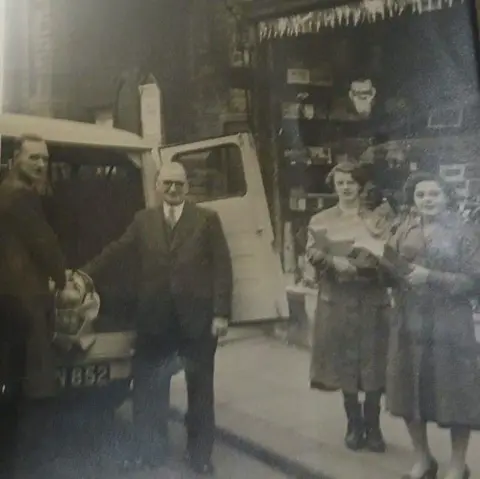 Suki Walker
Stuart Moorhouse, director of Leeds-based business agents Ernest Moorhouse, said stores are increasingly becoming "multi disciplinary", selling alcohol, groceries and lottery tickets, as well as often being parcel hubs.
"Over the past few years, whilst there has been a decline in the existence of traditional newsagents, we have seen a resurgence in the popularity and demand from buyers of convenience stores," he said.
"Whilst we are still instructed to sell traditional newsagents, often purchasers already have plans to extend the range of services and goods and convert them in to 'one stop' convenience stores."
Listen to highlights fromHull and East Yorkshire on BBC Sounds, watch the latest episode of Look North.
Download the BBC News app from the App Storefor iPhone and iPad orGoogle Play for Android devices
