The kind-hearted newsagent murdered for his takings - could a review find his killer?

 PA Media
Warning: This story contains details some readers may find distressing
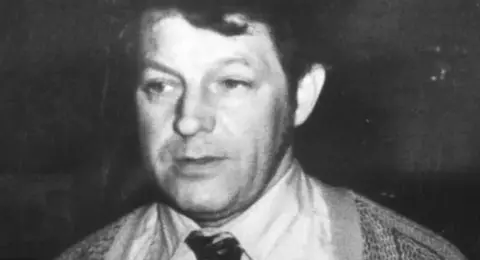
Philip Saunders was a popular, well-known face at Cardiff's former bus station, where he ran the newspaper kiosk.
But in October 1987, the 52-year-old was left for dead in the back garden of his home after being attacked with a shovel.
It seemed the ambush and brutal attack was an attempt to steal his day's takings.
Three days later, Saunders' life-support machine was turned off and the case became a murder investigation.
But almost 40 years on, his killer has never been found.
South Wales Police has announced it is re-looking at exhibits from that night to see if advances in forensic science could "provide the breakthrough needed to identify who was responsible".
More and more cold cases are being re-looked at, with a special Forensic Opportunities Programme set up to look at cases that pre-date 2016 where a killer or rapist has not been found.
DNA advances meant a simple cigarette butt recently caught a Scottish murderer decades after the attack, and a rapist killer was found after 60 years in what was dubbed "the UK's oldest cold case".
'A kind-hearted man'
"Phillip Saunders was a kind-hearted individual whose life was unjustly taken, and the person or persons responsible have yet to be held accountable."
These are the words of Michael O'Brien - a man who served 11 years in prison after being wrongly jailed for Saunders' murder.
Along with Darren Hall and Ellis Sherwood, O'Brien was part of the so-called "Cardiff Newsagent Three", who were all sentenced to life behind bars for the brutal killing before being cleared in 1999.
"Reopening this case will allow for the examination of all potential leads that were overlooked and the re-evaluation of the evidence with modern technologies," said O'Brien.
"It's a chance to correct the narrative of this case and provide closure to those still affected by Phillip's tragic death, particularly his family."
Saunders was previously described as "a loving brother and a caring uncle" by his brother Ted and sister-in-law Marge, who lamented the fact that he would not enjoy the retirement he had worked so hard for.
 Stephen McKay/ Geograph
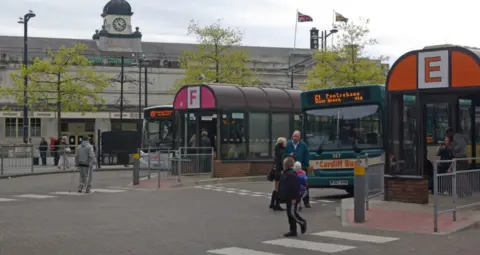
Cardiff's central bus station no longer exists.
That part of the city has since been bulldozed and replaced by the offices of Central Square, but some older residents will remember the newspaper kiosk and the man who ran it.
It was on the night of 12 October 1987 that Saunders finished work at around 21:30, and headed for a pint at a pub on nearby St Mary Street.
Carrying his takings of £500, he then headed home to Anstee Court in the Canton area of the city.
But somebody was waiting for him - and he was brutally attacked and robbed of his earnings before being left for dead.
He was later found gravely injured outside his home.
Soon afterwards, investigating officers became convinced they had their men and the Cardiff Newsagent Three were all charged with murder and robbery before going on trial in June 1988.
Relying on a confession from Hall that he was on the lookout for a robbery that went wrong, the three were all found guilty.
Hall, 19, Sherwood, 19, and O'Brien, 20, were jailed for life.
But the men had their convictions quashed at the Court of Appeal in December 1999, where Hall was described as living a "Walter Mitty" fantasy life and showing some of the attributes of a pathological liar.
Even the prosecution's own psychiatric expert conceded that his admissions were "at risk of being unreliable".
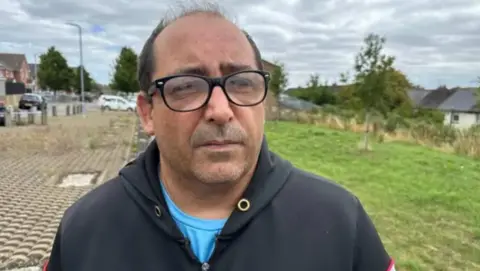
O'Brien later received £300,000 in a settlement with South Wales Police, but for decades there seemed little chance of finding the real killer.
That was despite the existence of more than 20,000 documents, 90 witness statements and items recovered from the scene, including clothing.
"South Wales Police is carrying out a review of exhibits to assess whether there is any potential for further forensic investigation," the force said.
"This work is being carried out by the force's Major Crime Review Unit in the hope that advances in forensic science will provide the breakthrough needed to identify who was responsible for Phillip Saunders murder in 1987.
"Mr Saunders' family and others affected by this case have been informed and our thoughts continue to be with them."
 Crown Office
Significant advances in DNA technology and other cases around the UK suggest the killer could still be brought to justice.
While not involved in the Saunders investigation, the Criminal Cases Review Commission looks at miscarriages of justice.
It set up the Forensic Opportunities Programme in 2024 to re-examine closed murder or rape cases from before 2016 where the culprit has not been found.
"Our purpose is to find, investigate and refer potential miscarriages of justice, so it is imperative that we take advantage of opportunities offered by scientific developments to do that," a spokesperson added.
A cigarette butt recently helped Scottish police to solve one brutal murder dating back to 1984.
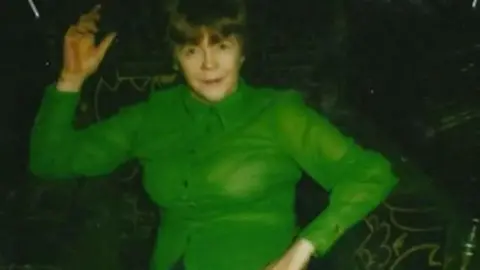
Mary McLaughlin, who was 58, was found dead in her flat in Glasgow, in a scene detectives called "particularly cruel".
It wasn't until 2021 that her killer was brought to justice after the cigarette stub recovered from her flat proved crucial.
There is also what was previously described as "the UK's oldest cold case", which took almost six decades to solve.
The murder of 75-year-old Louisa Dunne in 1967 horrified her community and sparked a manhunt for her killer that saw palm prints taken from almost every man in Easton, Bristol.
Ryland Headley, who is now 93, was caught decades later through DNA and last year was sent to prison.
Police think Saunders' killer could still be out there, and O'Brien remains hopeful that the case can now be solved.
"Because I met the victim's family and I've seen the pain they were going through, to get justice for them would be amazing, more so for them than myself," he added.
