Project to bring rare butterfly back to Yorkshire

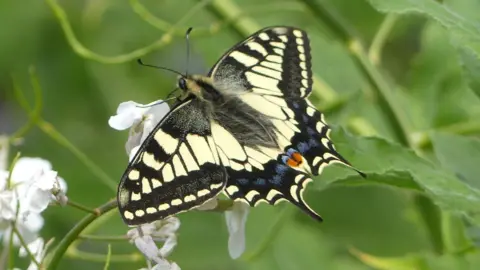 Mark Collins, Swallowtail & Birdwing Butterfly Trust
A rare wetland plant is making a return to East Yorkshire to support the nationally scarce swallowtail butterfly.
Milk parsley, which grows in marshy habitats, was once widespread around Hornsea Mere, but has declined sharply in recent decades.
If the planting project succeeds, conservationists hope it could help bring the swallowtail – the UK's largest native butterfly – back to the area for the first time in more than a century.
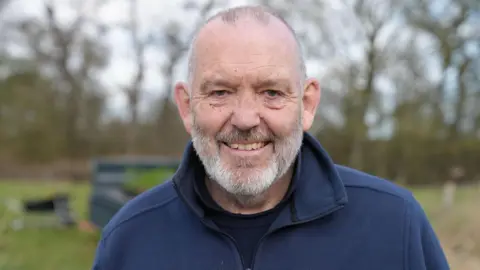
John Barnard, a wetland specialist, said: "There are historical records of swallowtails right across East Yorkshire. So bringing milk parsley back basically puts things in place for where they originally lived."
According to The Wildlife Trusts, swallowtails are one of the most localised butterflies in the UK.
They are confined to the Norfolk and Suffolk Broads, where they attract visitors from across the UK between late May and mid-July.
Milk parsley is their key food plant and formed part of East Yorkshire's natural fen landscape until large-scale drainage in the 18th and 19th Centuries.
The conservation programme is a partnership between the Wassand Estate, which overlooks the mere, and Yorkshire Water's Tophill Low Nature Reserve.
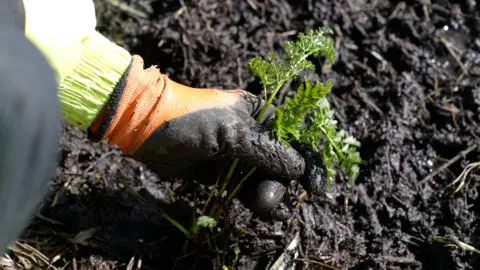
Barnard, from Tophill Low, began collecting seed from the handful of milk parsley plants still found at Hornsea Mere in 2024.
He then grew a fresh batch of plants genetically true to those that once surrounded the mere.
"They struggled in the past because in the 1700s, when the Dutch came over and started draining all of East Yorkshire, the wetlands dried out and the plant largely died off," John said.
Staff and volunteers from the Wassand Estate are now establishing the nursery-grown plants at the mere.
Hornsea Mere is surrounded by reedbeds, marshes, grassland and mature woodland, and is protected as both a Site of Special Scientific Interest and a Special Protection Area because of its importance for rare and migratory birds.
Conservationists say restoring milk parsley is a crucial first step in bringing back the swallowtail, because without it the butterflies cannot breed.
The plant is also being established elsewhere across the River Hull catchment, creating the wider network of wetland habitat that the swallowtail will eventually need.
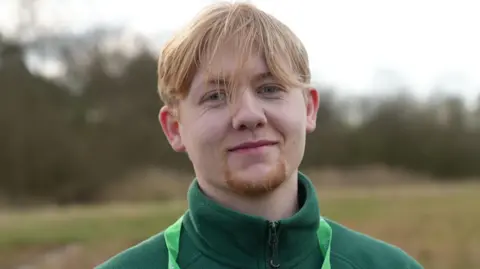
Conner Peters, from Groundwork Yorkshire, which is restoring the mere, said any attempt to reintroduce the butterfly would take time.
He added: "Potentially, in five years, that's the earliest point we think a reintroduction would be possible, because we're still in the early doors of creating these plant populations."
Listen to highlights fromHull and East Yorkshire on BBC Sounds, watch the latest episode of Look North.
Download the BBC News app from the App Storefor iPhone and iPad orGoogle Play for Android devices
