Plan to make city 'spongier' to help stop flooding

 BBC
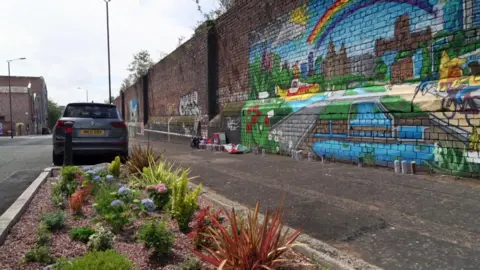
BBCRain gardens and green roofs are being introduced in Liverpool to help the city cope with heavy rainfall.
Water company United Utilities (UU) is investing £30m to make the city more "spongy" in a bid to soak up rainwater and take pressure off the city's sewer and drain system.
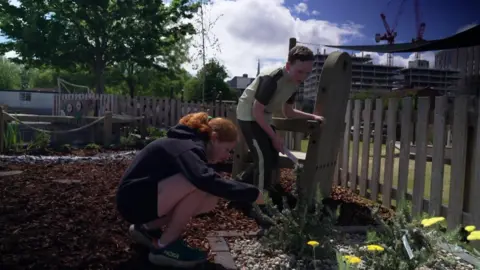
By building the gardens on roads and near schools, hospitals and supermarkets, the company hopes it can capture rain water where it falls and ease pressure on the network, which will mean fewer discharges of sewage into water courses.
Johnny Phillips, from UU, said rain gardens, such as one installed on Blundell Street in the city, not only helped to manage rainwater but also benefited the environment.
Around 85% of sewers in Merseyside are combined, meaning rainwater and wastewater flow through the same pipes.
"Over time we've lost a lot of the green and natural spaces in and around the city as we've urbanised, and we've paved over our gardens to accommodate more cars and we've built over old rivers that used to exist," Phillips said.
"Making our towns and cities more spongy means capturing the rainwater.
"By adding the sponge back into our towns and cities, we not only manage rainwater in a much better way, where it falls, we are also able to deliver so many more wider environmental benefits in terms of nature, and bringing nature back to towns and cities."
Blundell Street and the Baltic area in Liverpool have already had gardens installed.
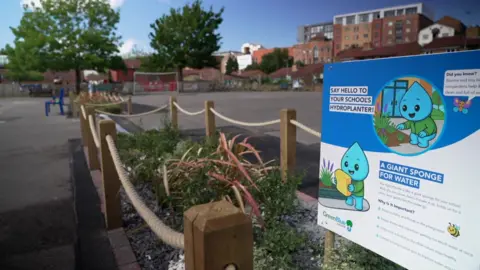
Peter Allen, assistant headteacher at St Vincent de Paul Catholic Primary School said before the gardens were introduced the playground would regularly be flooded after heavy rainfall.
"Before this project, because of the surface water, I'd have to wade out up to my ankles and clear the grids," he said.
"Now the children can get out, this is just exactly what we needed."
UU said it was also working with retailers at sites in the city, including Liverpool One.
"With more intense rainfall, we need to manage rain where it falls," United Utilities CEO Louise Beardmore said.
"If we can do that, we can protect rivers, reduce flood risk and create places that people are proud to live in.
"This investment marks an important step in shaping a more resilient future for Liverpool and the wider city region."
Steve Rotheram, the mayor of the Liverpool City Region, said: "I made a commitment to make the River Mersey free from untreated sewage discharges by 2030.
"Cleaning up our waterways will need all of us to play our part, so it's encouraging to see that partnership translating into investment that reduces pressure on the sewer network, improves water quality and helps mitigate against the impact of climate change."
Listen to the best of BBC Radio Merseyside on Sounds and follow BBC Merseyside on Facebook, X, and Instagram. You can also send story ideas via Whatsapp to 0808 100 2230.
