Museum urges people to install swift boxes as numbers fall

 Judith Wakelam via Oxford Museum of Natural History
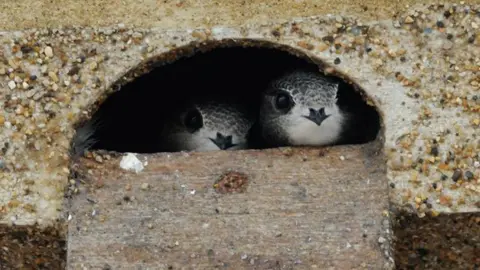
Swifts have returned to Oxford's Museum of Natural History to nest every year for 80 years, but numbers have fallen sharply over the past decade.
The birds spend up to 10 months of the year in continuous flight, only landing to breed.
However, with fewer nesting sites available in the UK, the species is facing a 47% decline nationally, according to the museum.
The tower houses 80 purpose-built swift boxes, and staff are encouraging more people to install them in their own homes.
Education officer Chris Jarvis said: "They have to nest with people, the old growth forests where they used to nest are gone…they now go in roof gaps, attics but all these sites are also going as people have [loft] conversions."
Swifts are the only birds that can fly continuously for 10 months straight. This means they sleep, eat and mate while in flight, making their chosen nesting locations very important.
It is why the museum has made a point of continuing its work with the species for so many years.
The museum has monitored its colony since the 1940s, making the survey one of the longest-running studies of a bird population anywhere in the world.
So far this year, 14 swifts have been recorded nesting in the tower, with more expected.
"It's absolute elation when you see the first swift arrive," Chris said.
"They're the most aerial of birds but they need help…if people want to continue having swifts the best thing to do is put up a swift nest box."
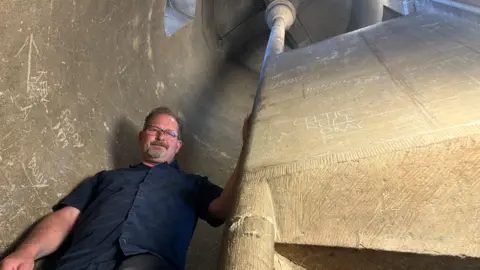
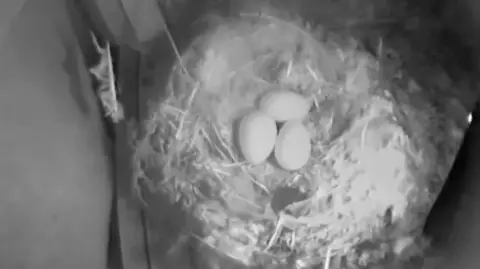
About 80 steps lead up to the nesting area, and a live camera allows the public to watch the birds building nests and raising their young.
 Oxford Museum of Natural History
Chris said gardens could also play a role in supporting the species.
"Swifts can eat over a million insects a day, so making your garden more wildflower friendly, planting more plants and encouraging insects into your garden is all helpful for swifts," he said.
He said one thing that stayed with him was how swifts had inspired figures from Shakespeare to the poet Ted Hughes, noting that Hughes wrote about their return as a sign that the world was still functioning and renewing itself.
And despite the decline, he said there was still hope.
"As long as they have good sites where they can nest and we cherish them and point out what wonderful birds these are, I think we can be optimistic," he said.
"If we can protect this population, they're a sign of hope for all those other migrating species that come to our country."
