Monkeys 'learn to eat soil to cope with junk food'

 Martin Nicourt / Gibraltar Macaques Project
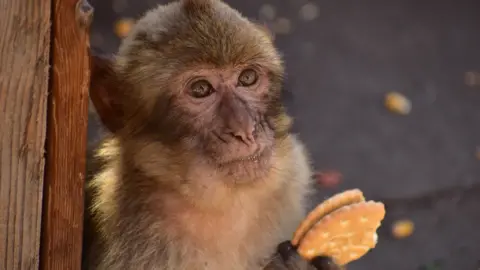
Monkeys living on Gibraltar have learned that swallowing soil can quell upset stomachs caused by eating snacks offered or stolen from tourists, research suggests.
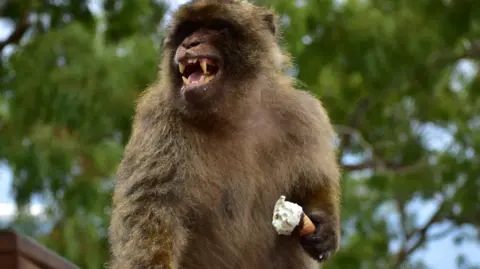
Food such as chocolate bars, crisps and ice cream have negative digestive effects for the macaques but are "as delicious for them" as they are for humans, according to a Cambridge University study.
Eating soil may allow the primates to keep eating junk food by helping to line the gut to prevent irritation from too much sugar and fat, research indicates.
"The emergence of this behaviour in macaques is both a functional and cultural one, like nutcracking in chimps, except it is driven entirely by proximity to humans," said biological anthropologist Dr Sylvain Lemoine.
 Martin Nicourt / Gibraltar Macaque Project
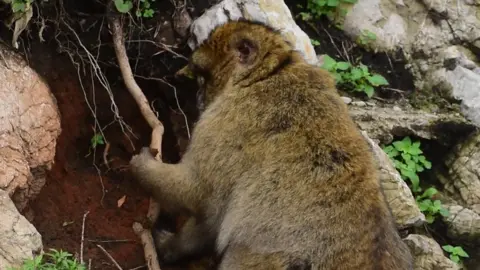
Some of the Rock's 230 monkeys in frequent contact with tourists were observed to eat more dirt, and dirt-eating rates were seen to be higher during peak holiday season.
The researchers think the behaviour is likely to have been learned socially as different troops of monkeys have preferences for certain types of soil.
Scientists believe the dirt also provides bacteria and minerals absent from junk food - which is completely unlike the monkeys' typical diet of herbs, leaves, seeds and the occasional insect.
 Martin Nicourt / Gibraltar Macaque Project
"We think the macaques started eating soil to buffer their digestive system against the high energy, low fibre nature of these snacks and junk foods, which have been shown to cause gastric upsets in some primates," added Lemoine.
"The consumed soil acts as a barrier in the digestive tract, limiting absorption of harmful compounds."
He said tourist food eaten by macaques was "extremely rich in calories, sugar, salt and dairy" - with primates intolerant of lactose found in "hugely popular" ice-cream.
"Humans evolved to seek out and store energy-dense fats and sugars to survive periods of scarcity, leading us to crave high-calorie junk food," he added.
"Availability of human junk food could trigger this same evolutionary mechanism in macaques.
"Soil-eating may allow them to keep consuming food that has negative digestive effects, but is as delicious for them as it is for us."
Gibraltar's macaque population averaged an estimated 12 soil-eating "events" a week, according to the study, with three instances of soil-eating observed directly after an animal consumed tourist food.
Additional reporting by PA Media
Do you have a story suggestion for Cambridgeshire? Contact us below.
Follow Cambridgeshire news on BBC Sounds, Facebook, Instagram and X.
