'Time of the essence' in plastic nurdle clean-up

 BBC
BBCA company involved in a collision between two vessels, which led to a huge spillage of plastic nurdles, has admitted "time is of the essence" in the clean-up.
Tonnes of plastic pellets have washed up on the North East coast, after the ship Wind Orca collided with berthed container ship BG Orange at the Port of Tyne on 19 July.
Responding to criticism from North East Mayor Kim McGuinness about the speed of the response to tackle the ensuing environmental damage, Wind Orca's owners, Cadeler, acknowledged they had "not met community expectations".
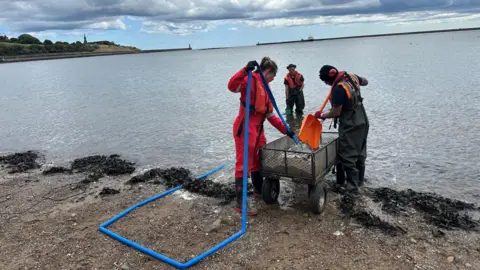
They have now dispatched specialist contractors, who are working alongside councils and volunteers to clean up beaches from South Shields to Sunderland.
Cadeler's chief executive, Mikkel Gleerup, said: "Cadeler shares the view that time is of the essence, and we are pleased to see that significant specialist resources are now deployed.
"We remain engaged with those leading the response and committed to supporting a co-ordinated effort to minimise the impact on the environment and local communities."
Labour's McGuinness said she was pleased to see the firms "stepping up".
But she added: "What we need to see is that to be sustained all the way through this clean-up - because this is exceptionally serious, these things are absolutely everywhere, they're ingrained in the sand.
"It's very clearly not going to be quick," said the mayor.

Last week, the Port of Tyne erected a floating barrier around the BG Orange last week to help prevent further spills, according to the Local Democracy Reporting Service.
McGuinness said the firms responsible for the spill should foot the bill for the clean-up.
She said: "What we've seen here is one of the biggest, if not the biggest pollution incident in Europe, with the spillage of these nurdles."
She said she could not predict how long the clearing operation would take.
"I think it's unpredictable - the pace at which they're washing up on the beaches.
"Certainly I'm not an expert, but you can see just by looking how ingrained they are in the sand, and the fact they're still washing up."
Gleerup said Cadeler was "deeply" appreciative of efforts from local volunteers and the Recovery Working Group established by North and South Tyneside, Sunderland, Newcastle City and Gateshead councils, alongside other agencies.
