Timber transport funds to upgrade 'fragile rural roads'

 Scottish Forestry
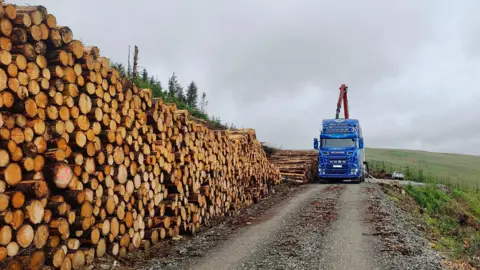
A string of new projects to protect "fragile rural roads" used for timber transport across Scotland are to receive funding support.
Scottish Forestry said £900,000 would go to the schemes in Dumfries and Galloway, Argyll and Bute, Scottish Borders, South Ayrshire and the Highlands.
Agriculture Minister Jim Fairlie said the strategic timber transport fund was a "great example" of the Scottish government, councils, businesses and communities working together.
The funding is in addition to £1.1m already committed this year to schemes including the TimberLINK coastal shipping project.
It operates from Argyll using ships instead of lorries to move timber to wood processors in Ayrshire.
The new projects receiving funding are:
- Dumfries and Galloway: Full reconstruction and resurfacing on the Penpont village section of the A702
- South Ayrshire: Regulating, strengthening and general upgrades to the B734 road from Barr to Lamdoughty
- Argyll and Bute: Strengthening of the single track C29 where it meets the West Lochawe timber haul route
- Scottish Borders: Three projects upgrading sections of the B6357 between Dinalbyre and Kirndean, the B709 from just north of Blackhopebyres to Garvald Lodge, and the B6399 road south of Shankend
- Highland: Three projects on the single track A884 will make various structural, strengthening and safety improvements over 17 miles (28.3km) of road near Lochaline, including creating 18 additional passing places
Fairlie said he was "keen to support" a sector which sustainably produced about six million tonnes of timber a year.
Dr William Clark, Scottish Forestry's forest transport and innovation advisor, added: "By addressing transport issues collaboratively, we can improve quality of life for residents and enhance local road networks for communities and other businesses that rely on them, while maintaining the productivity and competitiveness of essential forestry operations."
