How do you like them apples? Cider 'gene bank' branches out to awards

 Museum of Cider
There are back-up systems for data. There are copies of important documents. But what happens when a once-loved flavour - and the precise fruit that made it - goes out of fashion? Photographs and code can't help you then.
But In Herefordshire, they know all about how to back up pips rather than bits.
There, an orchard serves as a gene bank of sorts for ciders not currently aligned to consumer taste - and the work has just landed an award for the museum behind it.
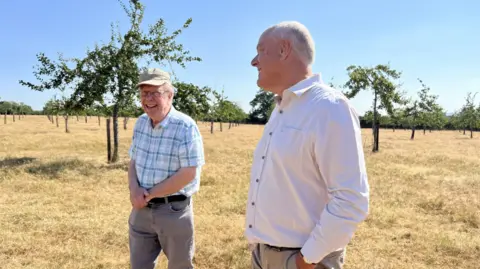
It all came about when the Museum of Cider in Hereford took ownership of several orchards in Breinton, which includes a collection of so-called heritage apple trees with links to the cider-producing Bulmer family.
The collection was the brainchild of the late Gillian Bulmer, who realised the need to preserve varieties of tree - and their fruit - that did not fit with current consumer preference or modern orcharding practice.
Now the collection has been awarded National Plant Collection status by UK conservation body Plant Heritage in recognition of the Malus Cider apple trees.
Such collections are recognised internationally as contributing to plant conservation and biodiversity.
The museum said the recognition would endorse the importance in preserving the heritage cider apple varieties and to help ensure cider fruit can withstand threats including climate change.
The trees are said to contain "material that is currently not backed up" in the UK's National Fruit Collection.
Identity and provenance
Finding, propagating and researching the collection is undertaken by museum volunteer John Teiser, while the orchards are maintained by Rob Uren and Tim Bulmer.
All varieties - which have been collected and grafted from trees across Herefordshire, the wider West Midlands, and the South West - are being genetically tested to help confirm their identity and provenance.
Dr David Marshall, chairman of the trustees of the Museum of Cider said: "Receiving National Plant Collection status is thanks to many years of care by John Teiser and the Museum of Cider's orchard team, led by trustee Chris Fairs, and the vision of Gillian Bulmer.
"It's a major achievement for Herefordshire and reflects its important cider heritage."
Dr Tim Upson, chair of the plants collections committee at the Royal Horticultural Society, said that conserving the UK's unique plant diversity through well-managed collections was vital to ensure the heritage was available for future generations.
"This collection of cider apple trees, now a fully approved Plant Heritage National Plant Collection, makes a key and important contribution to conserving the UK's cultivated plants and apples in particular," he said.
Follow BBC Hereford & Worcester on BBC Sounds, Facebook, X and Instagram.
