Consultant stresses need for sun cream in heatwave

 BBC
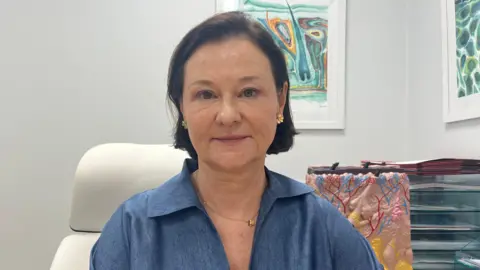
BBCA Jersey consultant has stressed the importance of using sun cream as a protection against skin cancer.
It comes as a sun safety campaign has been released in Jersey in response to the island's skin cancer rates being higher than those in Guernsey and England.
Dermatology consultant Dr Anna Kukula said she was concerned some people do not follow guidance on skin care, with three heatwaves in the island during the last six weeks.
She said: "If people neglect advice about sun protection they sooner or later end up in the dermatology clinic with some sort of precancerous condition or skin cancer."
 EPA
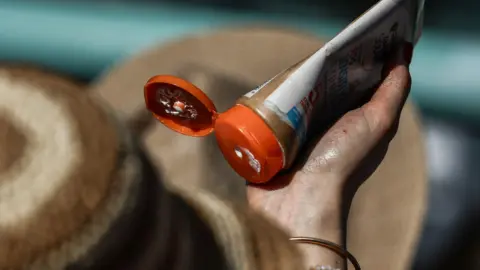
EPAKukula added that if someone is out in the sun without cream "one five minutes can be the tipping point".
"Your skin has the ability to defend the harmful mutations. But at some point, this ability is lost. And it could be this very five minutes which would put our life at risk," she added.
'Sunburn is risk factor'
"Getting sunburned in childhood is one of the risk factors for malignant melanoma", Kukula said.
"I ask my patients if they remember getting sunburned severely in early years of childhood or at teenage years and it counts as a risk factor even if it happened once."
On Tuesday, many people were at St Brelade's bay enjoying the fine weather.
One man, a farmer, said he had never worn sun cream in his life "because I work outside all winter, all summer, and it doesn't bother me".
A student admitted to not wearing it because the aim was to get a tan.
"Just lay there for hours, that's it", they said.

Asked if she wears sun cream, Alex Crianga said: "Rarely, but honestly, most of the time, no. I feel like it just doesn't get you as good of a tan."
Kukula said: "There is no such concept as a safe tan and also I hear a lot of patients believing that their skin is immunised because they spent a lot of time in the sun.
"There is no such thing as a resistance to the sun with time.
"Every exposure to sun leads to damage of the cells and it may not be an acute sunburn but UV radiation which reaches deeper layers of the skin, are particularly harmful.
"It causes skin tanning brown in colour, not red, and this is particularly dangerous."
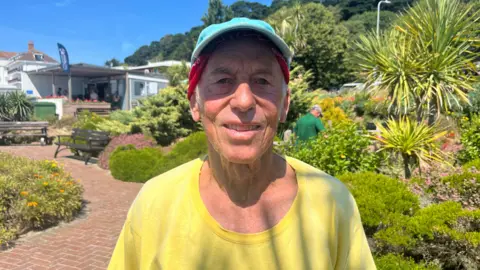
Charley Parker, who goes to the beach each day to do yoga, said: "I always wear a hat when I come out.
"And one day I'll wear shorts and the next day it's long trousers. One day it'll be a short-sleeve t-shirt and the next day it'll be long sleeves. So I'm not exposing the same part of the body twice in two days."
He said he thinks that some people do not follow the advice.
"I see people just arrived here, take their shirt off, white as a seagull and they're sitting facing the sun for three hours. They've got to go home with a slight burn, you know."
Margaret Russell said she wears SPF 50 in both the summer and winter, and always covers up in the sunshine.
Regarding the sun safety campaign she said: "I think it's necessary. I think not enough people wear hats. And babies - you see them without hats and in the sun now."
"Deadly"
Kukula said: "The risk factors for melanoma are getting sunburned with blisters in childhood and overexposure to the sun during sunny hours. So we are doing it to ourselves.
"It's very difficult to reverse the habits in elder patients, but skin cancers, especially melanoma, are quite common in this group."
The consultant explained melanoma was a potentially "deadly skin cancer" that can spread through the lymph nodes to the internal organs, through blood vessels.
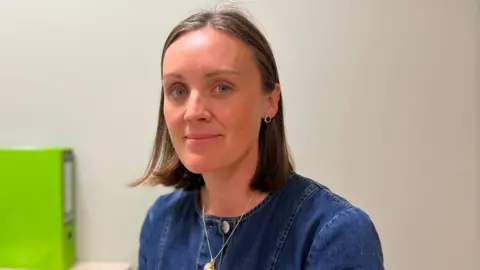
Steph Gibaut, CEO of Macmillan Cancer Support Jersey said it was "really important" to take sun safe steps.
This includes being in shaded areas between 11:00 and 15:00, when the sun is at its peak, wearing sun cream of at least factor 30 when the UV index is 3 or above, and covering up.
She said it was advisable to apply sun cream half an hour before going out and to reapply at least every two hours.
Kukula agreed sun cream should be applied before leaving the house, and every day in the summer: "There is a misconception of using sunscreens when people intend to go to the beach.
"We have to remember that the sun follows us, and it may not be intentional tanning."
Follow BBC Jersey on X and Facebook. Send your story ideas to channel.islands@bbc.co.uk.
