Rail crash passengers are no longer critical

 PA Media
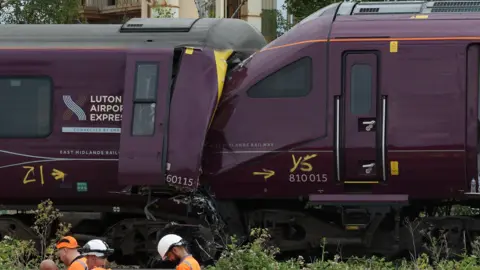
All the passengers taken to hospital after last month's Bedford train crash are out of a critical condition, British Transport Police (BTP) says.
The day after the crash, BTP said nine people had been critically injured, but the most seriously hurt people are improving.
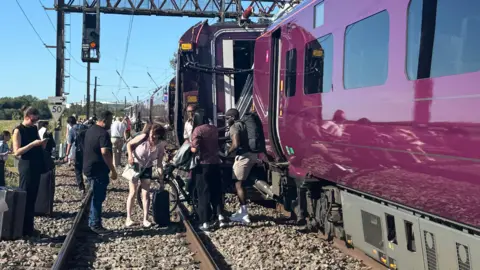
A total of 162 people were hurt and 102 needed hospital treatment after the incident on 19 June, in which train driver Shaun Burton, 60, died.
It happened near Elstow, Bedfordshire, about 2.5 miles south of Bedford and involved two East Midlands Railway trains, travelling from the Midlands to London St Pancras.
 Justin Rivett
An inquest into the death of the driver will open in Ampthill on Tuesday, 14 July.
Burton had previously been a parish and district councillor for The Stukeleys in Cambridgeshire.
More from Beds, Herts and Bucks
The general secretary of train drivers union Aslef said he was "devoted to his colleagues and enormously popular at his depot".
His family said they had been "devastated by his loss" while adding their thoughts were also with the other people affected.
 British Transport Police
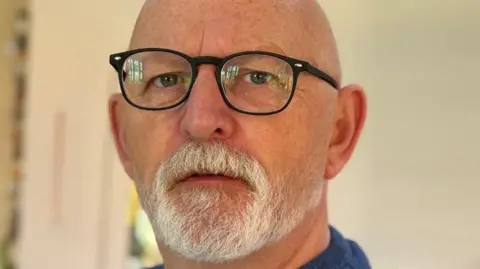
Des Collins, a senior partner at Watford-based Collins Solicitors, said he had represented a number of clients caught up in the Watford, Paddington, Southall and Ladbroke Grove train crashes.
He said Network Rail and Midland Main Line would be putting together "some form of redress" and could be "arguing about this for some time".
He said about 30 people on the train had been in touch with him so far, and their injuries ranged from "minor to horrific fractures".
 Network Rail
The Rail Accident Investigation Branch has published a preliminary report into the incident, although its full investigation remains ongoing.
The Nottingham train came to an unexpected stop near a signal at Elstow after its brakes were applied because of a fault with its Automatic Warning System.
Meanwhile, a four-carriage train was heading to the same destination from Corby.
It left Bedford Railway Station at 17:10 BST and hit the stationary Nottingham service about five minutes later.
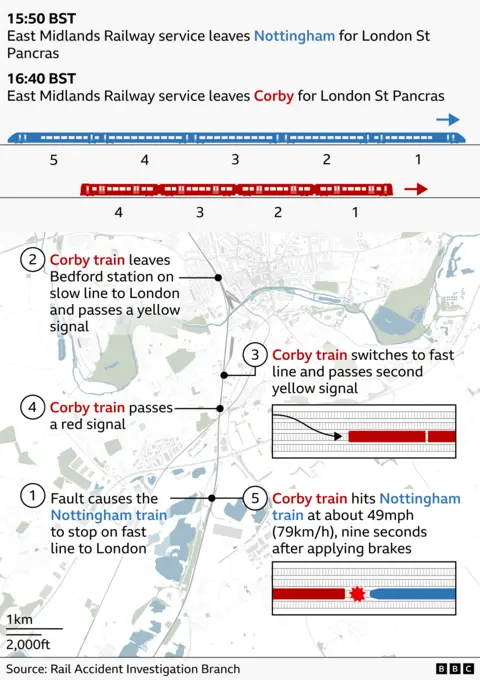
Initial findings showed the Corby service had been travelling at about 76mph (about 120km/h) before its brakes were applied nine seconds before impact.
The maximum speed for trains in the area is between 100mph and 125mph, depending on the type of train.
At the point of impact, the train was travelling at about 50mph.
Prior to the collision it had passed two yellow signals, which warn drivers they should be prepared to stop at a red signal.
It then passed a red signal shortly before hitting the stationary train.
 John Fairhall/BBC
Do you have a story suggestion for Beds, Herts or Bucks? Contact us below.
Follow Beds, Herts and Bucks news on BBC Sounds, Facebook, Instagram and X.
