EU bans gold imports from Sudan to curb money financing conflict

 AFP via Getty Images
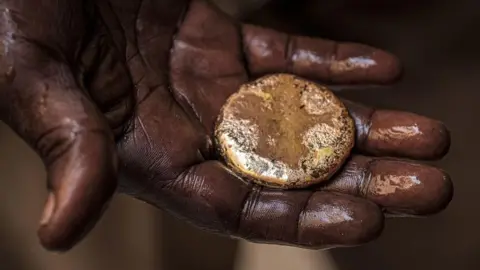
The European Union (EU) has banned the purchase, import and transfer of gold from Sudan, saying the trade has become a key source of financing for the country's civil war that erupted in April 2023.
The conflict between the regular army and the paramilitary Rapid Support Forces (RSF) has triggered one of the world's worst humanitarian crises, forcing more than 14 million people from their homes.
Sudan is one of Africa's largest gold producers and its vast reserves have become a crucial source of revenue for both sides, according to rights groups.
EU foreign ministers approved the measures alongside a ban on exports to Sudan of mercury and cyanide, chemicals widely used in gold mining.
- According to UN experts and other analysts, more than half - and by some estimates as much as 70% - of Sudan's gold is smuggled out of the country each year.
The RSF controls most goldfields in Darfur and Kordofan - in the western and central areas of the country, while the Sudanese army oversees production in northern and eastern regions.
The gold is often trafficked through neighbouring countries, including Egypt, Chad and Libya, before reaching Dubai in the United Arab Emirates (UAE), a major global hub for gold refining and trade.
"Gold has become a key source of revenue sustaining the conflict in Sudan," the EU Council said in a statement, adding that the ban and other restrictions were designed to "reduce the resources" available to those responsible for perpetuating the violence.
"The measures are designed to curb sources of financing for the conflict and further increase pressure on those fuelling the war," it added.
Under the restrictive measures, EU individuals and companies are prohibited from purchasing, importing or transporting gold originating in Sudan.
Mercury and cyanide needed for humanitarian and public-health purposes are not subject to the EU's export ban.
The latest restrictions expand a broader EU sanctions regime that has already targeted individuals and entities accused of fuelling the conflict.
However, experts have warned that sanctions alone are unlikely to halt the trade unless major international gold trading hubs and regional transit routes also tighten enforcement against illicit Sudanese gold.
International pressure has been increasing on the backers of this conflict to disengage as aid agencies estimate that more than 28 million people in Suan are facing acute hunger.
More about the conflict in Sudan from the BBC:

Go to BBCAfrica.com for more news from the African continent.
Follow us on Twitter @BBCAfrica, on Facebook at BBC Africa or on Instagram at bbcafrica
