How messages between two dads helped expose the largest NHS maternity scandal

 BBC
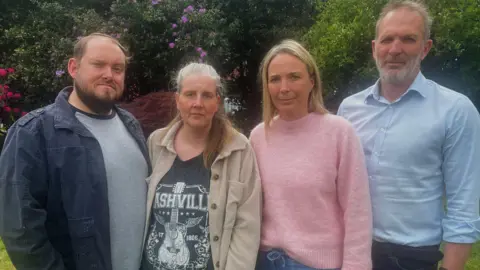
BBCA WhatsApp message from one grieving father to another, and one question: "Do you want to speak?"
Little did he know, but Gary Andrews's decision to contact Dr Jack Hawkins would prove pivotal, playing a crucial part in prompting the largest maternity scandal of its kind in NHS history.
Donna Ockenden's major review of maternity services at Nottingham University Hospitals (NUH) NHS Trust, published on Wednesday, revealed 260 babies died or were seriously injured as a result of "deep-rooted, systemic and sustained" failings.
Before she presented her long-awaited report, the senior midwife paid tribute to a group of families who "came together in harm and in grief" and determined that "what had happened to them should not happen to anyone else".
Ockenden said her review "owes its very existence" to them - with the list of names she read out including Gary, Jack, Sarah Andrews and Sarah Hawkins.
Jack and Sarah Hawkins's daughter Harriet was stillborn at Nottingham City Hospital in April 2016 after intervention was repeatedly delayed.
An initial hospital review found "no obvious fault" and stated Harriet had died of an infection.
But Sarah and Jack - who both worked for the trust as a senior physiotherapist and consultant doctor respectively - did not accept that, and pushed for answers.
An external review into the circumstances surrounding Harriet's care, published in January 2018, identified 13 failings and concluded her death was "almost certainly preventable".
NUH apologised and said major changes would be made.
Ockenden added Harriet's death "was compounded by a systemic cover-up and investigations designed to mislead, which took a profound toll on the couple's wellbeing".
She called Jack and Sarah's campaign "a watershed moment" - and "the patient safety catalyst for the Nottingham maternity review".
Gary and Sarah Andrews's daughter Wynter died 23 minutes after she was delivered by Caesarean section at the Queen's Medical Centre on 15 September 2019 after repeated warning signs of her being in distress had been missed.
Wynter died from a loss of oxygen flow to the brain - which an inquest found could have been prevented had staff delivered her earlier.
Sarah, 41, had been admitted to hospital on 14 September, six days after initially experiencing contractions.
The inquest heard the maternity unit was "busy" when she arrived, with information on the patient's history not properly handed over to other staff at shift changes.
The inquest found Wynter may have survived if "multiple missed opportunities" had been spotted.
In what would become a recurring theme about warning signs being missed, the coroner cited a 2018 letter from midwives to bosses at the trust, outlining concerns over staffing levels as "the cause of a potential disaster".
"The grim predictions... were indeed realised some 10 months later when Wynter died as a result of the unsafe practices warned about," coroner Laurinda Bower said.
The Care Quality Commission (CQC) prosecuted NUH over Wynter's death in January 2023, with the trust pleading guilty to care failures.
The criminal prosecution resulted in NUH being fined £800,000.
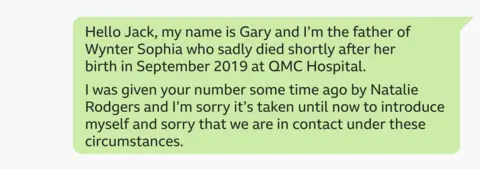
It was weeks after Wynter's death that Gary, 38, decided to reach out to Jack, 57.
He had been reading about what happened to Harriet, and it resonated with his wife's treatment.
Sarah Andrews said: "It was like word for word. You could have changed Harriet's name and put Wynter's name in there and it would have been the same story - left in labour for six days, ignored.
"The only difference was that Wynter had taken a breath and Harriet hadn't, so Harriet was classed as stillborn and Wynter was classed as neonatal death.
"And we were like, 'we need to make contact with this family, we need to speak to them because their experience is so similar to what we've been through'."
Jack quickly replied to Gary's message.
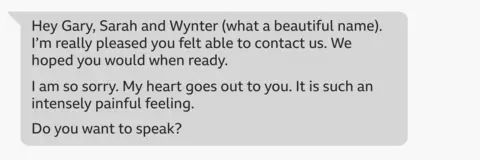
The two sets of parents finding each other was a major moment in the push for the truth.
"I think it was big," said Sarah Andrews.
"[The Hawkins] had been fighting for a long time and they'd been, like many families in Nottingham, isolated, told that it was just one of those things and sometimes these things happen, and made to feel like it was just a one-off.
"But they had been fighting, they've been shouting from the rooftops, they had been trying to get people to listen to them and then suddenly Wynter came along.
"I think Harriet needed Wynter to prove that they hadn't learned and I think Wynter needed Harriet to show that we weren't a one-off."
Sarah Hawkins, 43, added: "It definitely changed things because we knew once we found someone else, we built momentum.
"At the time the trust kept on saying 'sorry for this tragic isolated case', which obviously isolates you on your own."
 Jacob King/PA Wire
Because of the 23 minutes she was alive, Wynter's death was investigated by the coroner.
But, in UK law, the death of a child that is stillborn is not subject to an inquest - something Sarah Hawkins said was "frustrating".
She added: "The hospital staff did such a bad job that she [Harriet] died inside me.
"If they'd done a slightly better job, she would have taken a breath and then there would have been an inquest."
Jack said Wynter's inquest was "key", and added: "If a baby or young child has died of neglect in the care of their family it's a police matter, it's front page stuff.
"So for the coroner to say that a hospital which is saying that it doesn't have any issues, the death of a baby in their care contributed by neglect is massive."
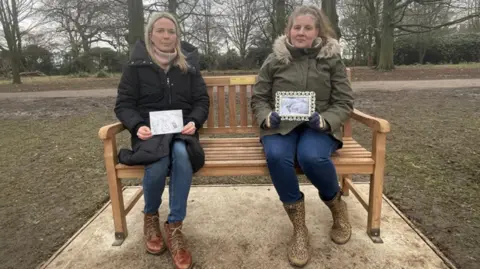
While the CQC's prosecution of NUH pushed ahead, the two couples were working together to make sure more voices were heard.
Sarah Hawkins said: "And then we spent loads of time, Sarah and I, on social media and doing media to try and find other people who were affected.
"We got some and then Kim Errington, who is Teddy's mum, set up a Facebook group and it started off with just a few people and now it's got just shy of 600."
After getting local MPs on board, the group secured a meeting with then-health secretary Sajid Javid.
When a "thematic review" was commissioned, the families campaigned against it, saying it lacked independence and had too narrow a remit.
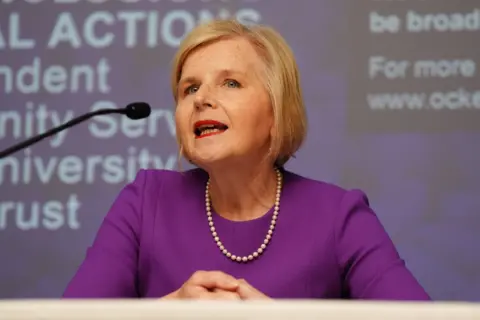
In May 2022, it was then confirmed Ockenden would lead the independent review.
 Jacob King/PA Wire
The following year, it was confirmed it was already the largest review ever carried out in the NHS, with the scope increasing to about 2,500 families.
In February last year, the trust became the first to be prosecuted by the CQC more than once, when it was fined £1.6m for "avoidable failings" connected to the deaths of three other babies in 2021.
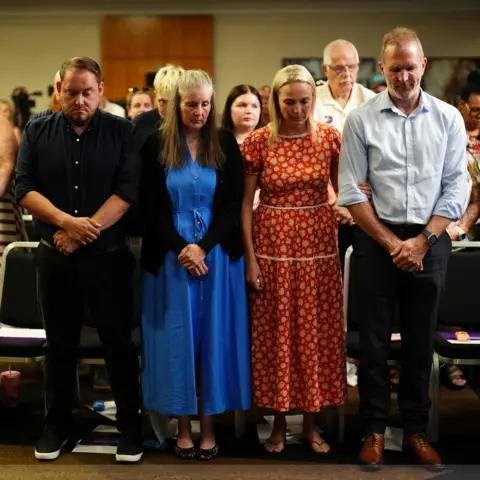
Reflecting on the bond between the families, Sarah Andrews said: "We always say it's a club you don't want to be in, but actually we've made friends that will stick with us for the rest of our lives.
"That's because they're the only other people in this world that understand the pain of losing a child, or living with a child with disability in this situation and it's like there's that 'forever connection' there."
Gary added: "Together our two little girls have hopefully made a difference and other babies won't have died because of them."
 Jacob King/PA Wire
During her review presentation, Ockenden said the service at NUH now was "not where it was, but it is not yet where it needs to be".
In March NUH maternity services were given a "requires improvement" rating following a series of unannounced inspections in May last year.
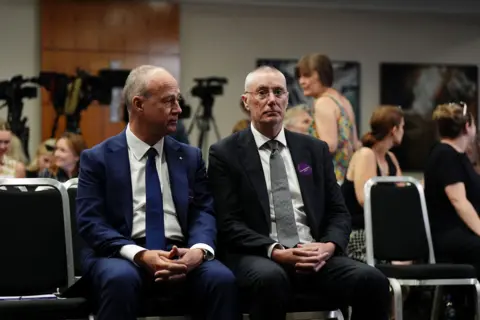
In response to the review, NUH chairman Nick Carver and chief executive May issued an open letter, addressed to "the people and communities of Nottinghamshire".
In it, they apologised "unreservedly to the women and families who have suffered harm, loss, trauma or distress while receiving care in our services".
 Jacob King/PA Wire
The letter added: "We recognise that trust is earned through actions, not words. We know, also, that families and the wider public will judge us not by what we say today, but by what we do next.
"We will work with families on a meaningful apology because we know it is important to them that this is reflective of the findings of the review, and our commitment to lasting improvement."
Overall, Ockenden's review concluded there were "potentially avoidable" outcomes for mothers and babies in 520 cases.
She added: "The families of Nottingham have shown extraordinary courage, dignity and determination in the face of the devastating consequences that continue to mark their lives... their voices must now become the catalyst for lasting national change."
Listen to BBC Radio Nottingham on Sounds and follow BBC Nottingham on Facebook, on X, or on Instagram. Send your story ideas to eastmidsnews@bbc.co.uk or via WhatsApp on 0808 100 2210.
