Charity concerns over changes to ME services

 Getty Images
Changes to the services offered to people with myalgic encephalomyelitis (ME) - also known as chronic fatigue syndrome (CFS) - or Long Covid, are worrying, according to a leading charity.
The ME Association said George Eliot Hospital in Nuneaton had closed its service, while those with Long Covid served by University Hospitals Coventry and Warwickshire NHS Trust (UHCW), were being referred to other care schemes by their local GPs.
Dr Charles Shepherd, the charity's medical advisor, said many patients relying on the support services in Warwickshire were finding out via social media and that in some cases GPs had also been left in the dark.
In a statement, NHS Coventry and Warwickshire Integrated Care Board (ICB), which commissions services, said it had not changed funding packages, but acknowledged that specialist clinics had been stopped.
However, it would not be drawn on what services remained accessible to patients.
Shepherd said up to 6,000 people in Coventry and Warwickshire could be affected by ME and possibly double that number with Long Covid, most of whom, he said would have previously been "fit young adults, economically active, in employment".
"It just doesn't make sense not to have specialist care for them."
What is ME?
ME, or CFS, is a long-term condition that can affect different parts of the body. According to the NHS website, its symptoms include:
- Feeling extremely tired all the time, making daily activities including works and school, difficult
- Sleep problems, including insomnia, sleeping too much and feeling like you have not slept properly and are exhausted when you wake up
- Brain Fog, which causes problems with thinking, concentrating and memory
- Symptoms getting worse after undertaking physical or mental activity and then taking longer than usual to get better
There is no cure for the condition, but treatments include finding ways to manage what energy a patient does have, along with medication to control sleep or pain.
 Google
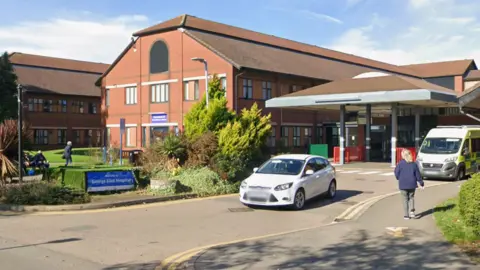
The George Eliot Hospital (GEH) NHS Trust in Nuneaton had held a specialist clinic for patients every Wednesday, but in a statement said it had closed it after an internal review, because of staffing changes.
"Following the loss of the consultant clinical leadership required to safely deliver the service, it was no longer possible to continue, we recognise that this decision will be disappointing for patients," it said.
Shepherd said as a result there was "no satisfactory specialist care for people in the Coventry and Warwickshire area" to meet the level of care recommended in NICE guidelines.
'Lost and worried'
Mum-of-one Natasha Cleveley, from Nuneaton, was diagnosed with ME is 2021 and said the loss of the service at her local hospital was a blow.
"It does leave me lost and worried. New things are coming up all the time and I feel very much on my own with it," she said.
"Obviously, I do what I can, but that's easier said than done."
The ME Association said patients who had been supported by a dedicated care team at UHCW's Rugby's St Cross hospital were also now being sent elsewhere by GPs.
"There are very clear instructions from the Department of Health that these services should be commissioned by the ICBs and to our view, this is a denigration of care by the ICB," Shepherd said.
In a statement, the ICB said it had not changed how the services had been funded, but it acknowledged recent changes meant no specialist clinics were currently operating in Coventry or Warwickshire.
"We are working closely with our local NHS trusts to explore potential options for how ME/CFS services may be delivered moving forwards, with the aim of ensuring all patients in our area have equitable access to these services," it added.
In a statement, UHCW said it understood how important specialist ME/CFS support was.
"We continue to work with the ICB, as service commissioners in Coventry and Warwickshire, to ensure patients can access the right care."
Follow BBC Coventry & Warwickshire on BBC Sounds, Facebook, X and Instagram.
