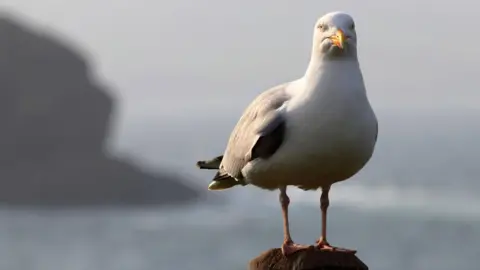
Do you have what it takes to be a town's gull ranger?

 Getty Images
Gull ranger is surely the sort of job title which would catch your eye if you saw it advertised in your local paper.
It is is exactly what a charity set up to protect the habitats and species along the Borders coastline is hoping to appoint to help tackle the "conflict" between humans and the birds.
The Berwickshire Marine Reserve (BMR) - covering the area between the fishing towns of Eyemouth and St Abbs - is looking to fill the position for the summer months.
But why is such a role necessary and what exactly would be expected of a person taking up the post?
 Walter Baxter
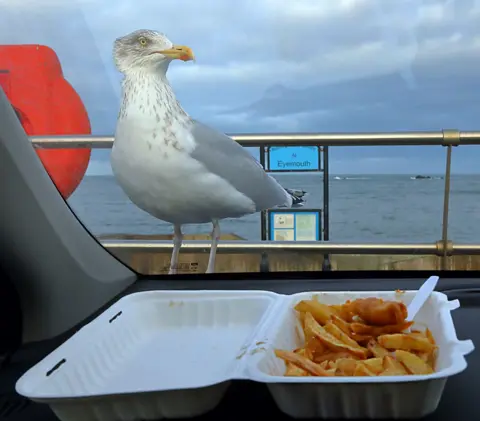
Eyemouth has hit the headlines for its gull issues - in common with a number of other parts of Scotland - in recent years.
In 2024, it was reported a number of children were injured after herring gulls swooped on them in the town.
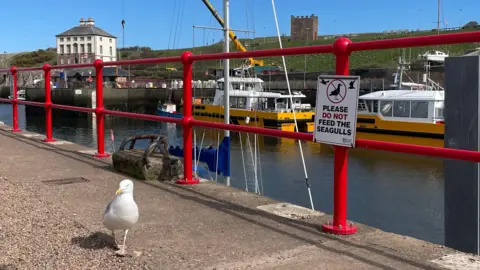
It has been followed by efforts to create a by-law banning the feeding of the birds.
Opinion has been divided over whether that is the best way forward to deal with the issue.
In the meantime, the BMR - a conservation charity - has received funding from Flora and Fauna International to hire a dedicated gull ranger from June to August this year.
"The gull ranger role will primarily be community engagement," explained the BMR's education and engagement officer Lauren Nieuwenhuys.
"The successful candidate will be out and about in the town of Eyemouth and the surrounding areas speaking to locals and visitors about gulls."
They also hope to explain why the birds have moved into urban areas and encourage people to make "small and easy changes to their behaviour" to help avoid conflict.
She said the main examples would be trying to stop people feeding gulls but also disposing of food properly.
 Stephen Craven
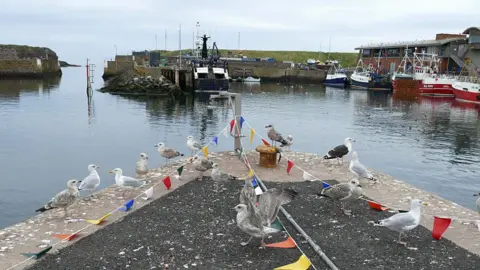
"The ranger will also be conducting citizen science surveys to try to get an accurate picture of the number of gulls nesting in Eyemouth town, and to identify any hotspots of gull activity," she added.
"There have been a number of incidents over the last few years in Eyemouth, where gulls have taken food from people and on occasion caused injury.
"This has quickly become not only a local issue but is widely discussed and reported nationally and has become a talking point for politicians."
She said the conversation could sometimes become "quite heated" between those who advocate conservation and those who "see them as a pest".
"Through the gull ranger position and wider project, we hope to raise awareness and change perceptions of gulls, finding solutions to allow us to live alongside this iconic coastal bird," she added.
 BMR
BMRThe job advert has already provoked some tongue-in-cheek comments on social media.
"If that's a position for just one person, are we allowed to call them The Lone Ranger?" asked Euan Gibson.
Another inquired if you could expect a "gull-den handshake" when you left the position.
Karen McKone, who lives in nearby Ayton but grew up in Eyemouth, regularly deals with injured birds in the area.
She welcomed the creation of the new post.
"I was very happy to hear that this has been funded," she said.
"I feel educating the community on gull behaviour can have a positive impact on the welfare of the gulls and the awareness of the general public on how best to deal with the nesting season and summer months when footfall is higher."
