Failings 'probably contributed' to girl's death

 Family handout
Warning: This story contains details of suicide and self-harm.
Failings by a specialist child and adolescent mental health unit "probably contributed" to the death of a 17-year-old girl in its care, an inquest has found.
Lucy Curtis died in hospital on 1 January 2024, five days after being found unresponsive at Riverside Adolescent Unit at Bristol's Blackberry Hill Hospital, which closed weeks later.
Delivering a narrative conclusion on Friday, the jury at Avon Coroner's Court also found delays in getting specialist mental health support also "possibly contributed" to Lucy's death.
Lucy's parents said they believe her death was "preventable and avoidable" and she would still be alive had concerns about her care been acted upon sooner.
Barry and Michelle Curtis added Lucy was a "bright, kind and high-achieving" teenager, and it was a "shock" when she began to struggle with her mental health in early 2023.
In an exclusive interview with the BBC, Barry said his daughter "did everything that a 16-year-old at that point should really be doing".
"She was reaching out for help and looking for support," he said.
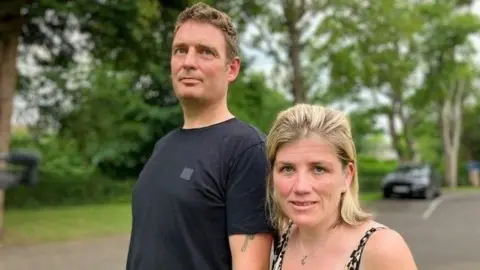
The couple said Lucy was referred to Child and Adolescent Mental Health Services (CAHMS) but did not meet the threshold for treatment.
Instead, she was signposted to a counselling service with a lengthy waiting list, which Barry described as "a gatekeeping service from children that needed it".
An independent review of Lucy's broader care found her GP first referred her to CAHMS in January 2023, noting growing concerns about her deteriorating mental health, but the referral was declined.
Michelle said: "We feel that a lack of early intervention really meant that Lucy didn't receive a service from CAHMS until she was actively suicidal."
'She wanted to recover'
Lucy was admitted voluntarily to Wessex House, a specialist adolescent mental health unit in Somerset, in August 2023.
Her mother said Lucy's "brave" decision reflected that "she wanted help and wanted to recover".
But Barry and Michelle said they were not fully aware of the risks associated with in-patient admissions.
The independent review reported that while Lucy was at the unit, her self-harm escalated and she repeatedly expressed suicidal intent.
She was assessed under the Mental Health Act twice before she was discharged in November 2023.
But her parents said they remained concerned about the decision to send Lucy home.
Michelle said some clinicians believed Lucy needed to stay in the unit, while others felt it became harmful to her.
"[Lucy] felt that she needed to remain in hospital and she didn't feel that she could keep herself safe in the community," she said.
The inquest jury found that Lucy being discharged from Wessex House, which later closed down in October 2025, was a turning point and possibly contributed to her death.
Death was 'preventable'
Lucy was admitted voluntarily to the Riverside on 12 December 2023 after further incidents at home.
Her father had told the inquest he had raised concerns about an item in her possession that she may use to harm herself.
Lucy's parents also questioned the observations carried out on her ward on 27 December 2023, the morning she was found unresponsive, and raised concerns about the emergency response at the unit.
The inquest heard that Lucy was seen at 10:20 GMT, but then not again until 23 minutes later at 10:43, despite being on 15-minute observations.
Michelle Curtis said: "Had the observation happened within 15 minutes, the outcome could have been very different for Lucy.
"I feel that Lucy's death was preventable and avoidable."
"That is both within Riverside, but also the bigger picture around the lack of early intervention."
'No further recommendations'
The jury found that the Riverside Adolescent Unit's failures to recognise her increasing self harm and observe her accordingly "probably contributed" to her death.
It also concluded the failure to adhere to the 15-minute observation and delays in delivering emergency treatment until paramedics arrived possibly contributed to her death.
Dr Michelle Cox, director of Avon and Wiltshire Mental Health Partnership, told the inquest the Riverside closed because it was not safe following Lucy's death and other patient safety incidents.
Area Coroner for Avon Peter Harrowing accepted the trust had learned lessons from Lucy's death by acting upon independent reviews and was satisfied he did not need to make further recommendations.
"I heard from Dr Cox many of those recommendations have been addressed and work is ongoing to address and make improvements," he told the court.
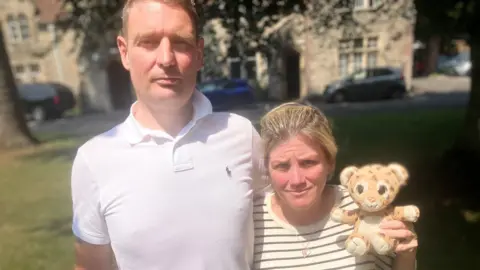
Throughout the inquest, the couple carried one of Lucy's teddy bears into court, which she had while in hospital.
Barry added that Lucy was an "integral" member of the family who was "the kindest, most caring young person that would do absolutely anything for anyone".
"She was just a real joy to parent."
If you have been affected by any of the issues raised in this story, information and support can be found at the BBC's Action Line.
Follow BBC Bristol on Facebook, X and Instagram. Send your story ideas to us on email or via WhatsApp on 0800 313 4630.
