Government approves £220m flood alleviation scheme

 BBC
BBCThe government has approved the business case for a project designed to reduce the risk of flooding in Oxford.
The Oxford Flood Alleviation Scheme was initially expected to cost £176m, but the Environment Agency (EA) said it had agreed to a £220m deal with contractor GRAHAM.
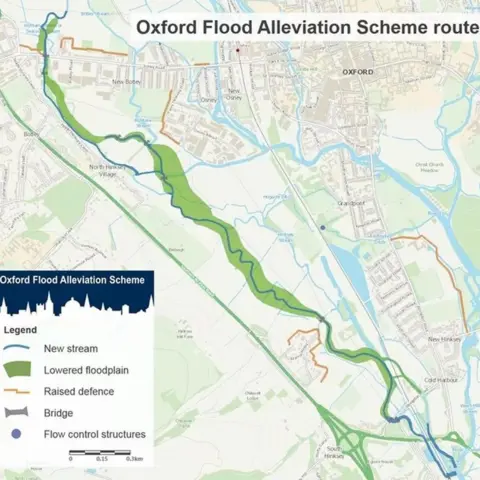
It will create a new route for floodwater west of Oxford, storing it in deepened flood meadows and keeping it away from at-risk areas like Botley and Abingdon Road.
The EA blamed inflation for the increased cost, but said the benefits of reducing flooding will mean a return of £9 for every £1 spent on it.

Jon Mansbridge, flood risk manager at the EA, said the aim of the new 5km-long floodwater route would be to reduce the risk from the River Thames to homes in Oxford.
He also said the project would result in the creation of 40 hectares of new wildflower meadows and see the planting of 17,000 trees.
Flooding has been a regular problem for parts of Oxford for many years, with about 250 homes evacuated in both 2003 and 2007.
Roads also becoming impassable in 2014 and as recently as February 2026.
 EA
EAHinksey and Osney Environment Group member Brian Durham lives in the Oxford flood plain and said he was frustrated by the lack of clarity around the plan.
He also said it would be "needlessly slow" to generate benefits in practice.
The EA also had not made clear an "elegant alternative" to the work required at the Kennington Bridge, he added.
The agency said over the next few months it would bring its plans together and then publish timescales and plans for construction.
The work is expected to take between three and five years to complete and should start in early 2027, once final planning consents have been met.
You can follow BBC Oxfordshire on Facebook, X (Twitter), or Instagram.
