GWR public ownership 'reunites track and train'

 BBC
BBCThe south west of England's biggest rail company needs to be renationalised for services to improve, experts and politicians have said.
The government confirmed on Friday a decision to take Great Western Railway (GWR) back into public ownership on 13 December when its contract with the Department for Transport ends.
GWR, which is based in Swindon, runs services linking London to south-west England and south Wales.
Andrew Bowes-Roden, the Cornwall-based deputy editor of Modern Railways Magazine, said reintegration allowed "coherent balanced decisions", whereas opponents of the decision said it made government accountability "virtually non-existent".
Bowes-Roden said the ownership issue was less important than the change possibly being able to improve coordination.
He said: "I think what we're seeing is less improvements from a change of ownership from private to public, and more improvements due to the fact that track and train are being reintegrated together.
"What that means is that the railway can make really coherent, balanced decisions about how to run its services, how to plan its maintenance and so on.
"So, Great Western integrated with Network Rail Western should deliver a better performing, more reliable railway."
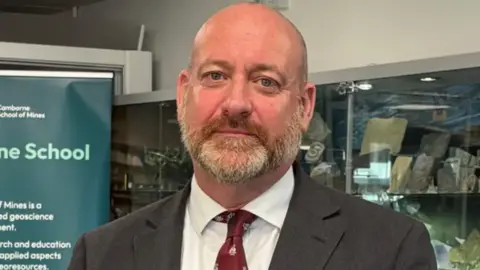
Perran Moon, Labour MP for Camborne, Redruth and Hayle, said: "An absolutely core policy commitment in the General Election Labour Party manifesto was the setting up of GB Rail and renationalising of the train operating companies.
"Privatisation of our railways was a fundamentally flawed policy and I'm pretty sure this renationalisation will be welcomed, not only by those that use GWR, but also the many people that work on our trains too."
Rebecca Smith, the Conservative MP for South West Devon, said: "I remain incredibly sceptical about the impact this is going to have because the government haven't actually got the detail in place yet."
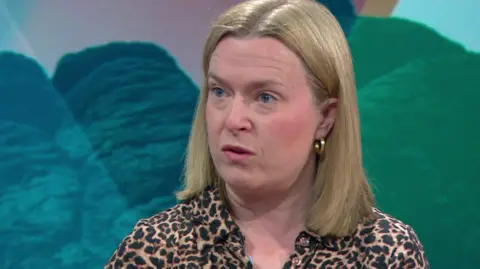
Smith, who also sits on the House of Commons Transport Committee, said it would be hard to "hold the government to account".
She said: "Accountability is going to be virtually non-existent because everything's going to be run by regional business units that are not elected.
"So, if we don't see enhancements to services, we're not going to be able as voters or as elected politicians to hold Great Western Railway to account."
Richard Foord, the Liberal Democrat MP for Honiton and Sidmouth said: "The proof of the rail service will be in the journey.
"Public or private, people want trains that are efficient and punctual.
"That will be the test that we Liberal Democrats and other passengers will apply to the nationalised service."
A Department for Transport spokesperson said: "This is another significant moment for the government's flagship public ownership programme and brings a simpler, more reliable network under Great British Railway a step closer.
"The government is delivering on its commitment to bring services back into public ownership and put passengers, not shareholders, at the heart of our railways."
Correction 12 May 2026: In an earlier version of this story the headline stated: Public ownership of GWR is 'absolutely critical'. This has been amended to say GWR public ownership 'reunites track and train'. We have removed the reference to 'absolutely critical' as this comment from Andrew Bowes-Roden's was in relation to a different rail project and our article had incorrectly connected this quote to the move to renationalise GWR. We have also updated the article to reflect Bowes-Roden's comments that reintegration allowed "coherent balanced decisions".
