'We've lost £200k to Dover Citadel entrepreneur'

 Michael Keohan/BBC
Two men who invested £200,000 into a start-up business owned by an entrepreneur who planned to redevelop the Dover Citadel say they fear they will never see their money again.
The pair put their cash into a building technology company called System de Min, owned by David de Min, the director of Dover Citadel Ltd.
One of the creditors, who has begun bankruptcy proceedings against de Min to try to recover his money, said the situation was "heartbreaking" because they had "trusted someone".
But de Min's lawyers said their client had been the victim of a scam which had left him and investors with "an empty shell" of a business, and that he did not "personally owe any money to the investor".
When System de Min was created as a limited company in 2022, de Min began to secure early investment for his construction technology business.
In 2024, WhatsApp messages seen by the BBC between de Min and the investor, who wishes to remain anonymous, reveal the pair had a good rapport and both seemed excited about the project.
The entrepreneur told the man he had been offered "€40m from the Spanish government" to build a factory, "approval" from "one of the biggest families in Europe putting in £10m with a few others", and an offer of £5m from a "big investor in Monaco".
'Shafted out of £50k'
The individual, who had already put £100,000 into System de Min, said he gave the business a further loan of £50,000 after de Min told him he would get the additional money back "within one to two months" with a "20% top up".
After that period had expired the man began to ask for his loan and the profit to be returned. At first de Min promised that would happen, but later stopped replying to messages.
The investor messaged de Min to ask: "Are you not the slightest ashamed and disgusted just stealing my money and my family's money?"
De Min told the BBC communication became more limited while disputes with former collaborators in his business escalated, and he dealt with his own serious health issues.
His legal representatives said their client had "never dishonestly induced [the individual] to invest in or give a loan to System de Min" and the "sophisticated investor" would have known, or be expected to have known, that without formal documents the talks with third parties were "nothing more than potential".
The lawyers added that former collaborators in the project had "unlawfully transferred the business and intellectual property assets of System de Min to a new company" not in their client's name.
They said the investor's loan had been made to System de Min, the company, not Mr de Min personally.
"Notwithstanding that our client did not give any personal guarantee over the loan, [the investor] issued a statutory demand for repayment of the loan to our client, not System de Min, while our client was in hospital," they said.
Messages seen by the BBC show de Min paid the investor £1,000 in January 2026, but bankruptcy proceedings are still being pursued.
 David De Min
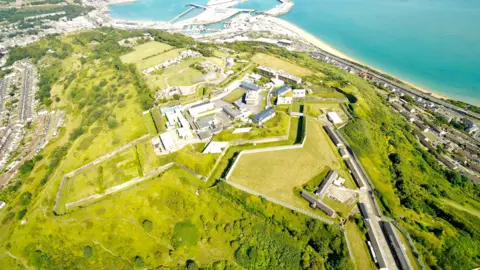
Two years before System de Min was incorporated, Dover Citadel Ltd bought the town's 250-year-old Napoleonic fort from the Ministry of Defence for £1.8m.
Plans for the historical site which overlooks the English Channel included a five-star hotel and innovation park with leisure, cultural, hospitality and residential uses to be completed in phases.
Another investor, who we are calling Paul because he's concerned identification may lead to reputational damage, said he signed contracts and put £50,000 into System de Min after he visited the Citadel site and heard discussions about "hundreds and hundreds of millions" to be spent there.
"It was very, very interesting," he said. "[De Min] was saying as well he was meeting leaders of countries. You believed in what he was saying because he was a good show."
But little of the planned redevelopment was completed and in 2024 the site was put back on the market at an asking price of £11m.
 Charlie Rose/BBC
At the time de Min told the BBC having to sell the project had been "soul-destroying".
He added: "I've invested friends, family and my money into this site. It's such a complex site; we've had to take time to get things right."
A grant of £1.85m from the government's Getting Building Fund was awarded to the project. De Min said the grant was overseen by cost consultants, with every pound "monitored and accounted for".
A number of contractors say they carried out work at the Citadel site but haven't been paid. Shane Manogue, the owner of a construction and maintenance company, claims he is owed at least £20,000 and said he "rues the day" he met de Min.
De Min said payments to contractors had been delayed amid the wider financial situation surrounding the Citadel development, including the ongoing receivership, but "legitimate contractor costs" would be "addressed".
The Citadel was sold in 2026 for a sum believed to be £1.15m.
'I try to forget about it'
Paul, who also works in building and construction, said with hindsight the offer of investing in System de Min seemed too good to be true and he felt he had been "shafted" out of his £50,000.
"I try and forget about it to be honest," he said. "I try to blank it out of my mind."
In a statement de Min said the £50,000 was used "for the development of the construction technology project and related business activities," which is now the subject of disputes and legal proceedings involving former partners and collaborators.
"Some of the individuals making allegations against me are directly involved in those disputes, or have competing interests in the technology and businesses concerned, and their claims should therefore be understood within that broader context," he said.
"My intention has always been to resolve the situation properly."
De Min said he remained committed to ensuring investors who supported the project were treated fairly once the underlying disputes had been addressed.
Financial expert Susannah Streeter said people thinking of investing in any start-up business should be wary about promises of big returns over a short period.
"Investing should be for the longer term and any scheme that is promising lofty returns should be really scrutinised and analysed," she said.
Follow BBC Kent on Facebook, on X, and on Instagram. Send your story ideas to southeasttoday@bbc.co.uk or WhatsApp us on 08081 002250.
