'I sent eight letters': Drivers hope for payout from car finance redress scheme

 Poppy Whiteside
Drivers have told the BBC about their hopes to finally be paid compensation for mis-sold car finance.
The Financial Conduct Authority (FCA) has revealed how around 40% of those who took out a car loan between April 2007 and November 2024 could be entitled to redress and has set out how those people can claim.
The regulator has said millions should receive payment this year.
One of those who believes she is owed money from her car finance provider is Poppy Whiteside from Kent.
"They've made me jump through hoops," the senior data analyst for the NHS says. "I must have sent seven or eight letters. And they kept asking for the same details over and over again."
Like the vast majority of motorists in the UK, Poppy has always bought cars on finance.
After reading in 2024 that millions of drivers may have been mis-sold car finance, she decided to make a claim on the Ford Fiesta she bought in 2018.
She says her provider eventually admitted there was a discretionary commission arrangement (DCA) on her car loan that she was not told about at the time. This is when car dealers receive commission from lenders, based on the interest rate charged to the customer.
The FCA banned DCAs in 2021, arguing they provide an incentive for a buyer to be charged a higher-than-necessary interest rate, leaving them paying too much.
It has confirmed in its redress scheme that drivers who were sold agreements with a DCA and not told about it are entitled to compensation.
Consumers will also be considered for compensation if they were not told about two other arrangements between the lender and the car dealer.
These are:
- a high commission arrangement where at least 39% of the total cost of credit, including interest and fees, and 10% of the loan was paid to the dealer
- contractual ties that gave a car finance lender exclusivity or the right of first refusal
However, there are some exceptions where the FCA may consider cases fair even if any of the above applies.
The FCA said it believes 12 million people will be entitled to compensation, down from an earlier estimate of 14 million, with an average payout of £829 each.
The share price of some banks rose after the number of people eligible for compensation ended up lower than expected.
Shares of Close Brothers, a leading provider of car finance, rose by 2.8%, while shares in Lloyds were 1.1% higher on Monday morning.
Both banks, as well as the Bank of Ireland, said they were assessing the financial impact of the FCA ruling.
The Finance and Leasing Association (FLA), which represents the industry, said the scheme was too broad, but consumer rights group Consumer Voice said the scheme did not go far enough.
The FCA's scheme could still be challenged by lenders and lawyers.
Money would be a 'lifeline'
 Gray Davis
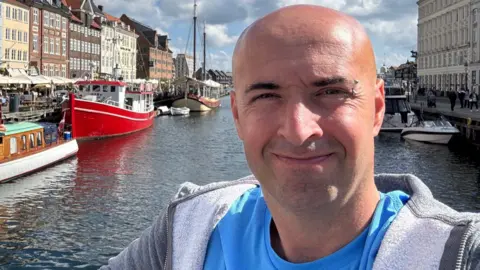
Gray Davis says he usually avoids car finance, but says his seller told him that if he used a hire purchase agreement to buy a black convertible Renault Megan – his "dream car" – in 2008 that £500 would be knocked off the final price.
He says he paid off the loan in full after three months. It wasn't until 2024 that he says he realised he had been "ripped off".
"When this came out in the news, I realised 'that's me'," he recalls.
Like Poppy, he says the process has been dragged out with his provider not providing any updates beyond generic emails every 28 days.
He says the money would be a "lifeline" for his wife and two children as he is currently out of work after falling ill last year.
"At some point, I will see that money, but I don't know when. And I could do with it now," he says.
'I realised I'd been hoodwinked'
The FCA says its centralised redress scheme means borrowers can be paid out for free without the need to go to the courts.
Under this scheme, the FCA says borrowers should file a claim with their lender directly.
However, some borrowers have opted to use claims management firms or lawyers to handle their claims. FCA does not recommend this option and it is not free – with the lawyer or claims management company often taking a cut of the compensation.
Its chief executive Nikhil Rathi told the BBC's Today programme there are "many law firms out there who would like to get 30% of any compensation", stressing that the regulator's scheme was "free to use" for consumers.
The FCA has also warned motorists to be on the alert for scammers posing as car finance lenders offering fake compensation.
Law firms and claims management companies have said they can get borrowers a bigger payout than using the FCA scheme, but the FCA says there is no good evidence of this.
Michael Waller, from Bexley, bought two cars on finance a decade or more ago. He is someone using a law firm instead of the FCA scheme.
"I bought them basically for my job which was as a salesman. I went all over the country doing tens of thousands of miles in both of them.
"Years on I've realised that in both cases, I've been hoodwinked."
He no longer had the paperwork, so made a claim through Courmacs Legal, a law firm representing more than a million drivers.
He argued that the principle, rather than the money, meant he wanted to take his case through the courts, rather than using the FCA scheme.
Additional reporting by Kevin Peachey, Alex Akhurst and Bernadette McCague
