Gherkin architects on trial over 2018 window death

 PA
PAA leading architecture firm has been accused in court of ignoring "foreseeable risks" after a man was struck by a falling window pane and killed instantly.
Foster + Partners is charged with "failing to discharge a duty" under the Health and Safety at Work Act 1974. The trial began on Tuesday at Inner London Crown Court.
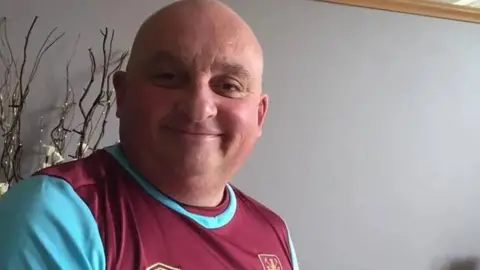
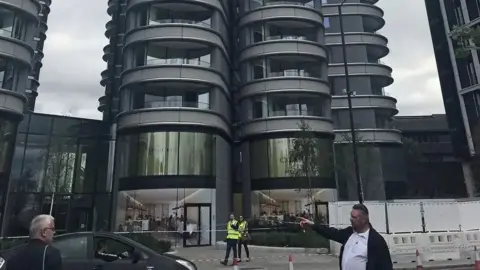
Coach driver Mick Ferris, 53, was hit by the glass as he returned to his coach on the Albert Embankment in Vauxhall, central London, on 2 October 2018.
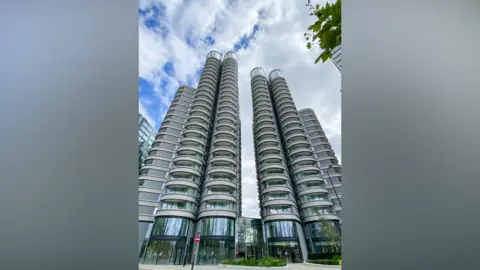
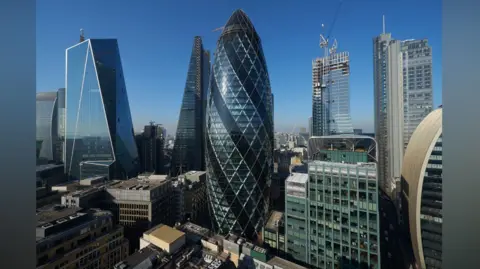
The window fell from the penthouse of The Corniche, a luxury tower block designed by Foster + Partners, which was also responsible for the Gherkin building in the City of London.
 PA
PAFerris, who worked for Clarkes Of London, had parked opposite the building.
The window pane, which weighed 130kg and was roughly 85cm wide and 190cm tall, fell around 300ft and killed Ferris on impact.
Three other companies involved in the development, Lindner Prater Ltd, Wintech Ltd and St James Group Ltd, face the same charges.
All four are accused of exposing people, including Ferris, to a health and safety risk in relation to "the outward opening penthouse window vents".
The Corniche, which is on the south bank of the Thames opposite Tate Britain, contains 252 apartments.
 Getty Images
Prosecuting, Gordon Menzies said: "Originally these windows had been designed to open inwards, an approach that the pros say is safe and simple – however the design was changed from inward opening to outward opening.
"The prosecution's case is that the final design of these windows was not safe, and because of the design there was a serious risk that a gust of wind could prise them off their hinges."
The design meant that the outward facing windows were held in place by a single metal "restrictor" attached to the window, the court heard.
"It had no effective failsafe, no reliable backup, there were many things that could go wrong with the restrictors and if they did, consequences could be catastrophic," said Menzies.
Menzies said Foster + Partners and St James Group Ltd were likely to disagree about who made the decision to have outward facing windows.
Jurors were told that after the first window panel fell from the building and "miraculously no-one was killed or injured" on 18 August 2017, the developers failed to use the incident as a reason to "go back to the drawing board".
 Getty Images
Menzies said construction workers were told "not to open the windows at all" and small written warnings were put up next to the windows for residents.
"Effectively the designers were hoping the residents would not forget to close their windows," said Menzies.
It was not until after Ferris's death that the design was revisited, and returned to using inward opening windows.
Prosecutors added that glass covered buildings were "something of a speciality" for Fosters + Partners.
The firm, founded in 1967 by renowned architect Lord Foster of Thames Bank, also designed the new Wembley Stadium, the Millennium Bridge in central London, Canary Wharf Tube station and London City Hall.
The trial continues.
Listen to the best of BBC Radio London on Sounds and follow BBC London on Facebook, X and Instagram. Send your story ideas to hello.bbclondon@bbc.co.uk
