In the age of streaming, it can feel like there are more TV series and films released every year than we could ever have time to watch, never mind from past years.
What would you think if there were episodes of your most-loved show or films made by your favourite director which were unavailable to watch… because they no longer exist in any form?
Believe it or not, this isn't hypothetical. There are huge amounts of vintage TV programmes, and films from the early days of cinema, which are lost and non-existent. Join BBC Bitesize as we delve into the sad but fascinating history of lost media.
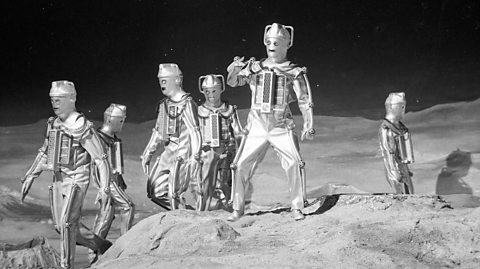 Image source, BBC
Why were TV series wiped or lost?

The early days of television were pioneering and experimental. But archiving and preservation were not prioritised.
This may seem strange given the cultural impact of TV as a medium in the 20th century. However many early viewers saw TV as an extension of theatre, where each performance is fleeting and unique. A lot of early broadcasts were live transmissions.
There wasn’t the same expectation to repeat and rewatch programmes - the BBC, for example, wasn’t legally required to keep an archive until 1981.
There were also numerous practical reasons why early TV material was not retained, as this BBC Archives article explains - which included:
- It was expensive to record television. The tapes used would cost the equivalent of up to £2,000 each at today’s prices. To save money, tapes were wiped so new programmes could be recorded over them.
- Views on repeats and commercial value changed. Until 1964 there were only two TV channels and until 1982 only three, so there wasn’t the same need to fill schedules with repeats. When broadcasts switched to colour, older black and white programmes were perceived by some as less valuable.
- Contracts and copyright. Actors, writers, musicians and other contributors retain rights, which adds to costs for broadcasters re-using programmes.
- Space and operations. The physical storage space required to house an archive was sometimes prohibitive. Sometimes only one copy of a programme was kept, exposing material to the risk of accidental damage or loss.
Terms like ‘junking’, ‘wiping’ and ‘scrapping’ are used to describe this process, demonstrating the strength of feeling among vintage television fans.
While the particular combination of factors described above is understandable in context, the result is gaps in the archive for beloved series like Dad’s Army, The Likely Lads, Top of the Pops; pioneering soap operas like Crossroads and Emergency Ward 10; and significant programming like the UK coverage of the first moon landing, or the 1963 BBC play Madhouse on Castle Street, which starred a pre-fame Bob Dylan.
What are the missing episodes of Doctor Who?
Doctor Who is the perfect case study for this topic. It’s one of the UK’s best known and most-watched entertainment franchises. And yet new fans are unable to watch every single episode produced by the series… which is disappointing for the completists among us!
Who fans had some good news recently as two episodes missing from the archives since 1965 were discovered in a private film collection. The episodes, parts one and three of the epic serial The Daleks’ Master Plan, will be released on BBC iPlayer on Friday 3 April 2026 for UK viewers to enjoy.
This brings the number of Doctor Who missing episodes down to 95, out of 253 produced in the 1960s. Still a significant amount, but a count that continues to shrink as material is found in a variety of places: foreign TV stations where the show was screened; in film collections as far away as New Zealand; and, believe it or not, in the basement of a Mormon church.
Even the still-missing episodes have something to offer Doctor Who fans. Early viewers placed tape recorders next to, or even wired into, their television sets, meaning audio recordings exist for every broadcast story. These have been synced with specially commissioned animations and photographic slideshows to reconstruct the original stories.
Some fans are even experimenting with AI to recapture the lost magic - though as with all uses of AI, this comes with ethical considerations.
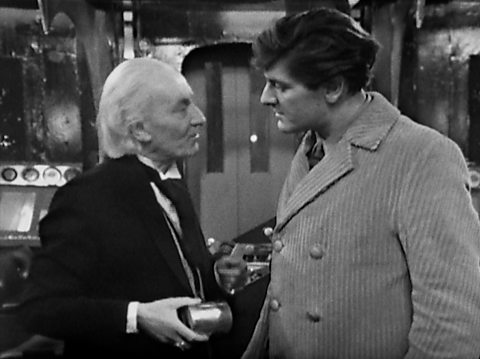 Image source, BBC
How many early films are lost?
It’s not only television with missing material. Silent movies were hugely popular in the 1910s and 1920s, before the development of 'the talkies'.
Estimates vary but it's thought over 70% of silent era films no longer exist and around half of the earliest films with sound.
Some of the same factors with television were in play for cinema. The longer-term cultural impact of this art was not appreciated.
Additionally, the physical materials used to film many of these early movies were highly flammable. A series of fires in the vaults of Hollywood studios led to the permanent loss of huge amounts of cinema history.
What are the most wanted missing films?

The British Film Institute publishes a list of their most wanted missing films. The list includes A Study in Scarlet (1914), the first British feature adaptation of a Sherlock Holmes story, and The Mountain Eagle (1926), the second film by acclaimed director Alfred Hitchcock.
Other renowned lost films include London After Midnight (1927), a silent vampire film described as "the ‘holy grail’ of film collectors", and Hollywood (1923), a comedy with cameos by stars of the time like Charlie Chaplin, Gloria Swanson and 'Fatty' Arbuckle.
These lists show that lost media affected even the highest profile directors and actors working in the film industry.
It's not just completely missing films which fascinate cinema buffs. The Magnificent Ambersons (1942) was written and directed by Orson Welles as the follow-up to his groundbreaking debut Citizen Kane (1941). The production studio chopped almost an hour of material from Welles' intended 135-minute version without consulting the director, and the cut material was not retained.
The surviving film is still considered a classic, but film historians dream that one day the cut material may be found, enabling the film to be reassembled as the director originally wanted.
What is Metropolis (1927) and how was it restored?
The silent science fiction film Metropolis was released in 1927, directed by famed filmmaker Fritz Lang as part of the German expressionist movement.
Praised at the time for its grand, striking and stylish visuals, now named by the BFI's Sight and Sound magazine as the 67th greatest film of all time, Metropolis remains incomplete, although the situation has improved.
All copies of the original film edit were thought to be lost. Then in 2008, eighty years after its first release, a 16mm print of the original cut was discovered in a museum in Buenos Aires, Argentina.
This print was not in great condition but it does contain many scenes that were previously missing, enabling the film to be restored to something close to its intended composition. Watching this version can be jarring as the footage jumps back and forth between pristine quality and grainy, scratchy visuals. This in itself is an interesting example of the challenges faced when preserving vintage media.

What does 'lost media' really mean?
There is no formal definition of the term 'lost media' and there are debates around what qualifies. Any episode of a series or film which is not downloadable or available on streaming services might be considered functionally 'lost', as it is inaccessible to fans or newcomers.
Some aficionados of vintage media have interpreted this as millennials or Gen Z misunderstanding the limitations of physical records dating from a time before their memory.
However this debate raises other important considerations around archiving in the digital era. For example, what happens to digital-only video game releases when hosts upgrade and shut down older stores or servers? Could we be entering another age of media loss?
What should I do if I find missing film or TV material?
Discoveries of missing film and TV are rare. That's not to say it's impossible, as we've seen, footage sometimes turns up in unlikely or unexpected places!
If you think you've found something rare, a good first step would be to contact the BBC Archives or the BFI National Archivists.
The recent Doctor Who missing episodes discovery was made by the charity Film is Fabulous! who work with film collectors and their families to preserve collections for future generations.
Where can I read more about film and television?
Films and cinema
- GCSE Media Studies: Film
- GCSE Moving Image Arts: Film language and techniques
- Which classic stories were these modern films inspired by?
- 'Based on true story' films that aren't actually accurate
Television
- GCSE Media Studies: Film
- The fascinating history of TV
- Four memorable continuity mistakes in TV and film
Doctor Who
