In a world of almost constant cinema releases and on-demand platforms, it can be hard to imagine. But a surprising number of films aren’t available to view anywhere.
Some are quite literally lost – every print of the film having been misplaced or disintegrated.
In other cases, the owner might not want them seen for some reason, or the studio released a version of the film that they had edited against the director’s wishes, leaving the original ‘director’s cut’ lost.
Here are five of the most talked-about films that have gone missing in action.
A Study in Scarlet (George Pearson, 1914)
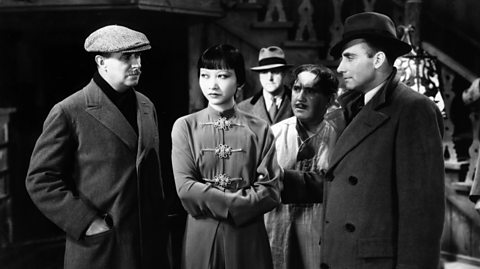
A Study in Scarlet was the world’s first ever Sherlock Holmes feature film. It was an adaptation of a story of the same name, which was also the first story to feature Sherlock Holmes and Dr Watson.
Directed in 1914 by silent film director George Pearson, it tells the story of a murder in a Mormon community in America, which is skilfully solved by the legendary detective duo. The person who starred as Sherlock Holmes, James Bragington, was actually not an actor at all, but one of the employees of the manufacturing company producing the film.
The adaptation of A Study in Scarlet was authorised by Sir Conan Doyle himself, but the film was lost soon after its release. It is believed the film was recycled for its silver content – a common practice at the time, and one of the main reasons many of the first silent films are now long gone.
A Study in Scarlet is still high on the British Film Institute’s list of most wanted films.
Song of the South (Harve Foster & Wilfred Jackson, 1946)
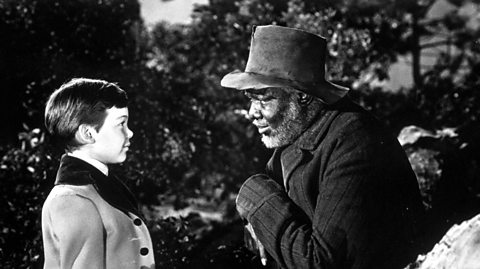
Song of the South is one of the most controversial animated movies ever made. Although bootleg copies exist, watching it today is very difficult.
Made in 1946 by The Walt Disney Company, it was set in the southern USA after the abolition of slavery. It had kindly black man Uncle Remus telling stories of animal characters such as Br’er Rabbit, Br’er Bear and Br’er Fox.
But the film’s depiction of black people – which perpetuated the racist myth that enslaved people were happy in the cotton fields – as well as its use of black slang, was controversial and offensive to some, even when the film was originally released.
As the years went by, and attitudes changed further, Song of the South became even more of an embarrassment to its makers. In March 2020, Disney chief Bob Iger described it as “not appropriate in today’s world”.
In the USA it was never released on home video or DVD and it hasn’t been available in the UK since 2000 when it was last released on VHS. When Disney’s streaming platform Disney+ launched, it was confirmed Song of the South would not be available on it. In October 2020, Disney updated its content warning for racism in some of its classic films.
But traces of it do remain in the ride Splash Mountain at Disneyland, which was based on the movie; however, the ride is currently getting a makeover, using designs from their newer film Princess and the Frog. And people still hum its Oscar-winning song Zip-A-Dee-Doo-Dah, probably unaware that it comes from a controversial film that they’re unlikely ever to be able to see.
Greed – Director’s Cut (Erich von Stroheim, 1924)
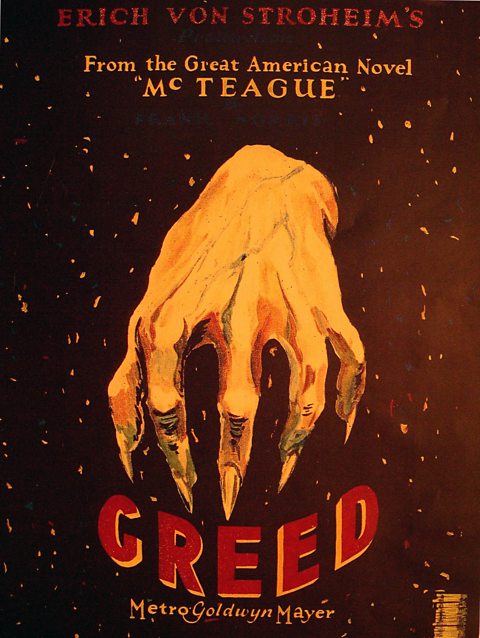
Erich von Stroheim was one of the most significant directors of the silent era. His films were famous for their incredible technical innovation, epic scale, and the extravagance of his budgets.
Greed, made in 1924, was set to be his masterpiece. It told the gruelling tale of a man and his wife whose lives are ruined after they win $5000 on the lottery. Von Stroheim spent the then vast sum of $500,000 making the movie.
Unfortunately, the version of the film that he finally submitted to the studio was nine hours long. The horrified executives told him to recut it, and von Stroheim finally pared it down to a still lengthy four hours. But the studio cut it even further, finally releasing the film in a version that ran for just two hours and twenty minutes.
An enraged von Stroheim claimed that all the excess footage he had shot had been burned – supposedly to extract the tiny amount of silver from the negative. But rumours of a copy of the original cut having survived, somewhere, have swirled ever since.
The Day The Clown Cried (Jerry Lewis, 1972)
Jerry Lewis was one of cinema’s greatest, and most successful comic talents. With films such as Hollywood or Bust (1956), Cinderfella (1960) and The Nutty Professor (1963) his manic, goofy comedies endeared him to film fans across the globe.
But The Day the Clown Cried was different – a serious film about an incredibly serious topic. A passion project for Lewis, who also directed the film, it told the story of a fictional clown who is first thrown into prison and then sent to a Nazi concentration camp, where he tries to bring a smile to the imprisoned children.
Lewis was finally so appalled with his own film he took the only copy and kept it under lock and key to prevent it ever being screened. “I was embarrassed. I was ashamed of the work, and I was grateful that I had the power to contain it all, and never let anyone see it,” he later said. “It was bad, bad, bad.”
It is rumoured that that Lewis attempted to introduce moments of humour into the film. The question of whether comedy is appropriate when talking about such a terrible subject is one that continues to divide opinions.
A few people claim to have viewed bootleg copies, and in 2015 it was announced that material from the film had been donated to the American Library of Congress with instructions that it not be screened until 2024.
The Magnificent Ambersons – Director’s Cut (Orson Welles, 1942)
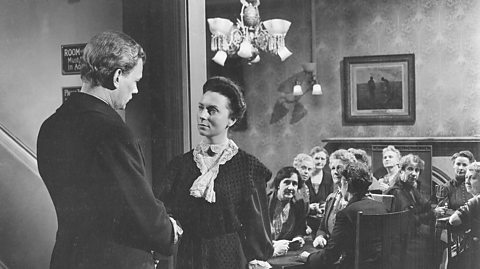
Orson Welles was only 25 years old when he made Citizen Kane (1941), now reckoned by many critics to be the greatest movie of all time. His follow up was hotly anticipated, but the making of The Magnificent Ambersons was mired in controversy, and the version Welles wanted audiences to see has been lost for decades.
The film tells the tragic story of a rich family, the titular Ambersons, who are ruined by a series of disasters. Welles originally submitted a version of the film that was 135 minutes long, but the studio assigned an editor to remove almost an hour from its running time.
Welles was in Brazil at the time shooting another film, and later said he was powerless to protect The Magnificent Ambersons. “There was just a built-in dread of the downbeat movie,” he later told a biographer. “I knew I'd have that to face, but I thought I had a movie so good, I was absolutely certain of its value.”
The missing material was eventually destroyed by the studio in order to free film vault space. But a complete version of the original cut, sent to Welles in Brazil, is rumoured to have survived. Film historians have been searching for it ever since.
Six blockbuster films that got history wrong
From Bohemian Rhapsody to Titanic, movie-makers have been very creative with historical timelines.
Six secrets of movie posters
Find out how movie posters are designed to encourage us to buy a ticket.
When film and TV got the future spot-on
The storytellers who predicted President Trump and the technology we have today.