

The project is helping to save the world’s rarest species of dog. The Fund helped support conservationists in Ethiopia who are trying to protect the last 500 or so Ethiopian wolves. The money has been used to help prevent the wolves from catching fatal diseases, and educate local people to respect the creature and its habitat. A key aim was to prevent Ethiopian wolves in the Bale Mountains dying from rabies and canine distemper. Project workers regularly monitor the wolves to see if any are in danger of infection and, if that does happen, can then react quickly. For example, in 2003, the programme detected a rabies outbreak. Soon, a rapid response was proposed and accepted by the Ethiopian government which involved vaccinating many local dogs, creating a buffer zone between infected animals and non-infected wolves. The response worked, and helped control the outbreak.
Africa and Madagascar
 Africa is well known for the wide range of large mammals living in the wild and Madagascar is one of the most biodiversity rich places on the planet. The conservation threats are still a major issue for the wildlife that live there and the BBC Wildlife Fund supported a number of projects in this region. Find out about a few of them below.
The Ethiopian Wolf Conservation programme.
Ethiopian Wolf

Mikongo Gorilla Ecotourism.
Lowland Gorilla

One of the best ways to protect gorillas is to encourage people to pay to view them. That is exactly what the grant has helped make happen in Gabon, working with the Zoological Society of London on the Mikongo Gorilla Ecotourism and Conservation Project. The idea was to get a few groups of western lowland gorillas accustomed to people, so they are comfortable being watched by tourists. As the gorillas generate revenue from ecotourism, they become more valuable to, and protected by the local community. The aim of the project was simple: to develop an ecotourism scheme to generate high revenue but with little impact on the gorillas or their habitat
Creating Elephant Corridors.
Namibian Elephant

Elephants travel vast distances and need to drink a lot of water. But in Namibia, farmers and their cattle also need land and water, bringing people and elephants into conflict. That’s why the Integrated Rural Development and Nature Conservation, a Namibian non-governmental organisation, is seeking to find ways to allow people and elephants to live more harmoniously together. The BBC Wildlife Fund helped the Integrated Rural Development and Nature Conservation organisation create elephant corridors with the Kunene region of Namibia. This project has helped to restore traditional elephant routes.
Bushmeat Community campaign.
Chimpanzees

The BBC Wildlife Fund grant helped prevent chimpanzees in West Africa being hunted for their meat. In the Republic of Congo, the Jane Goodall Institute has set up the Illegal Bushmeat Community Campaign. It studies chimpanzees living in the forests that make up the Greater Tchimpounga Ecosystem in the west of the country and educate local people about their status. This will hopefully reduce the number of chimpanzees being hunted and help reintroduce into the wild chimps that have been orphaned by the bush meat trade.
Conservation Comores.
Livingstone's Fruit Bat

The BBC Wildlife Fund contributed to efforts to save the forest home of the last 1,000 or so members of this large, enigmatic species. Without a forest to live in, the Livingstone’s Fruit Bat would be condemned to certain extinction. Conservation Comores, Bristol Zoo’s community-driven conservation plan, seeks to preserve the last wild colonies of Livingstone’s Fruit Bats. To preserve the rainforests on the Comoro Islands the project has worked with local communities to develop conservation expertise, create proper management plans, and mark out agreed protected areas
Protecting Mountain Gorillas, Central Africa.
Mountain Gorillas

The grant helped to protect mountain gorillas through addressing human-gorilla conflict and reducing human impact on mountain gorilla habitat. The International Gorilla Conservation Project funds a human-gorilla (HuGo) conflict mitigation programme in Rwanda and Uganda, with the aim of altering perceptions of the gorillas as a direct threat to people's livelihoods; and support to beekeepers and artisans to diversify livelihood options in the communities around the parks. The project aims to consolidate impact in Uganda and Rwanda and scale up regional impact to include Democratic Republic of Congo, ensuring that gorillas become an asset to local people rather than a threat to their livelihoods.
Community Conservation in the Kipsing Corridor.
Elephant

The BBC Wildlife Fund grant supported a collaborative project in northern Kenya that seeks to secure a vital corridor for the African elephant, allowing them to move between protected reserves safe from harassment by people and poachers. The unique project links people and wildlife, and unites communities, government and the private sector across a vast landscape. Together they hope to safeguard the future of the world’s largest land animal for the next century.
Bristol Zoo Gardens/Cameroon Wildlife Aid Fund.
Gorillas
Gorillas and chimpanzees are regularly taken for bush meat in Cameroon. The BBC Wildlife Fund helped the Cameroon Wildlife Aid Fund to employ a full-time teacher to lead a three year education project in three local schools. They have worked with 750 children and young people to increase understanding and knowledge about the plight of the great apes and to lead to changes in attitudes and practices concerning bushmeat. The teacher also carried out informal education for visitors to Mefou National Park, and met with local communities to identify key issues affecting their livelihoods and wellbeing.
Enhance Protection of Four Community Forests to Attract Large-scale Conservation Investment.
Various
The grant from the BBC Wildlife Fund was used to sustain existing incentives that have successfully promoted environmental conservation in the Iko Esai Community Forest to date. Project staff enabled the community to strengthen the conservation by-laws in Iko Esai and extend these to 3 neighbouring communities, almost doubling the area of forest in which conservation measures are mandated. Funds were used to expand forest patrol activities to further enforce the by-laws and restore degraded forested areas through a tree-planting programme. Work is now underway to facilitate international REDD+ engagement within the region. [REDD is the United Nations Collaborative Programme on Reducing Emissions from Deforestation and Forest Degradation in Developing Countries]
Satellite Tracking Cuckoos.
Cuckoo

With BBC Wildlife Fund support, the project aimed to identify the migration routes, stop-over sites and wintering grounds in sub-Saharan Africa of the declining UK cuckoo population, by monitoring their movements with satellite tags. This information is urgently needed to initiate appropriate conservation strategies. Further work will aim to establish how the identified areas are changing and impacting on the cuckoos and other migratory species.The project has been hugely successful in raising awareness within the UK and the African host countries about threats to migratory birds.
The Recovery of the Kibale/Queen Elizabeth National Park (Dura) Corridor.
Various

The BBC Wildlife Fund provided grant support to this project in the Maldives, which aims to bring an end to fish blasting and to promote recovery of coral reefs that have been degraded or destroyed as a result of this practice. Project staff have worked with local communities to raise the awareness of the value to the local economy of pristine reef habitat to reduce the incidence of fish blasting. The project has also begun work to restore degraded reefs through seeded frames.
Protecting Mountain Gorillas through Addressing Human-Gorilla Conflict.
Mountain gorillas
To save the mountain gorilla, a strategy for resolving the conflict between this magnificent great ape and local people needed to be found. The BBC Wildlife Fund funded the International Gorilla Conservation Programme to work on this in and around the Virunga-Bwindi region of Uganda and Rwanda, home to the last 720 surviving mountain gorillas. The International Gorilla Conservation Programme seeks to ease tensions between gorillas and people living nearby. Strategies to convince people that these rare creatures are not a threat, but a valuable asset that should be protected have been tried and tested here. Community support for gorilla conservation in the region has been advanced by training and equipping conflict-resolution teams to encourage communities to cooperate with park authorities.
Saving the “World’s Rarest Snake” and its Coastal Ecosystem.
Antiguan racer
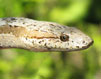
The BBC Wildlife Fund supported this project which aims to conserve the Antiguan racer, as well as other globally threatened and endemic animals and plants on Antigua's offshore islands. This project will increase the population of the Antiguan racer, control alien predators that threaten the racers, birds and nesting hawksbill turtles, as well as educate and involve locals in wildlife conservation. The number of Antiguan racers recorded on the islands has risen significantly as a result of the project.
The Conservation of the Endemic Critically Endangered Sagalla Caecilian.
Sagalla caecilian

The project aims to improve environmental sustainability in the Eastern Arc Mountains through habitat restoration, soil conservation, water resources management, education and livelihood improvement of the local community to conserve the endemic critically endangered Sagalla caecilian.
Ruaha Carnivore Project: Mitigating Human-carnivore Conflict.
Various

With funding from the BBC Wildlife Fund, the project aimed to significantly reduce human-carnivore conflict in Tanzania's Ruaha landscape. This is one of the most important areas of the world for carnivores, but the intense conflict is seriously impacting both people and predators. Resolving this issue will have clear, important outcomes for both biodiversity and local communities.As a result of the project’s work, wildlife killings have been reduced and local people have been given a much greater understanding of the benefits of the Park.
Explore another region
Click on a region below to find out about some of the projects we funded there.

