Video
Jack: I’m Jack and I live in Gateshead. As a teenager and I hate traffic. First of all it’s so boring just sitting there for hours and second of all it’s terrible for your health.
Jack (Narrating): Cars release particles of air pollution through their exhausts which affects the air that we breath. More traffic means more pollution which means worse air which is an increasing worry in Newcastle-upon-Tyne, my nearest city. So how do we stop this problem?
Jack: I think the best way to stop it is a congestion charge. It worked in cities like London and more locally Durham so why wouldn’t it work in Newcastle?
Jack (Narrating): A congestion charge makes drivers pay a fee to bring their cars into the city at busy times of the day. In cities like London it’s reduced the number of cars driving in to the city centre. And as Newcastle is the third most congested city in the country I’m hoping it will have the same effect.
Jack: I’m on my way to find out more about it and why it would work or it wouldn’t work.
Title: Congestion. Is congestion charging the best way to reduce traffic pollution?
Jack (Narrating): I’ve come to Heaton two miles from Newcastle centre. It’s one of the city’s most congested areas. So it’s a good place to find out how much the city’s air really is affected by traffic fumes.
Jack: Hello.
Aare Puussaar: Hello.
Jack (Narrating): I’ve come to meet Aare from Newcastle’s university who uses these special monitors to measure air pollution levels.
Aare Puussaar: I’ve been handing these out to local communities for them to find out what’s the air pollution in their area.
Jack (Narrating): So I’m going to use Aare’s monitor to collect air pollution samples with Julie, a local doctor. I’ll look at the results with Aare later.
Jack: Why are we so worried about this road?
Julie Whittaker: Well because it’s one of the busiest roads in Heaton. And there’s a primary school here that’s right on the edge of the road. So you’ve got lots of kids.
Jack: It’s just two seconds up the road and you can already smell like the fumes from the cars. I’ve been researching into the London and the Durham congestion charges. So do you think it would work in areas like this next to primary schools?
Julie Whittaker: Yeah, I think it would. And for people like me I think there’s nothing like a bit of a penalty to make you change your behaviour.
Jack (Narrating): Time to find out what the other side think. Great, I’ve got a meeting with Stephen, a local businessman to find out why he thinks a congestion charge isn’t a solution.
Stephen Patterson: Hi Jack. Nice to meet you.
Jack: How do you think people would react if just the congestion charge would be added into Newcastle?
Stephen Patterson: I think it would be a negative thing. People feel as if they’re getting taxed simply for coming in to the city centre. And we want more people to use it. We want businesses to be investing in the city centre, employing people.
Jack: I’ve just had a really good chat with Stephen about the congestion charge and his main points were it wouldn’t really work. But I think I need to know a bit more about congestion charge and why it wouldn’t work before I can make my final decision.So I’m going to meet up with Aare again.
Aare Puussaar: Hey.
Jack: Hello.
Aare Puussaar: Nice to see you again.
Jack: Nice to see you.
Aare Puussaar: Let’s see the data. So this is the map of the area we were in.
Jack: So these big red ones over here. What do they mean?
Aare Puussaar: It’s red, it means that it’s high amount of particles. And then the sizes as well correlate to is it small amount of particles or high amount of particles. And there are legal limits of how high the particle count can be.
Jack: The results in Heaton are similar to the rest of Newcastle showing high pollution levels. In fact over 1,000 deaths each year in the north-east of England are caused by air pollution.
Jack: So I’ve just had a chat with Aare and I’m actually quite surprised at how much pollution there actually was in here. But I still feel like I need that little bit extra information. So I’m going to go and speak to the council and see what their ideas are.
Jack: Hello.
Jack: As director of public health for the city council Eugene is the perfect person to tell me about the council’s view on tackling pollution in the city.
Jack: There’s been talks of a congestion charge and would you think that will be a good idea or a bad idea in Newcastle?
Eugene Milne: Well one of the things we know is if we don’t manage to get the levels of nitrogen dioxide down, and we don’t manage to do that through other means, then we have to introduce a congestion charge. I think we prefer not to have to. We’d like to use other ways of doing that.
But there are various things we can do but ultimately the one that’s going to matter most is getting people to use different kinds of transport. Because that not only benefits people in terms of reducing congestion and making it easier to get around, it also reduces the air pollution. It makes people walk more and reduces obesity. It gets them fitter at the same time.
Jack: So do you think we can change our habits and improve the congestion in Newcastle and surrounding areas?
Eugene Milne: Changing people’s habits and behaviours is one of the most difficult things that anybody could try and do. But I think there’s real will to do it. And I think people understand now in a way that they didn’t a few years ago the damage that’s being done by pollution from vehicles in the city.
Jack: So I’ve just spoken to Julie, the congestion charge felt like the right thing to happen. But then after speaking to Stephen and Eugene they’ve really changed my opinion. And they made us think about different alternatives like cycling or walking in to school.
Jack (Narrating): I don’t think the congestion charging is the answer of reducing pollution. It’s much more important to change people’s habits and get them to use other forms of transport - like my bike!
Video summary
Download/print a transcript of the video.
Jack, a student from Gateshead on Tyneside, investigates solutions to traffic related air pollution, which is a particular problem in Newcastle.
Jack wants to know if a congestion charge would solve the problem of air pollution and talks to people on both sides of the argument. He speaks to a local resident, an environmental researcher from the University of Newcastle who measures traffic pollution levels, a local GP, a local businessman and the Newcastle City Council’s Director of Public Health.
After listening to the arguments, Jack makes up his mind on the best option.
This clip is from the series Geography: The Big Issues.
Teacher notes
Download/print the Teacher Notes for this video (pdf).
Before watching the video
Using a map of the UK, locate Newcastle and write a locational description of where it is. Use online mapping to explore the area further. Ask students to describe the landscape that they can see.
Introduce key terms such as:
Congestion charge: A fee imposed on vehicles entering a designated area, particularly during peak traffic hours, aimed at reducing traffic congestion and improving air quality by encouraging alternative transportation methods.
Nitrogen dioxide: A greenhouse gas emitted by car exhausts.
Air pollution: Contamination of the indoor or outdoor environment that modifies the atmosphere. This could be through greenhouse gas emissions. Air pollution has a negative impact on human health, ecosystems and the environment.
During the video
You may wish to stop at relevant points during this short film to pose questions and check understanding or wait until the end. Useful questions might include:
- Why is air pollution an issue?
- What is a congestion charge?
- How can air pollution be monitored?
- Why is it important to try and reduce air pollution?
- Why are there mixed views on the congestion charge?
- Who is responsible for reducing the levels of air pollution?
- What other solutions could there be to reducing air pollution?
After watching the video
Students could investigate the area around them to see whether air pollution is an issue locally. Websites such as Air Quality in England provide real-time updates on air quality and this may be a useful place to start. This is also a great opportunity to discuss primary and secondary data. Students could also collect their own data on air quality by carrying out traffic surveys and using equipment to measure the air quality such as a PM10 monitor.
Students could also investigate what is being done locally to reduce air pollution, for example is the local council restricting traffic into the town centre or is public transport being widely advertised as an alternative. Students could also write to the local council or MP to find out what is being done and whether they believe air pollution to be an issue.
Where next?
Compare the air quality data to a location overseas, for example cities such as Lahore or Dhaka are well known for being congested and therefore having poor air quality.
Students could research the data for those cities and find out what is happening to try and improve the air quality in those locations.
Curriculum Notes
This clip will be relevant for teaching Geography at Key Stage 3 and 4 in England and Northern Ireland and 3rd and 4th Level in Scotland.
More videos from this collection
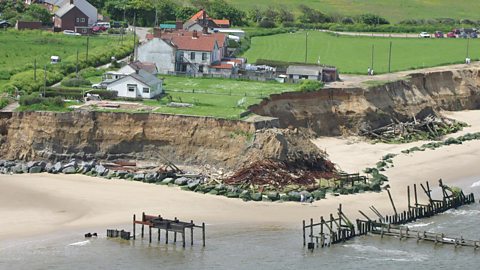
Coastal erosion: the high cost of protecting homes. video
Investigating whether properties in North Norfolk should be protected from coastal erosion.
The environment: is rewilding a good idea? video
Investigating rewilding issues posed by the possible reintroduction of lynx to Kielder Forest.

Change of land use: developing the greenbelt. video
Investigating issues posed by change of land use and the development of the greenbelt.
Use of natural resources: the advantages and disadvantages of fracking. video
A student investigates the pros and cons of fracking by speaking to advocates and opponents.
Agriculture: issues with intensive arable farming. video
Investigating the benefits and drawbacks of intensive arable farming.