Aim
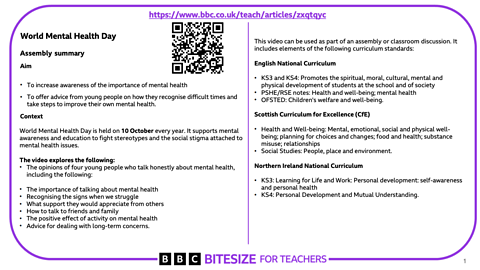
To increase awareness of the importance of mental health, and to share personal advice from young people on how they recognise difficult times and take steps to improve their own mental health.
The video
We spoke to four teens about what mental health means to them, and here’s what they said.
We all know talking about mental health is a good thing, but why?
I think for me, at least, it's really important to know you're not alone and when you can talk to someone else, and it's much better than struggling in silence.
Yeah, like everyone struggles with their mental health sometimes and it shouldn't be something to be embarrassed about.
How do you feel on days when you are struggling with your own mental health? What are the signs that you have?
Sometimes I just feel tense and sometimes you don't want to eat. Sometimes you just want to look at the floor and you just don’t want to move around. That’s just sometimes how I feel.
Sometimes more anxiety wise you get like a stomach ache or a headache, like a lot of tension sort of around the temples and like, tension headaches and migraines and stuff like that. If it gets really bad.
Severe lack of motivation or anything to just kind of get stuff done. You're very procrastinative when you're… Is that a word? Procrastinative? Yeah, you're just kind of stalling yourself and it's not good.
How would you like someone to support you if you were struggling with your mental health?
If I'm struggling and I'm having a hard time, having someone that can listen and just sort of be a shoulder to cry on or just be someone there to lean on, that's really beneficial.
Personally, I love it when someone properly listens to me and actually feel what I'm saying to them so that I trust, because, you know, it's someone that I trust that I'm telling them.
What would you say to a friend if they were feeling sad or anxious?
I'd say do you want to do something or do you want to talk about it? Either way I'm happy. Like I want to let them know that they're seen and heard and that I can actually care about it. I care about what they're feeling.
I mean, sometimes people just need space to process things and I wouldn't necessarily push to give them advice. You know, they can, they need their own time to process their own emotions and thoughts and I feel like that is probably the best thing you can do for them.
What activities have a positive impact on your mental health?
Anything without a phone really because, you know, the constant buzzing, constant notifications, so taking a moment to be in the moment and also sometimes just doing something maybe a bit tactile, maybe colouring maybe, you know, just getting away from the constant endless scrolling and sitting there doing nothing.
Any form of physical activity is great for your mental health. Honestly, it's so good for you. Just, it releases so much dopamine into your head and you just feel, almost like tranquil, you’re just relaxed.
Me, probably just getting out of the house, ideally with nature. But just going to a different environment always helps me.
I think especially with music, it really helps you kind of channel your thoughts and think about how you're feeling. If you want to listen to sad music, sure. Some people say that it might make you feel worse but I don’t necessarily think that’s a bad thing because I think it helps you get in touch with your emotions.
Sometimes struggling with mental health can be more than just a day or two - what would you do for long term challenges?
Reach out, reach out, definitely. From personal experience, it helps. It helps. I used to be really, really stubborn about speaking to people about how I'm feeling and about, like telling a stranger like with counselling. I'm telling you, it's literally probably one of the best things I did. And I wouldn't be the same person I am now without doing it.
Totally agree. Similar story for me. And just reaching out, trusted adult, a GP, someone at your school. Just talking to someone who you trust. It's the best thing.
Yeah, and sometimes just thinking you've been through stuff before and you know that good things can happen and there is always going to be light at the end of the tunnel. And even you'll notice sometimes little moments, you'll laugh at something and that will sort of reawaken you and think that it's gonna be, it's gonna be alright.
Video summary
This video explores the opinions of four young people who talk honestly about mental health, including:
- The importance of talking about mental health
- Recognising the signs when we struggle
- What support they would appreciate from others
- How to talk to friends and family
- The positive effect of activity on mental health
- Advice for dealing with long-term concerns.
Context
World Mental Health Day is held 10 October every year. It supports mental awareness and education to fight stereotypes and the social stigma attached to mental health issues.
Key terminology
- Stigma: when people judge or shame someone for their mental health, making them feel embarrassed or afraid to speak up
- Discrimination: when someone is treated unfairly or badly because of who they are or what they are dealing with
- Anxiety: feeling very worried or nervous, especially when things feel stressful or out of control
- Procrastination: putting things off or delaying tasks, even when you know you should do them.
Resources
Discussion questions
- Do we talk enough about mental health?
- What more could schools do to support students?
- Are parents/carers/guardians aware of mental health issues that might impact on young people?
- How can we remove the negative associations of talking about mental health?
Activity ideas
- Students could design a poster about World Mental Health Day
- Students could create a list of tips (in the form of a flyer, email, text message, social media post or media recording) to share will all students about how to manage their own mental health
- Divide the class into groups to discuss the stigma and discrimination of talking about mental health issues
- Students could plan their own personal guide on things they should do on any day they struggle.
Suggested framework
If your students need support
You should always tell someone about the things you’re worried about. You can tell a friend, parent, guardian, teacher, or another trusted adult. If you're struggling with your mental health, going to your GP can be a good place to start to find help. Your GP can let you know what support is available to you, suggest different types of treatment and offer regular check-ups to see how you’re doing.
If you’re in need of in-the-moment support you can contact Childline, where you can speak to a counsellor. Their lines are open 24 hours a day, 7 days a week.
There are more links to helpful organisations on BBC Action Line.
Related links
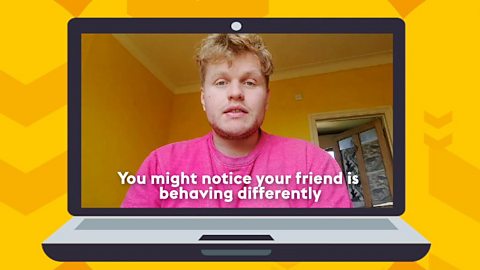
How to tell if your friend needs help. video
Ollie Glick from Children and Young People’s Mental Health Coalition’s gives his advice on what to do if you think your friend needs some help and support.

Time to talk about... collection
A collection of short films for secondary schools intended to help to start classroom discussions around mental health. The films introduce students to five well-known faces who share their personal experiences.