Aim
To learn about the Battle of Hastings, including when it took place and the key figures involved. To consider how the Battle of Hastings and the Norman Conquest changed England and the impact it had then and up to today.
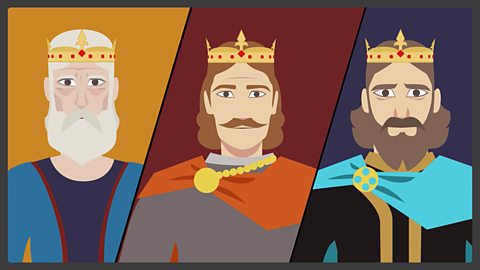
The Battle of Hastings took place on 14 October 1066. There were three rivals to the English throne: William of Normandy, Harald Hardrada and Harold Godwinson. After the defeat of Hardrada by Godwinson, William fought Harold Godwinson in Hastings. He won and became the new ruler of England. The way England was then run changed significantly.
The video
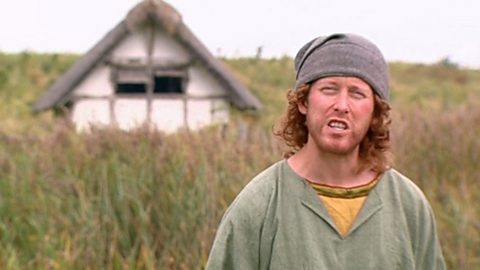
Hello! My name's Eden, I'm 10 years old and I'm a shepherd.
And they're Normans – they're the bosses around here. They do and take whatever they like.
Oi, that's my sheep!
But the Normans weren't always in charge.
The rulers of England used to be Anglo-Saxon, like me!
We came here from Germany aaaages ago – with our language, our weapons and our Gods.
The last proper Anglo-Saxon king of England was called Edward.
But he didn't have any children.
So when he died, three different men said “I'm King – Me! Me! Me! Me!”
Harald Hardrada – a Norwegian.
William – a Norman from France.
And Harold Godwinson – a powerful Anglo-Saxon.
The Witan - a group of English nobles, chose Harold Godwinson to be King.
William of Normandy and Harald Hardrada were fuming because they believed the throne rightfully belonged to them – and they both decided to invade England!
Harold Godwinson marched north to fight Harald Hardrada – winning a famous battle at Stamford Bridge.
But then he had to march south to fight William of Normandy
The two armies met near Hastings, with about 7,000 men each.
The Anglo-Saxons were mainly foot soldiers, but the Normans had archers and cavalry too.
The Anglo-Saxons stood at the top of a hill with a strong shield wall that the Normans couldn't break.
So William used a clever trick – he told his men to pretend to retreat – and the Anglo-Saxons fell for it! They started chasing the Normans, who turned round and attacked!
The Anglo-Saxons lost and Harold Godwinson was killed – but no one knows how exactly.
Maybe that's him, or maybe that is?
William was crowned King of England on Christmas day 1066. And he made some big changes.
First, he said all the land in the country belonged to him. Greedy.
Then he gave the land to his Norman Barons and Bishops who bossed us Anglo-Saxons about and took our stuff, like my sheep. Not another one!
The Normans spoke French – so we couldn’t understand what they were saying.
And they built loads of castles too – and churches to show how powerful they were.
You can still see lots of castles in your time – like this one in Pevensey where I'm from.
Anglo-Saxons were angry and some of us rebelled against the Normans.
So William’s soldiers killed lots of ordinary people and left them without homes, farms and food.
Not many Anglo-Saxons wanted to fight after that.
For years, priests and monks wrote about the Norman Conquest.
But the most famous account isn't a book – it's a cartoon! Kind of …
The Bayeux Tapestry is nearly 70 metres long and it tells the whole story of how William became King.
And though there are only three women in the tapestry, it was actually women who made it! Skills!
If you look carefully, about halfway along it, you can see a little boy, with a sheep.
I'll tell you a secret – that's me!
Have a look, see what you think, and while you’re there think about how ordinary people's lives changed after the Battle of Hastings.
Video summary
The Battle of Hastings took place on 14 October 1066. There were three rivals to the English throne: William of Normandy, Harald Hardrada and Harold Godwinson. After the defeat of Hardrada by Godwinson, William fought Harold Godwinson in Hastings. He won and became the new ruler of England. The way England was then run changed significantly.
This video explores the following:
- The background to the Battle of Hastings, including the death of the Anglo-Saxon King Edward and the three rivals to the throne.
- The battle at Stamford Bridge and the defeat of Harald Hardrada by Harold Godwinson.
- The Battle of Hastings and the defeat of Harold Godwinson by William. William then becoming King of England.
- The changes to England during his rule, e.g. approach to rulership, building castles, land ownership.
- Life for Anglo-Saxons after the conquest, explained by the character of the boy called Eden in the video.
- The Bayeux Tapestry and its relevance as a historical source.
Video questions
Before watching the video:
- Ask the students if they have ever heard of the Battle of Hastings.
- Show a map of Europe and point out where Hastings is. Then point out where France is.
- Discuss with the children whether or not they know that the Anglo-Saxons came to an end in England in 1066.
- Can they offer suggestions about why that might have happened?
- Ask the students to explain what they already know about the Battle of Hastings, e.g. it happened in 1066; King Edward died and didn’t have any children.
After watching the video
Discussion questions:
- Why did William of Normandy want to conquer England and become king?
- How do you think life in England changed after the Norman Conquest?
- What are the similarities and differences between the Battle of Hastings and conflicts or wars that take place today?
- Why do you think that learning about events like the Battle of Hastings is important?
Activity ideas:
- Create a visual timeline in words and pictures showing the sequence of events leading up to, during, and after the battle.
- Students have their own map and mark the movements of the main figures and their armies at the lead up (and during) the Battle of Hastings. They can label the locations, routes and battle sites.
- Write diary entries or letters from the perspective of the character Eden (the boy who narrates the assembly video). The students could write a news report of the Battle of Hastings but present it on a modern newspaper front page template.
Key terminology
Introduce key terminology, including:
- Battle: a fight between armies, especially during a war; a violent fight between groups of people
- Conquer: to take control of a country or city and its people by force
- King: the male ruler of an independent state that has a royal family
- Anglo-Saxon: an English person of the period before the Norman Conquest
- Bayeux Tapestry: a finely decorated cloth wall covering made in the 11th century showing the events that led to the Battle of Hastings
- Cavalry: (in the past) the part of the army that fought on horses
- Archer: a person who shoots with a bow and arrows
- Norman Conquest: the Normans conquered England and brought Anglo-Saxon England to an end
Resources
Suggested framework
1. As pupils enter
Show an image of the Bayeux Tapestry (check appropriateness of the image for the age group).
Potential starting questions:
- Do you know what this is showing?
- Have you ever heard of the Battle of Hastings?
- Do you know when the Battle of Hastings took place?
2. Show the video
You may wish to stop at relevant points during this short film to pose questions and check understanding or wait until the end.
Useful questions:
- Who ruled England before 1066?
- What were the names of the three rivals to the throne of England?
- Where did Harald Hardrada come from?
- In what battle did Harold Godwinson defeat Harald Hardrada?
- How many men were in each of William and Harold Godwinson’s armies?
- The Normans had archers, but they also had cavalry. What does ‘cavalry’ mean?
- When he became king of England, who did William give lots of land to?
- What did the Normans build that can still be seen today?
- What do you think about the way the Normans treated the Anglo-Saxons that rebelled against them?
- Why is the Bayeux Tapestry an important historical source?
3. Closing the assembly
Some reflections on the Battle of Hastings.
- Was the Battle of Hastings an important event in history? [Ask for a show of hands.]
- Do you think that the Bayeux Tapestry is a completely reliable historical source? [Ask for ideas.]
- Have a final moment for quiet reflection, e.g. the students can think about the impact of the Battle of Hastings in the past and up until today; the students can think about the importance of examining historical sources to better our understanding of the past.
Related links
The Anglo-Saxons. collection
Alfred the Great, Athelstan, the Battle of Hastings...plus the Anglo-Saxon story of Beowulf.
The Anglo-Saxons. collection
We've collated some of our most popular short videos and clips on the Anglo-Saxons from the BBC archive, to help introduce your primary class to this KS2 history topic.
The Norman Conquest and 1066. collection
Animated series exploring the key events of the battle for the throne in 1066 and how William the Conqueror secured power.