The Body in the Cellar
A forensic archaeologist locates the body of a teenage girl buried in a cellar, and an expert in scanning technology sends a homemade gun maker to jail.
When detectives discover the body of 27-year-old Shakir Khan at a property in Bradford where Mohammed Ayub is living, he claims the victim turned up at his door already fatally hurt. Blood spatter inside the property tells a different story, and he is arrested.
During the search, investigators notice that the cellar floor has been crudely covered up with concrete, which appears unusual. After looking into Ayub’s background, they discover he had a history of violence and sexual offences. They also discover that one of the children from the house, 15-year-old Nicola Iqbal, is missing. Her mother let Ayub move in with them not long after they started a relationship.
Unable to locate Nicola, and after suspecting the floor of the cellar has been recently tampered with, investigators bring in forensic archaeologist John Hunter, who faces a sizeable challenge investigating the confined space. Despite facing issues throughout the dig, John locates and removes Nicola’s body. He has finally unearthed the truth, and Ayub is convicted of two murders. The programme includes powerful interviews from Nicola’s sister Bernie Gladwin, PC Mark Plovie and journalist Alun Palmer.
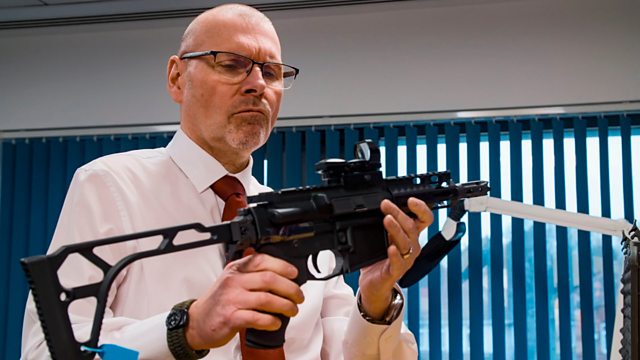
Next, when police raid a family home in Birmingham in 2022, they are stunned to find an arsenal of weapons that includes what appears to be two homemade guns. They also seize digital devices and a 3D printer. The homeowner, David Biddell-Portman, is immediately arrested.
It’s a worrying development in the war against gun crime, and investigators need to know if these handmade firearms were made by Biddell-Portman, why he made them and whether they are viable and therefore deadly weapons.
Biddell-Portman is uncooperative during questioning, but digital forensic officer Wayne Johnson’s analysis of his computer files reveals he did make the weapons using his own 3D printer. But was it the pastime of a hobbyist or something more sinister or gang-related?
Professor Mark Williams, an expert witness in the field of scanning and visualisation at Warwick University, is brought in to use CT-scanning technology in the quest to identify how the guns were made – are they just plastic, toy-like imitations or capable of expelling bullets?
Noting the amount of metal and sophisticated components, he concludes that the firearms could be fired and checks the barrels to establish if they are cleared for testing.
If the guns can fire live rounds, they will be considered viable weapons, and that will earn Biddell-Portman a conviction. Once tested at the shooting range, the guns fire successfully, and Biddell-Portman is charged with the manufacture of a deadly weapon and given a five-year prison sentence.
Last on

More episodes
Credits
| Role | Contributor |
|---|---|
| Presenter | Ashley John-Baptiste |
| Composer | Philip Guyler |
| Production Manager | Andrea McClelland |
| Executive Producer | Emma Barker |
| Executive Producer | Edward Hart |
| Series Producer | Lucy Wedlock |
| Producer | Ben Thomas |
| Producer | Gary Watson |
| Producer | Catriona Wright |
| Production Company | Rare TV |
Broadcast
- Yesterday10:45
