Summary

  • We've ended our live coverage of the Iran war on this page. You can follow all the latest updates on our new page here

  • Israeli military spokesperson Effie Defrin says there are still , hours after to include areas in western and central Iran

  • Iranian Foreign Minister Abbas Araghchi says Tehran has not asked the US "for a ceasefire"

  • In an interview with CBS News, the BBC's US media partner, Araghchi also says Iran doesn't "see any reason why we should talk with [the] Americans, because we were talking with them when they decided to attack us"

  • US President Donald Trump had said on Saturday Iran wanted to make a deal, but that he felt the terms were "not good enough"

  • Meanwhile, - the UK government says the pair spoke about the "importance of to end the disruption to global shipping"

  1. US discussing coalition to escort ships through Strait of Hormuzpublished at 05:09 GMT 16 March

    On his flight back to Washington from Florida on Sunday night, US President Donald Trump answered questions about the possibility of creating a coalition to escort ships through the Strait of Hormuz.

    He said the the administration has talked to"about seven" countries about "policing" the Strait of Hormuz, and named China as among the countries the US had spoken to.

    He wouldn't name any other countries he'd approached, but brought up Nato and other countries he believes need to "defend their own territory," defining that territory as "where they get their energy".

    In an interview with Financial Times, Trump also said that it would be "very bad for the future of Nato" if allies do not help secure the Strait of Hormuz.

    We will have more updates on this development in our new live page, which you can find here.
  2. Japan 'considering how to respond appropriately' - PM Takaichipublished at 04:25 GMT 16 March

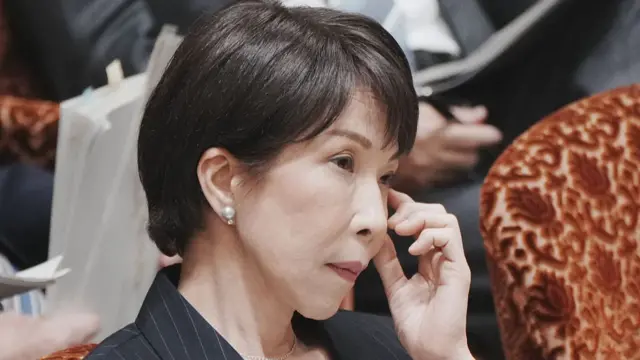
    Sanae TakaichiImage source, Getty Images

    Japan has not received a formal request to help open up the Strait of Hormuz but is "considering how to respond appropriately", Prime Minister Sanae Takaichi said on Monday.

    Trump had earlier requested help from countries affected by Iran's attempted closure of the shipping route – he listed China, France, Japan, South Korea and the UK as among the countries he hoped would help.

    Takaichi, who is preparing for a visit to the US next week, said Tokyo is also "examining how we can protect the vessels and the lives of their crews, and what measures we can take".

    Any seaborne policing action is "extremely difficult" under Japanese law.

    "We are to consider what is the best possible measure we can take within the framework of current law," she told reporters.

  3. US intelligence suggests Khamenei was wary of son taking power, sources tell CBSpublished at 03:41 GMT 16 March

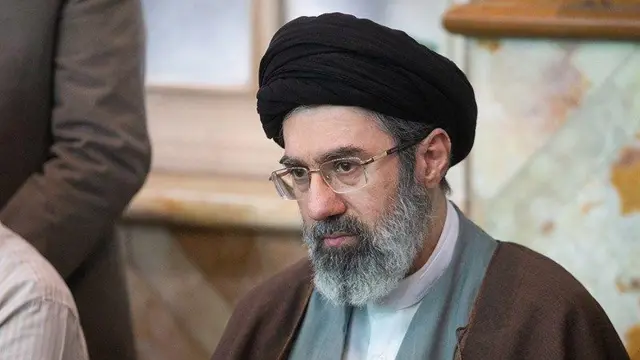
    Mojtaba Khamenei, with a black turban and a brown robe, looks away from the camera.Image source, Tasnim News Agency

    New intelligence from the US suggests that Iran's former supreme leader Ayatollah Ali Khamenei had misgivings about his son replacing him, multiple sources have told BBC's US media partner CBS News.

    It reports that Khamenei had concerns about his son Mojtaba Khamenei ever taking power as he was perceived as "not very bright" and "unqualified" to be leader. Sources also told the publication that the late supreme leader was aware that his son had "issues in his personal life".

    CBS reports that the information has already been circulated to US President Donald Trump and a "small circle around him".

    Ayatollah Mojtaba Khamenei, 56, was chosen to become Iran's supreme leader last weekend.

  4. Crew from Thai ship struck by Iranian missiles arrive homepublished at 03:05 GMT 16 March

    Jonathan Head
    BBC South East Asia Correspondent

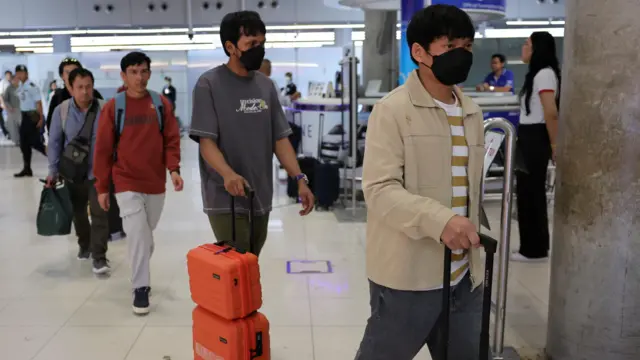
    Thai crew members arrive at Suvarnabhumi International Airport in Bangkok, Thailand, wheeling suitcases and wearing black face masks.Image source, Reuters

    Crew members from a Thai ship which was struck last week by Iranian missiles in the Strait of Hormuz have arrived back in Thailand after being rescued by the Omani navy.

    Of the ship's 23 crew, 20 landed in Bangkok’s main international airport on Monday morning and were soon reunited with their families.

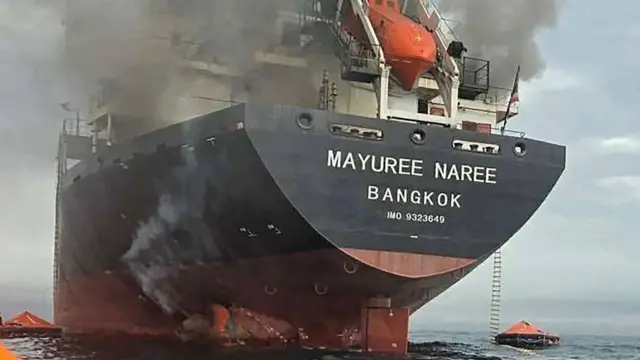
    Their ship, the Mayuree Naree, was struck by what were believed to be two Iranian missiles last Wednesday, starting a fire, and forcing the crew to abandon it.

    Theirs was one of more than a dozen commercial vessels to be attacked by Iran after it warned that it would block marine traffic from passing through the Strait of Hormuz.

    Smoke billows from the black and red cargo ship "Mayuree Naree" as it sits in calm water.Image source, Getty Images

    The Thai government has lodged a formal protest with Iran over the attack, and asked for its help in rescuing three crew members who are still believed to be trapped on board the vessel.

    Thailand has long maintained cordial relations with both Iran and Israel, and with other parties to the Iranian conflict. This incident, though, has shown how even countries far from the fighting are being caught up in it.

    Thailand’s economy is one of the most dependent in Asia on supplies of oil and gas from the Gulf, and its tourism industry has been badly affected by the disruption of commercial flights through the region.

  5. Oil prices hover around $100published at 02:34 GMT 16 March

    Osmond Chia
    Business reporter

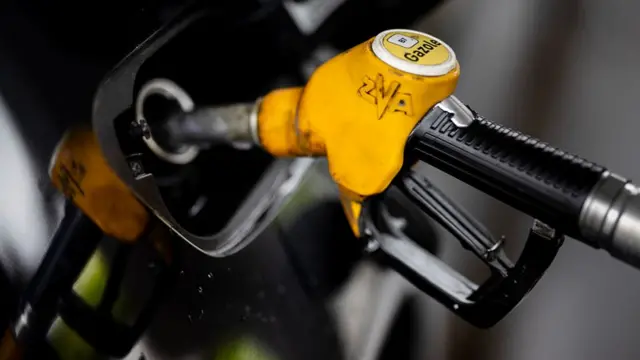
    Energy prices have kept near the $100 (£75.44) mark since the US bombing of Kharg Island, Iran's main oil export hub, though charts have been choppy in early Monday trade in Asia.

    US-traded crude is down slightly by 0.6% at $98.14 a barrel, while Brent is currently priced at $103.17, largely unchanged.

    Oil is still trading at prices higher than they were before the war, even after major nations under the International Energy Agency (IEA) have pledged to release 400 million barrels of reserves to keep a lid on prices.

    Major Asian stock markets edged higher during early Monday trade.

    South Korea's Kospi index was up by around 1%, while Japan's Nikkei 225 exchange gained by 0.2%. Both have fallen sharply since the start of the Iran war.

    A close up image of a yellow petrol pump used to refill a carImage source, Getty Images
  6. Flights suspended at Dubai International Airport following 'drone-related incident'published at 02:05 GMT 16 March

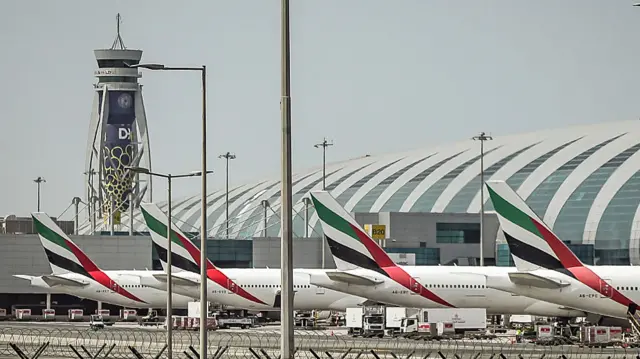
    Passenger planes with red, green and black tails sit on the tarmac at Dubai International Airport in Dubai on March 11, 2026.Image source, Getty Images

    Authorities have announced a temporary suspension of flights at Dubai International Airport as a "precautionary measure to ensure the safety of all passengers and staff".

    As we reported earlier, officials said they are responding to a fire after a "drone-related incident" affected a fuel tank.

    Travellers are being advised to contact airlines for updates regarding flights.

    Prior to the outbreak of conflict between the US and Iran in late February, Dubai International Airport was the world's busiest for international passengers, handling nearly 90 million travellers in 2025.

  7. Trump says Iran wants to negotiatepublished at 01:45 GMT 16 March

    Aboard Air Force One, Trump also spoke more generally about the war. He said Iran wants to negotiate and is using to AI to put out disinformation, while he presented a united front with Israeli Prime Minister Benjamin Netanyahu:

    • Trump repeated his assertion that Iran wants a deal badly, saying about diplomatic talks that "we're talking to them but I don't think they're ready, but they're getting pretty close". Iranian Foreign Minister Abbas Araghchi says that Tehran has "never asked for a ceasefire, we have never asked even for negotiation"
    • When asked if he was ready to declare victory over Iran he said "there's no reason to" and added that the US has caused significant damage so that "if we left them right now it would take them 10 years to rebuild"
    • Trump alleged that images of thousands of people gathered in a square to show support for Mojtaba Khamenei, as well as reports about "kamikaze boats" and strikes on the USS Abraham Lincoln were all AI-generated, but did not provide evidence
    • Asked if he had argued with Netanyahu, Trump said: "No, we really get along well." He said he would call his relationship with Netanyahu "extraordinary"
    • Trump also said oil prices "are going to come tumbling down as soon as it's over and it's going to be over pretty quickly"
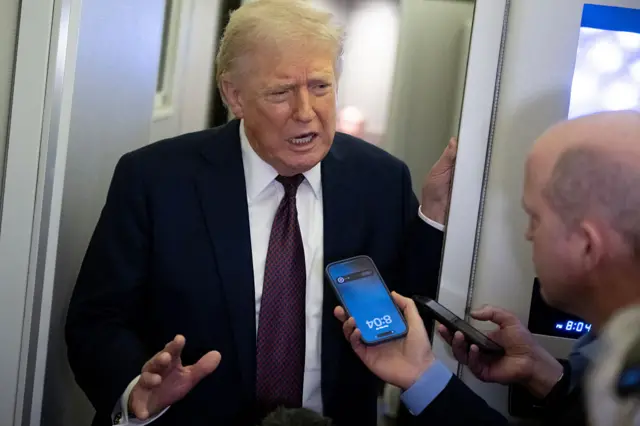
    US President Donald Trump speaks to a reporter, who records audio of what he is saying with a smartphoneImage source, Getty Images
  8. Trump says he's talking to countries about 'policing' the Strait of Hormuzpublished at 01:16 GMT 16 March

    Lisa Lambert
    Live reporter

    On his flight back to Washington from Florida just now, Donald Trump spoke to the White House press traveling with him.

    Here is what we heard aboard Air Force One about the possibility of creating a coalition to escort ships through the Strait of Hormuz:

    • The administration has talked to "about seven" countries about "policing" the Strait of Hormuz
    • Trump said he asked China "would you like to come in?" and said we'll find out what they decide. He repeatedly mentioned that China is heavily reliant on shipments through the Strait for its oil
    • Trump wouldn't name any other countries he'd approached, but brought up Nato and other countries he believes need to "defend their own territory," defining that territory as "where they get their energy"
    • Trump said he told his counterparts that "we will remember" if they do not help
    • He said some countries have minesweepers and a "certain type of boat" that "could help us"
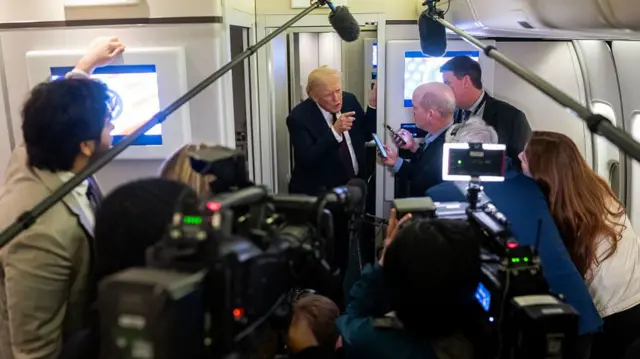
    Donald Trump points at reporters as he speaks to them aboard Air Force OneImage source, Getty Images
  9. Authorities responding to 'drone-related incident' near Dubai International Airportpublished at 00:53 GMT 16 March

    Dubai officials say they are currently responding to a fire in the vicinity of Dubai International Airport, after a "drone-related incident" affected a fuel tank.

    According to an official post to X, authorities are working to bring the fire under control and taking "all necessary measures" to ensure public safety.

    No injuries have been reported at this stage.

  10. Trump says he expects China to help secure Strait of Hormuzpublished at 00:36 GMT 16 March

    Following his comments on Nato, Donald Trump also spoke to the Financial Times about his upcoming summit in Beijing with China’s President Xi Jinping.

    He said the visit, scheduled for the end of March, could be delayed but did not give any further clarifying details.

    The president told the outlet that he expected China to assist in unblocking the Strait of Hormuz ahead of the meeting, and said that the nation receives "90% of its oil" via the Strait.

    We have previously reported that China buys roughly 90% of Iran's oil, but this only makes up about 12 per cent of its total oil purchases.

    Washington-based Center for Strategic and International Studies (CSIS) says about 40% of China's oil transits through the Strait of Hormuz.

    For a more detailed analysis on the impact of the Strait's closure on China, read this piece by BBC correspondent Laura Bicker.

  11. Trump says 'very bad for the future of Nato' if allies don't help unblock Strait of Hormuzpublished at 00:12 GMT 16 March

    US President Donald Trump has told the Financial Times that it is "only appropriate" for nations that benefit from the Strait of Hormuz to assist in re-opening it, arguing that Europe and China are heavily dependent on oil that comes from the Gulf.

    He warned that if there was no response from other nations, it could be "very bad for the future of Nato", remarking that the US has been "very sweet" to its European allies.

    The president went on: "We didn’t have to help them with Ukraine. Ukraine is thousands of miles away from us . . . But we helped them. Now we’ll see if they help us. Because I’ve long said that we’ll be there for them but they won’t be there for us. And I’m not sure that they’d be there."

    Trump's comments have come just one day after he called on China, France, Japan, South Korea and the UK to join a "team effort" to open up the Strait.

    The channel is regarded as the world's busiest oil shipping waterway and approximately 20% of global oil supplies pass through it.

  12. Middle East wakes up to sixteenth morning of warpublished at 23:30 GMT 15 March

    Freya Scott-Turner
    Live reporter

    Rubble and a charred houseImage source, Getty Images
    Image caption,

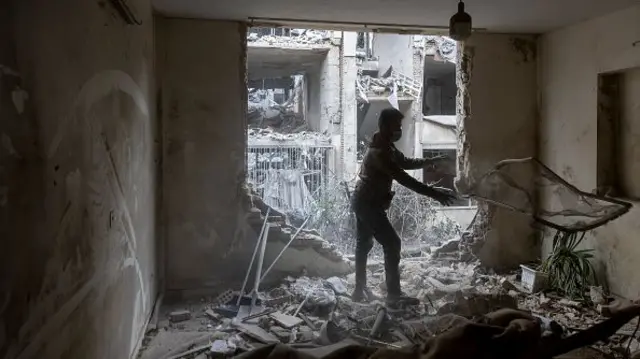
    A house in the Beryanak district of Tehran after it was damaged in missile attack on Sunday

    With the US and Iran giving contradictory messages about their hopes moving forward in this conflict, the prospect of a deal to end the war in the Middle East - now in its sixteenth day - seems far off. This is what's happened today.

  13. Analysis

    A call between Trump and Starmer about the Strait of Hormuz - what happens next?published at 22:54 GMT 15 March

    Paul Adams
    Diplomatic correspondent

    Tonight, there has been word from Downing Street of a call between the UK prime minister and Donald Trump. Officials say they discussed the importance of reopening the Strait of Hormuz.

    But how? No-one truly knows what dangers lurk in these waters and ships aren’t taking the risk.

    What are the options?

    Foreign navies could offer to escort tankers through the strait. Efforts could be made to hunt down and deal with mines. And America could focus its attacks on any Iranian forces interfering with shipping.

    The US has already targeted mine-laying vessels. But Iran claims to have other cards up its sleeve, including hundreds of fast boats capable of firing missiles at ships.

    Trump says Tehran wants a deal, but that’s not the message from Iran’s foreign minister, interviewed on American television earlier.

    No-one doubts America’s overwhelming power. It is, gradually, dismantling Iran’s military, piece by piece. It’s planned and systematic.

    But dealing with the war’s unintended consequences is something else. Among America’s allies, there’s deep anxiety at the seeming lack of a plan.

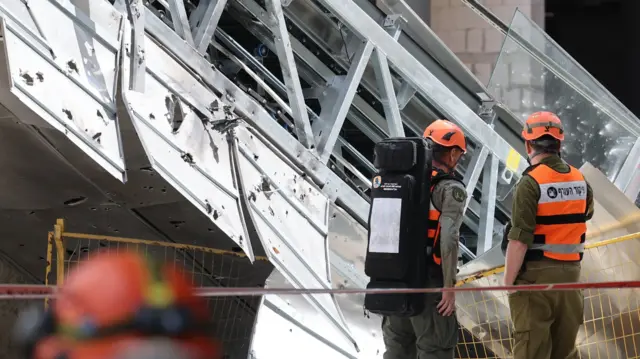
  14. Emergency services say 15 in Israel have died since Iran war startedpublished at 22:03 GMT 15 March

    Two men in high vis stand near a cordoned off building that's damagedImage source, EPA
    Image caption,

    Emergency services at the scene of an Iranian ballistic missile strike in Yehud, 9 March

    Fifteen Israelis have been killed since the start of the war in the Middle East on 28 February, according to emergency organization Magen David Adom (MDA).

    It says that, on Sunday, 69 people have been injured "in light condition", and one person "moderately injured".

    Over the course of the conflict, more than 900 people have been injured, MDA adds, with five of those being "seriously injured".

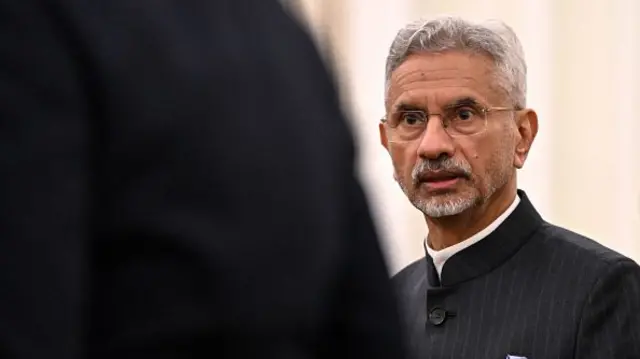
  15. India says it negotiated passage of two ships through Strait of Hormuzpublished at 21:43 GMT 15 March

    Sameer Hashmi
    Middle East business correspondent, reporting from Riyadh

    India’s Foreign Minister Subrahmanyam JaishankarImage source, AFP via Getty Images
    Image caption,

    India’s Foreign Minister Subrahmanyam Jaishankar

    India’s Foreign Minister Subrahmanyam Jaishankar says that direct talks with Iran have helped enable the passage of Indian ships through the Strait of Hormuz.

    In an interview with the Financial Times, Jaishankar says negotiations between New Delhi and Tehran allowed two Indian-flagged gas tankers to pass through the strategic waterway on Saturday.

    “I am at the moment engaged in talking to them and my talking has yielded some results,” he says, adding that discussions with Iranian officials are continuing.

    India imports around 60% of the liquefied petroleum gas (LPG) used by households, with nearly 90% of those supplies coming from Gulf producers such as Saudi Arabia and the United Arab Emirates. Much of that fuel is shipped through the Strait of Hormuz.

    More than 330 million Indian households rely on LPG cylinders for cooking.

    Videos circulating on social media show long queues outside cooking-gas dealers in several Indian cities, as concerns over supply disruptions grow. Some restaurants have also temporarily closed because of shortages.

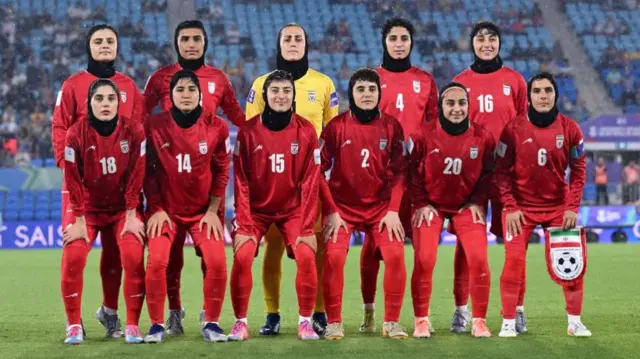
  16. Fifth member of Iranian women's football team withdraws Australia asylum applicationpublished at 21:29 GMT 15 March

    Simon Atkinson
    Australia producer, BBC News

    The women's football team players lined up on the pitchImage source, Reuters
    Image caption,

    Iran players pose prior to the AFC Women’s Asian Cup Group A match, 8 March

    A fifth member of the Iranian women's football team has withdrawn a claim of asylum in Australia and left the country overnight, the federal government has confirmed to the BBC.

    Though not officially named by officials in Canberra, local activists and Iran state media says it is the captain, Zahra Ghanbari.

    The IRNA news agency in Iran says Ghanbari was “returning to the embrace of the homeland”. The Mehr news agency calls it a “patriotic decision”.

    Of the delegation's seven members who initially sought to stay in Australia and were given humanitarian visas, only two remain in the country.

    Australian authorities have confirmed that three other women also dropped their asylum applications, while another had a change of heart last week.

    The group had originally sought sanctuary after concerns the team would face repercussions for staying silent during the country's anthem at their opening Asian Cup match.

    The BBC understands that the Australian government has found "no evidence" to support a theory suggested by human rights activists within the Iranian diaspora in Australia that one of the seven had been acting on behalf of the government and pressuring teammates to return home.

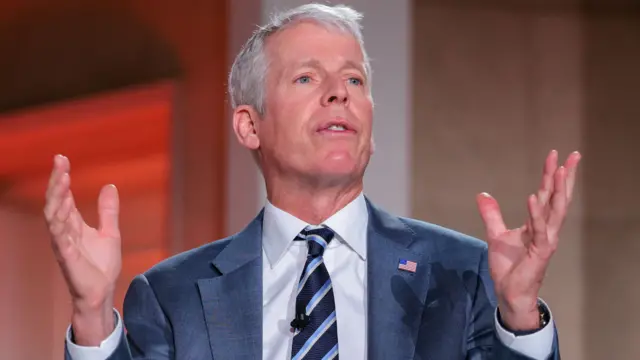
  17. 'Many contingency plans were taken' on Strait of Hormuz - US energy secretarypublished at 21:17 GMT 15 March

    U.S. Secretary of Energy Chris Wright speaks during the 2026 Infrastructure Summit of government officials, corporate executives, and labor leaders, in Washington, D.C., U.S., March 11, 2026Image source, Reuters

    US Energy Secretary Chris Wright earlier told ABC News that the United States "knew there would be a temporary interruption of flows" through the Strait of Hormuz after launching strikes on Iran.

    There were many contingency plans, he said, and it involved "some allies", including Saudi Arabia, positioning "over 100 million barrels" of oil in storage outside the Middle East before the conflict.

    "Meticulous planning went into what might happen with the Strait of Hormuz, how to deal with that," he said.

    Speaking to NBC shortly after, he conceded that the strait is currently not safe for shipping, and that the US goal is to "reopen it" and help bring down rising gas prices.

    "Americans are feeling it right now. Americans will feel it for a few more weeks, but in the end, we will have removed the greatest risk to global energy supplies," he adds.

    Asked if this statement means he believes the war will be over in a few weeks, he says: "I think that's the likely time-frame, yes."

  18. 'I always wear colourful clothes - now I don't': Iranians tell BBC about fear of security checkpoint searchespublished at 21:06 GMT 15 March

    Ghoncheh Habibiazad
    Senior reporter, BBC Persian

    A man in black with a gunImage source, AFP via Getty Images
    Image caption,

    An Iranian security force officer in the capital of Tehran

    Iranians in the country's capital have been telling the BBC about the security checkpoints around the city, where many people are being stopped and searched.

    One man in his twenties, who has been providing internet access amid the blackout in the country, tells the BBC of his fear while passing through one in a taxi.

    "What I do as a job is considered a crime in Islamic Republic," he explains. "I was really worried, because I had my laptop and phone with me."

    "They had stopped cars. But luckily, they didn't search the car that I was in," he says.

    Another man, also in his twenties, lays out his strategy for getting through a checkpoint: "I started saying things like 'thanks for your hard work' and that sort of thing.. as if they were genuinely putting in a lot of effort and I appreciated it."

    The authorities let him go afterwards.

    "I always wear colourful clothes. But now I don’t," says a woman, also in her twenties. "I’m afraid of their patrols, worried that if I wear something too bright it might annoy them."

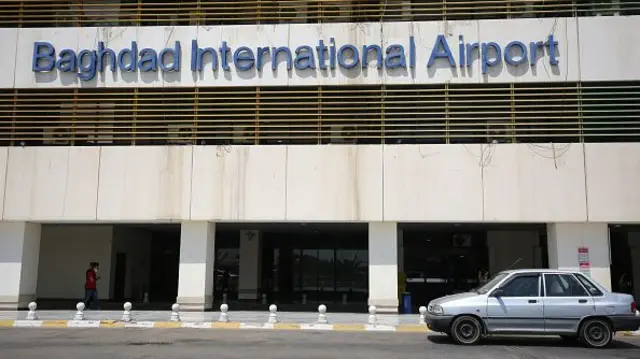
  19. Five injured in rocket attack on Baghdad International Airport, official sayspublished at 20:48 GMT 15 March

    exterior of Baghdad International AirportImage source, AFP via Getty Images
    Image caption,

    File photo of Baghdad International Airport

    Five people have been injured in a rocket attack on Baghdad International Airport, says the head of Iraq's Security Media Cell.

    At 19:00 local time, the airport and its surroundings were attacked with five rockets, says Lt Gen Saad Maan.

    Rockets landed within the airport premises, at a water desalination station and near to both the Iraqi Martyr Alaa airbase and the central Karkh prison, he says.

    A missile launcher "hidden inside a vehicle" to the west of the Baghdad was seized by authorities in the aftermath of the attack, Maan adds.

    He lists the injured as an engineer and four airport staff and security personnel.

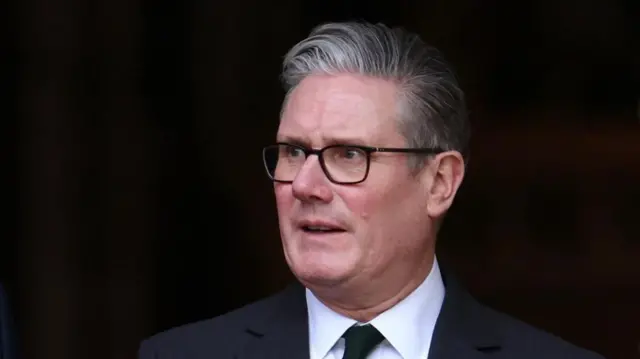
  20. Starmer to hold meeting on Middle East with Canadian PM on Mondaypublished at 20:30 GMT 15 March

    Keir StarmerImage source, EPA

    More now from the phone call that Keir Starmer has been holding with Donald Trump.

    The call with Trump lasted for 15 minutes, says a Downing Street spokesperson.

    Beyond discussing the Strait of Hormuz with the US president, Starmer "also expressed his condolences for the American service personnel who have lost their lives during the conflict".

    In a separate call, with Canadian PM Carney, No 10 says Starmer agreed to "discuss the ongoing conflict further in their meeting tomorrow [Monday], among other bilateral issues".