Summary

  1. Oil prices rise as strikes continue in Middle East - the latestpublished at 00:04 BST 30 March

    As Asia kicks off a new week with another rise in oil prices, here's a look back at the last 24 hours.

    Our live coverage continues here – follow the link for the latest developments.

  2. Oil price rises to over $115 as markets open in Asiapublished at 23:37 BST 29 March
    Breaking

    The markets have just opened in Asia and the oil price has climbed to over $115 a barrel. The price of Brent crude is $115.84, a 2.9% increase.

    Oil was trading at around $72 a barrel before 28 February, when the US and Israeli strikes on Iran began.

    Last week it peaked at $118 a barrel on 19 March and as of Friday afternoon was sitting at just below $112 - significantly up from its pre-war price.

  3. Peacekeeper killed in Lebanon, UN sayspublished at 23:36 BST 29 March

    The UN's Interim Force in Lebanon says a peacekeeper has been killed and another critically injured "when a projectile exploded in a UNIFIL position" in Adchit Al Qusayr in South Lebanon.

    "No one should ever lose their life serving the cause of peace," UNIFIL writes in a statement on X.

    The organisation says it does not know the origin of the projectile and has launched an investigation.

  4. Iran threatens to target homes of US and Israeli officials in the regionpublished at 23:07 BST 29 March

    Ghoncheh Habibiazad
    Senior reporter, BBC Persian

    Ebrahim Zolfaghari, the spokesperson for Iran's Khatam al-Anbiya Central Headquarters - the country's highest operational command unit coordinating the armed forces - has threatened that the armed forces will target the houses of US and Israeli “commanders and political officials in the region".

    He says it is a “retaliatory measure” after accusing the US and Israel of “targeting residential homes of Iranian civilians in various cities”.

    Several Iranian military commanders and officials have been killed during the war, including Iran's late Supreme Leader Ayatollah Ali Khamenei who was killed on the first day of the war on 28 February.

  5. US embassy in Iraq warns universities may be targetedpublished at 22:36 BST 29 March

    The US embassy in Baghdad is warning that Iran and its allies may target American universities in the Iraqi cities of Baghdad, Sulaymaniyah and Dohuk as well as other universities perceived to be connected to the US.

    "Iran has specifically directed threats toward American universities across various parts of the Middle East," the embassy says.

    "Iran-aligned terrorist militias have carried out widespread attacks on American citizens and US-associated targets throughout Iraq, including in the Iraqi Kurdistan Region," the embassy says, adding that Americans need to leave Iraq immediately.

    • As we've been reporting, Iran has threatened to target American and Israeli universities in the region following strikes on universities in Tehran and Isfahan.
  6. Israeli strike on ambulance kills paramedic in Lebanon - WHOpublished at 22:20 BST 29 March

    The head of the World Health Organization (WHO) says a paramedic was killed in a strike on an ambulance in southern Lebanon on Sunday, blaming "Israel's expanding military operations" in the region.

    A medical warehouse in the same city was also destroyed in an attack, Tedros Adhanom Ghebreyesus says in an update on X.

    The WHO says it has verified the deaths of 51 Lebanese health workers since 2 March - including nine paramedics yesterday.

    "Attacks on health facilities must cease immediately," Ghebreyesus writes on X.

    "This cannot become the norm. Health workers are safeguarded under international humanitarian law and should not be targeted."

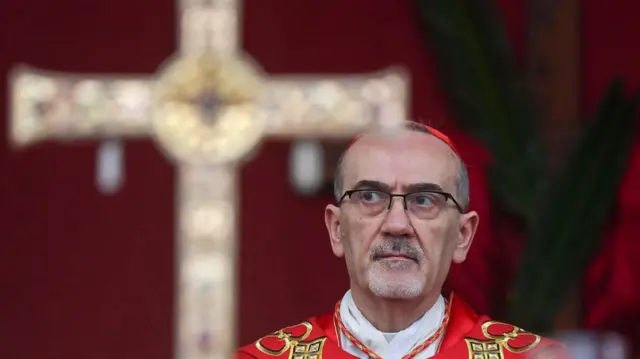
  7. Israeli police criticised for blocking Latin Patriarch from Palm Sunday mass in Jerusalempublished at 22:00 BST 29 March

    Latin Patriarch of Jerusalem, Cardinal Pierbattista Pizzaballa, leads a prayer service to mark Palm Sunday in Jerusalem on March 29, 2026, following the cancellation of the traditional Palm Sunday procession from the Mount of Olives amid restrictions on gathering in large groups and the US-Israeli war on IranImage source, Getty Images
    Image caption,

    Cardinal Pierbattista Pizzaballa planned to mark Palm Sunday at the church, thought to be the site of Jesus Christ's crucifixion

    Israeli police have drawn criticism for blocking the head of the Catholic church in Jerusalem from entering Christianity's holiest site to celebrate Palm Sunday.

    The Latin Patriarch, Cardinal Pierbattista Pizzaballa, and the Reverend Francesco Ielpo were stopped outside the Church of the Holy Sepulchre, where they planned to hold a mass to mark the start of Holy Week, church authorities said.

    Israeli Prime Minister Benjamin Netanyahu said worshippers of "all faiths" had been asked not to visit sites in Jerusalem's Old City for safety reasons after recent Iranian attacks.

    But the move has drawn strong criticism from global leaders as well as the church.

    The US ambassador to Israel Mike Huckabee said it was an "unfortunate overreach" that was "difficult to understand or justify", while Italian Prime Minister Giorgia Meloni called it "an offence not only against believers but against every community that recognises religious freedom".

    Cardinal Pizzaballa's office said it marked "an extreme departure from basic principles of reasonableness, freedom of worship, and respect for the status quo".

    Read more in our story here.

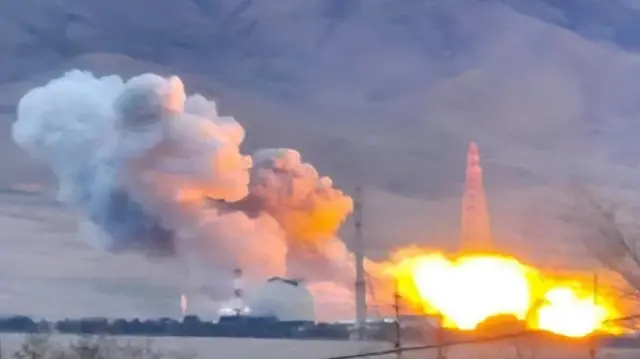
  8. UN nuclear watchdog says Iranian heavy water plant no longer operational after Israeli attackpublished at 21:48 BST 29 March

    A verified image of the moment a strike hit the site near ArakImage source, X/MAMLEKATE
    Image caption,

    Verified footage of an Israeli strike on the facility on Friday showed buildings adjacent to its reactor were hit

    The United Nations' nuclear watchdog has confirmed the Khondab heavy water complex in north-west Iran had sustained "severe damage and is no longer operational" after an attack this week.

    Iran's Atomic Energy Organisation had said on Friday that the nuclear-related facility had been attacked twice. Verified footage at the time showed a ball of fire and smoke rising near the reactor within the facility.

    It said no casualties or contamination had been reported. Israel had issued an evacuation order for the entire facility shortly before the strike.

    In its update today following independent analysis of satellite imagery "and knowledge of the installation", the UN's International Atomic Energy Agency (IAEA) notes that the facility contains "no declared nuclear material".

  9. Power reportedly restored in parts of Tehran and Karajpublished at 21:20 BST 29 March

    Ghoncheh Habibiazad
    Senior reporter, BBC Persian

    I have heard from one source that electricity is back where they live in east Tehran, and from another source in nearby Karaj.

    Iran's semi-official Fars News Agency, which is affiliated to the Islamic Revolutionary Guards Corps, also reports electricity has been restored to most parts of the cities, with work under way to return power to remaining areas as soon as possible.

    It also reports that the power grid in Alborz and Tehran is stable.

  10. IDF says it is striking targets across Tehranpublished at 20:59 BST 29 March

    The Israeli military says it is striking "Iranian terror regime targets across Tehran" in a brief update on Telegram.

    Heavy explosions have been heard in the Iranian capital and power outages have been reported following attacks on "electricity infrastructure" in parts of the city.

  11. Netanyahu instructs military to expand 'security zone' in Lebanonpublished at 20:34 BST 29 March

    Sebastian Usher
    Middle East analyst

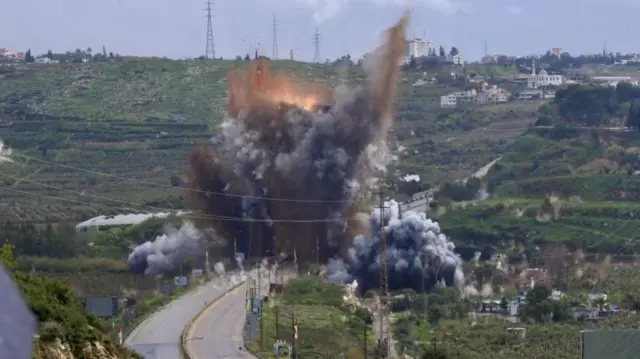
    Smoke and fire after an attack on a bridge in southern Lebanon in the middle of a road with green fields on both sides and buildings in the distance including a mosqueImage source, EPA
    Image caption,

    Israel blew up five bridges on the Litani River in southern Lebanon earlier this week

    During a visit to the headquarters of the Northern Command of the Israel Defense Forces (IDF), the Israeli prime minister Benjamin Netanyahu has said that he's ordered what he called the "existing security zone" in southern Lebanon to be expanded further.

    Netanyahu said the aim was to "definitively thwart the invasion threat" from Hezbollah and push anti-tank missile fire away from the border.

    He did not give any detail as to whether this extension goes beyond the zone that last week the Israeli Defence Minister Israel Katz said would now stretch up to the Litani river, with no Lebanese residents allowed to stay in their homes until the threat from Hezbollah to northern Israel had been entirely removed.

    Mr Katz' words were the strongest statement so far of the Israeli government's intentions in Lebanon with a move that puts a tenth of the country under Israeli control.

    The extent of the zone and the description of it as a "buffer" are reminders of the Israeli occupation of southern Lebanese territory from 1985 to 2000.

    Clashes are continuing in the area between Israeli forces and Hezbollah fighters, with the IDF saying several members of the group have been killed in recent operations, while another Israeli solder was earlier confirmed to have died - the fifth since Israel launched its latest incursion into Lebanon.

  12. Second attack at Isfahan university, Iranian media reportspublished at 20:15 BST 29 March

    A university in Isfahan, central Iran, says it has been hit by US-Israeli strikes for the second time this weekend, according to Fars - a semi-official Iranian news agency affiliated with the Islamic Revolutionary Guard Corps (IRGC).

    Fars has shared a statement from the Isfahan University of Technology, which was attacked yesterday.

    In the statement, originally in Persian, the university says it was "targeted" at around 14:00 local time (10:30 GMT) by a "brutal airstrike".

    It comes after the university, along with the University of Science and Technology in Tehran, were hit by strikes yesterday.

    Iran has threatened to attack American and Israeli universities in the region in response, describing them as "legitimate targets", saying yesterday that the US must condemn the strikes by 12:00 local time on Tuesday to avoid retaliation.

    The US has not commented on the strikes.

  13. Power cut off in parts of Tehran and Alborz provincespublished at 19:53 BST 29 March

    Ghoncheh Habibiazad
    Senior reporter, BBC Persian

    Iran’s Ministry of Energy says attacks on "electricity infrastructure" in parts of the capital, Tehran, the wider Tehran Province and Alborz Province have led to power being cut off, Iranian outlets report.

    Mostafa Rajabi Mashhadi, deputy minister of Energy, says on state TV that "shrapnel struck one of the electricity pylons at the entrance to the city of Karaj".

    Karaj lies north-west of Tehran in the Alborz province, and earlier a source reported electricity fluctuations in the city.

    Mashhadi also says "east Tehran lost one of its power transmission substations due to tonight’s attacks", before adding that people "should not be worried".

    Efforts are ongoing to resolve this matter, the ministry says.

  14. Kuwait, Qatar and UAE report missile and drone attacks todaypublished at 19:30 BST 29 March

    Let us take a quick look at countries in the Gulf region of the Middle East who have reported missile and drone attacks targeting their air space today.

    Kuwait's defence ministry says its has detected 14 ballistic missiles and 12 drones within the country's airspace today.

    "As a result, one of the camps affiliated with the Armed Forces was targeted by several of them, leading to injuries to (10) personnel from the Armed Forces," the ministry says in a statement.

    Qatar's ministry of defence says it has today detected "a number of drones" launched from Iran, having successfully intercepted all of them.

    A few hours before this, the United Arab Emirates (UAE) defence ministry said its air defence systems were "actively engaging" with attempted strikes, after 16 ballistic missiles and 42 drones had been launched from Iran towards the UAE.

  15. Heavy explosions reported in Tehranpublished at 19:11 BST 29 March

    Ghoncheh Habibiazad
    Senior reporter, BBC Persian

    Heavy explosions are happening in Tehran right now, according to four sources.

    There are also electricity fluctuations and outages in parts of Tehran and the nearby city of Karaj, according to two sources.

    Iranian outlets are also reporting power outages in parts of both cities.

  16. 'Hands full of blood': Pope Leo seemingly criticises those involved in warpublished at 19:06 BST 29 March

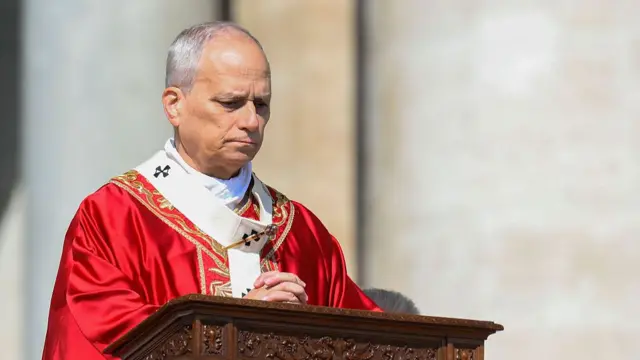
    Pope Leo XIV presides over Palm Sunday Mass at St. Peter's SquareImage source, Vatican Media via Vatican Pool/Getty Images

    As conflict in the Middle East continues, Pope Leo XIV has been addressing people at the Vatican who are celebrating Palm Sunday today.

    The Pope says that God rejects the prayers of leaders who start wars and have "hands full of blood", in what has been interpreted as a criticism of those involved in the US-Israeli war with Iran.

    "This is our God: Jesus, king of peace, who rejects war, whom no one can use to justify war,” says the Pope.

    “He does not listen to the prayers of those who wage war, but rejects them.”

    Quoting a passage from the Bible, he says: “‘Even though you make many prayers, I will not listen: your hands are full of blood.’”

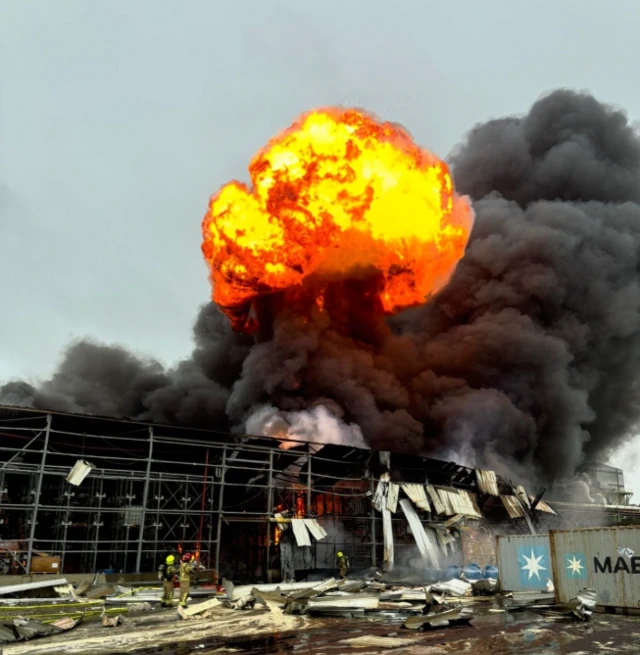
  17. Fire at Israeli industrial site 'under control' - rescue chiefpublished at 18:49 BST 29 March

    We've spotted an update from Israel's fire and rescue service, who have been battling a fire in in Neot Hovav industrial zone, southern Israel.

    "Large teams are operating here. The incident is under control," says Fire and Rescue Commissioner Chief Superintendent Eyal Kaspi.

    Earlier, Kaspi's team declared the fire a "hazardous materials incident". The Israel Defence Force had earlier suspected that the fire may have been caused by missile shrapnel.

    Below is a picture of the incident shared by the Israeli fire service.

    A large ball of fire and heavy black smoke erupts from the site of the fire, covering most of the skyImage source, Israel's fire and rescue service via X
    Image caption,

    A large blaze and heavy black smoke erupts from the site of the fire

  18. Iran and US 'expressed confidence' in Pakistan talkspublished at 18:33 BST 29 March

    Carrie Davies
    BBC Pakistan Correspondent

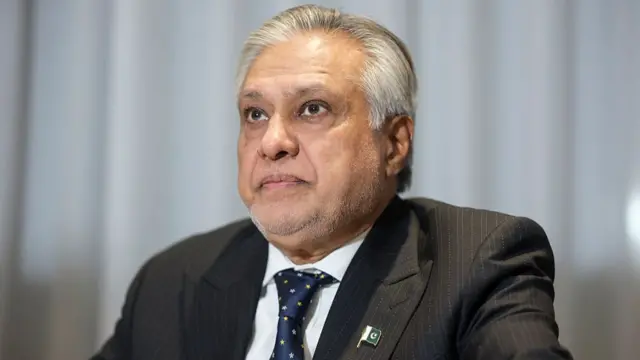
    Dar looks up as he attends a ceremonyImage source, Getty Images

    Pakistan’s foreign minister says that both Iran and the US have "expressed confidence in Pakistan to facilitate" talks.

    He says that Pakistan "will be honoured to host and facilitate meaningful talks between the two sides in the coming days".

    However, there was no mention about whether Iran or the US had confirmed that they would take part in peace talks.

    Foreign minister Ishaq Dar made these comments following the first day of meetings in Islamabad between foreign ministers from Pakistan, Saudi Arabia, Turkey and Egypt.

    According to Dar, the group discussed possible ways to bring an early and permanent end to the war in the region. He expressed his profound gratitude to all three for their support to Pakistan’s efforts for peace in the region.

    Dar also says that he had spoken to the Chinese Foreign Minister Wang Yi and the Secretary General of the United Nations, both of whom expressed support for the peace initiative.

    After a meeting earlier today between Pakistan’s Prime Minister and Saudi Arabia’s foreign minister, Pakistan released a separate statement saying that Pakistan would "always stand shoulder to shoulder" with Saudi Arabia and that Pakistan appreciated the "remarkable restraint" exercised by the country.

  19. BBC Verify

    What is the US Air Force’s E-3 jet and what does it do?published at 18:11 BST 29 March

    By Jake Horton

    As BBC Verify reported earlier, verified pictures show a US Air Force (USAF) command and control aircraft has been destroyed at an air base in Saudi Arabia.

    The aircraft is a Boeing E-3 Awacs - the acronym standing for Airborne Warning and Control System. Based on a Boeing 707 airliner the E-3 has a distinctive rotating radar disc mounted on the rear of its fuselage.

    This radar allows it to detect and track potential targets at long ranges to provide an early warning of possible threats during combat operations.

    The aircraft give “information for commanders of air operations to gain and maintain control of the air battle”, according to the USAF website, external.

    The first of this type entered service in 1977 and the E-3 is expected to remain operational until 2035. Around 15 are reported to still be in use by the USAF.

  20. Air defence systems heard in Tehranpublished at 17:37 BST 29 March
    Breaking

    Ghoncheh Habibiazad
    Senior reporter, BBC Persian

    Three sources in Tehran have said that they've heard air defence systems being activated. Two of them have heard explosions.

    Iranian outlets are also reporting that air defence has been activated in the capital.

    One source in Karaj, a city near Tehran, has said that he has heard air defence as well.