Summary

Media caption,
BBC at site of fatal Israeli strike on Beirut
  1. Trump still expects deal with Iran in 'next two to three hours' - Fox Newspublished at 17:49 BST
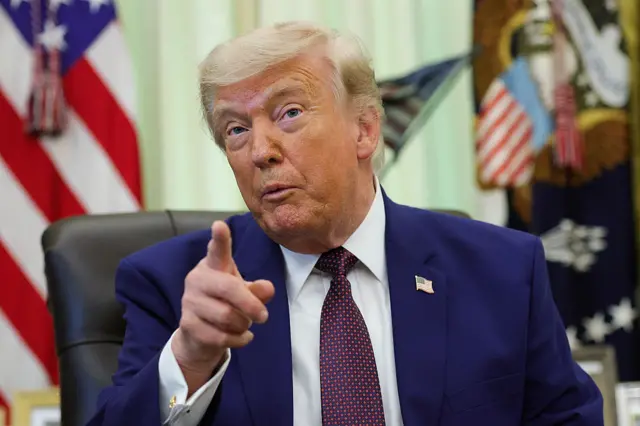
    US President Donald Trump speaks during an event in the Oval Office of the White House on June 03, 2026 in Washington, DC. Trump signed executive orders related to strengthening customs enforcement and reforms to federal work lawsImage source, Getty Images

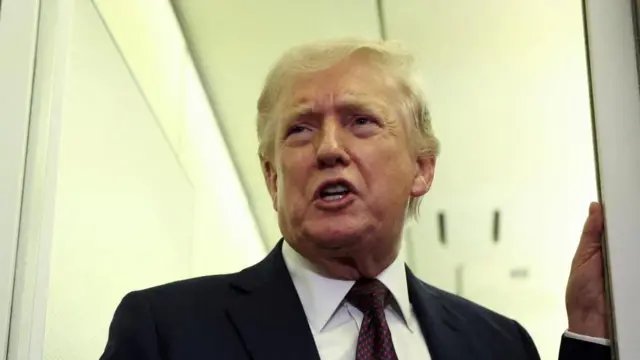
    US President Donald Trump believes a deal will still be signed with Iran "in the next two to three hours", he tells Fox News.

    He made the comments in a brief interview with the network's Trey Yingst, who repeated them on air during a live cross from Tel Aviv.

    Trump told Yingst he spoke on the phone with Israeli Prime Minister Benjamin Netanyahu after today's strikes on Beirut. Trump appeared to express his frustration, using an expletive to ask Netanyahu what he is doing.

    "He told the prime minister not to conduct additional strikes against Hezbollah, so it doesn't affect this deal from moving forward," Yingst said.

  2. Trump clearly furious with Neytanyahu after Beirut strikepublished at 17:44 BST

    Joe Inwood
    World news correspondent

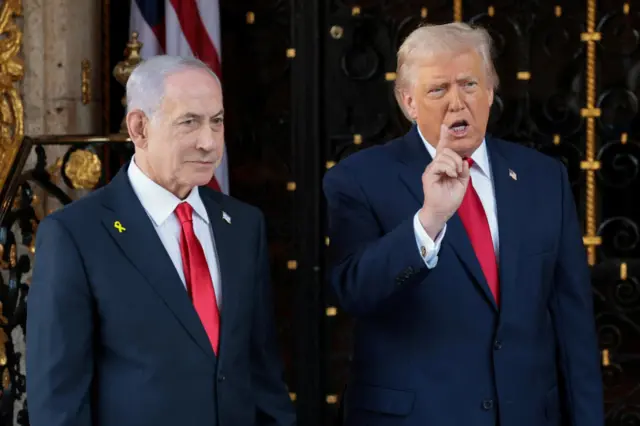
    U.S. President Donald Trump speaks to the media next to Israeli Prime Minister Benjamin Netanyahu upon arrival for meetings at Trump's Mar-a-Lago club in Palm Beach, Florida, U.S., December 29, 2025Image source, Reuters

    He might not say it explicitly, but President Trump is clearly furious with Benjamin Netanyahu.

    His social media post says that the attack on Beirut, which he implies was a disproportionate response to a “very small and meaningless” attack by Hezbollah, risked disrupting the peace process “on a special day”.

    It isn’t specified what makes the day “special", but it has not gone unnoticed that there was a chance of a peace deal being signed on Donald Trump’s 80th birthday.

    That prospect now looks far less likely.

    What will make this doubly galling for the President is that he has repeatedly pointed out the extent to which he is in the driving seat of his relationship with Israel’s Prime Minister.

    "If I tell Netanyahu to do something, he does it,” he told the BBC last week.

    The fact that his ally decided to launch strikes, knowing the impact they would have, on a day when the President had predicted a deal, will further sour an already strained relationship.

  3. Trump wants a deal on his 80th birthdaypublished at 17:37 BST

    Sebastian Usher
    Global affairs correspondent, reporting from Jerusalem

    US President Donald Trump wears a suit and holds onto a wall as he speaks to to reporters aboard Air Force One in MarchImage source, Reuters

    There's no doubt that President Trump would very much like to be able to announce the deal on his eightieth birthday - and frame it as a victory.

    The Iranian leadership may not want to give him that satisfaction.

    But it certainly does look as if the two sides have all but agreed a deal.

    The details are not yet known - and both the US and Iran have each been presenting the aspects that make them seem to have the upper hand.

    A senior Iranian official has said that this initial deal would see the Strait of Hormuz re-opened immediately, as Trump has stipulated.

    The same official has also said there's an agreement for Tehran to dilute its highly enriched uranium inside Iran.

    These would be significant moves forward, raising hopes of success in the difficult negotiations to come.

    But the issue of Israel's war against Hezbollah in Lebanon could still prove to be a deal breaker further down the line.

  4. People clear through rubble at site of Israeli strike in Beirutpublished at 17:32 BST

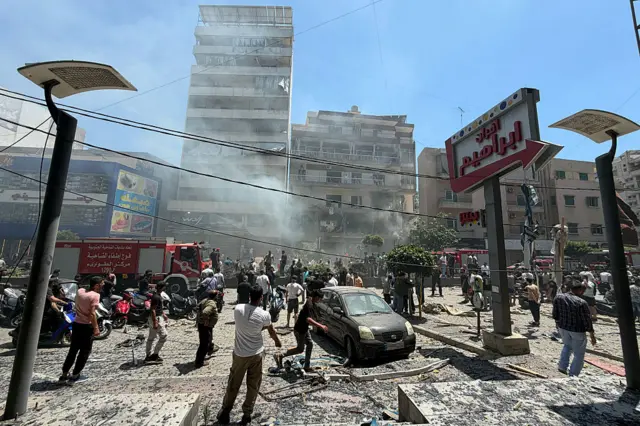
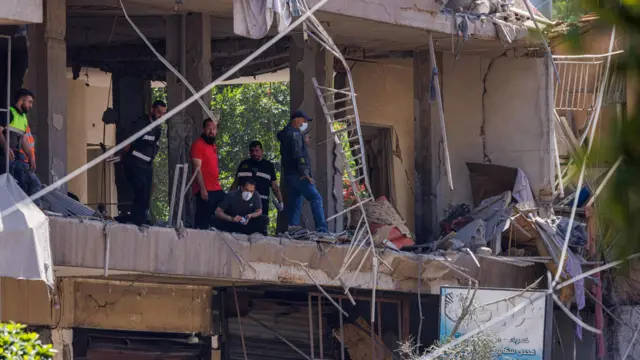
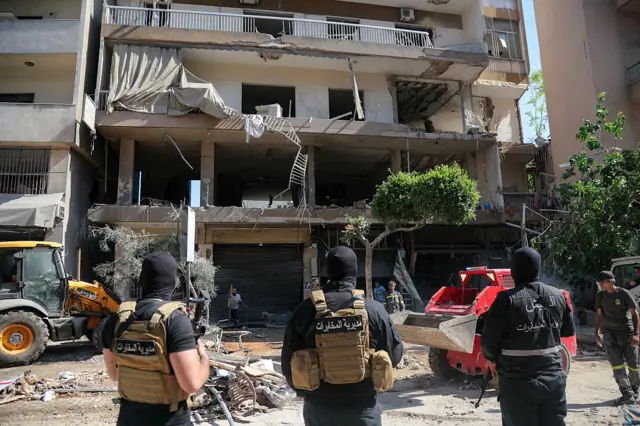
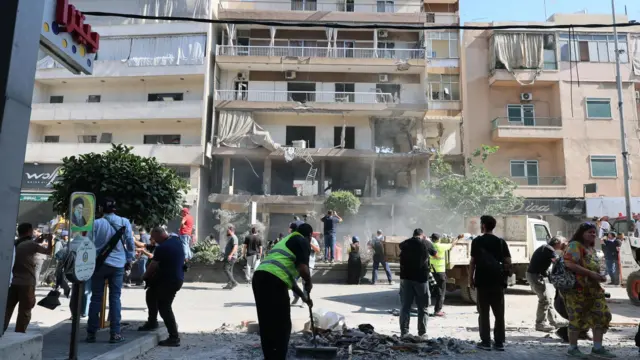
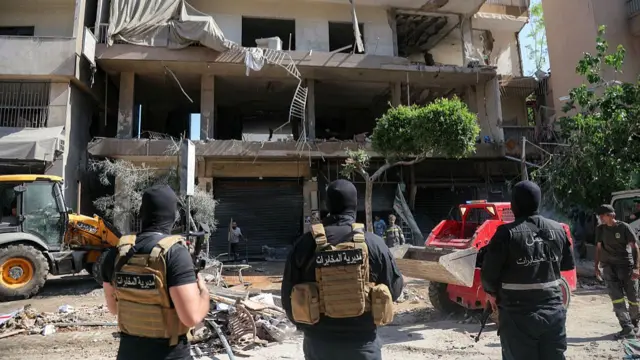
    These are some of the latest images reaching us from Beirut following an Israeli strike on the Dahieh suburb of the Lebanese capital earlier on Sunday.

    Three people were killed and 15 injured in the strike, according to Lebanon's civil defence agency.

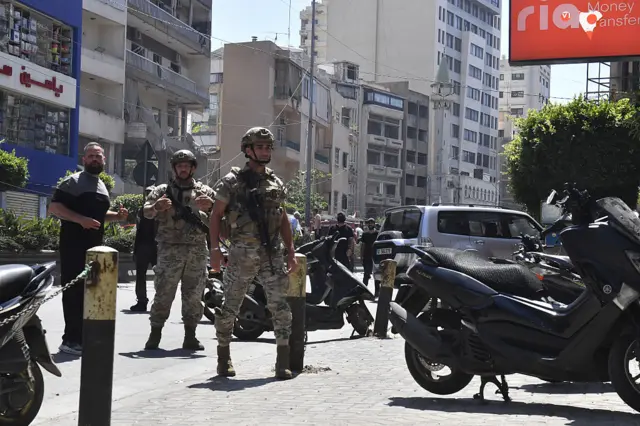
    Photos show Lebanese army officers at the site, while people can be seen clearing through the rubble.

    People gather at the site of an Israeli airstrike that targeted a building in Beirut's southern suburbs on June 14, 2026Image source, AFP via Getty Images
    Police officers and emergency personnel work at the site of an Israeli strike on the southern suburbs of Beirut, Lebanon, June 14, 202Image source, Reuters
    Security forces and emergency responders inspect the site after an Israeli airstrike hit Beirut's southern suburb of Dahiye despite an existing ceasefire, in Beirut, LebanonImage source, Anadolu via Getty Images
    Lebanese army soldiers stand guard as people clear the rubble at the site of an Israeli airstrike that targeted a building in Beirut's southern suburbs on June 14, 2026. The office of Israeli Prime Minister Benjamin Netanyahu said on June 14 the military had carried out strikes in Beirut's southern suburbs, known as DahiyehImage source, AFP via Getty Images
  5. US 'on track' to sign a deal with Iran, Hegseth sayspublished at 17:04 BST

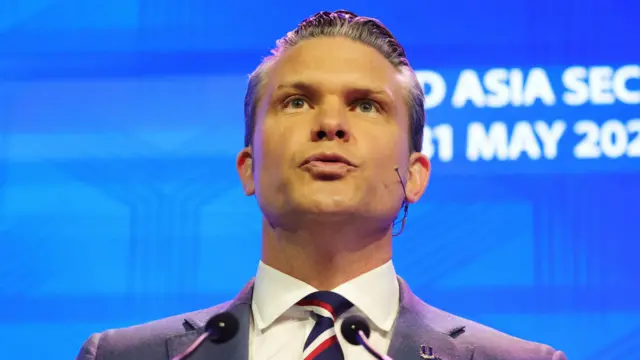
    US Secretary of Defense Pete Hegseth delivers his speech during a plenary session of the International Institute for Strategic Studies (IISS) Shangri-la Dialogue Defence Summit in Singapore, 30 May 2026Image source, EPA/Shutterstock

    US Defence Secretary Pete Hegseth says "we are on track" to sign a deal with Iran, and it's "not a matter of if" but when.

    In an interview with the BBC's US partner CBS, Hegseth says: "We're attuned to what's happening with Hezbollah firing rockets into northern Israel, which they need to stop doing," adding that "Iran needs to encourage them to stop doing that in very adamant ways".

    "If Iran wants this to hold", Hegseth warns, "they need to pull back Hezbollah, no doubt".

  6. Analysis

    US-Iran deal at risk of derailing as Lebanon remains major obstaclepublished at 16:46 BST

    Hugo Bachega
    Middle East correspondent in Beirut

    Lebanon had already become a major obstacle for a deal between the US and Iran, and the Israeli attack on the southern suburbs of Beirut, where the Iranian-backed armed group Hezbollah is based, can further complicate those efforts.

    Iran insists that any truce should also include the end of the war here, something that has been rejected by Israel, which appears to have been sidelined in the negotiations.

    Israeli officials say the conflict against Hezbollah is separate to the one in Iran and, in Israel, there is public support for the war in Lebanon to continue.

    If Iran is successful in linking the two arenas, Israel may be forced to stop its military activities in Lebanon.

    Many will say the timing of this attack, which Israel says was in response to Hezbollah’s attacks against northern Israel, was no coincidence, amid the expectation of the possible signing of the deal.

    People clean up near the site of an apartment targeted by an Israeli airstrike in Beirut's southern suburbs, LebanonImage source, EPA/Shutterstock

    The full text has not been released – in fact, we still do not know if it all its terms have been agreed by both sides - but there seems to be a consensus in Israel that this is a setback for the country: the military successes do not appear to have been translated into something that can be seen as a strategic victory.

    Based on leaks of the deal, an Israeli military official described it as “very bad” and “catastrophic” to the country’s Ma’ariv newspaper.

    A defence official told N12 “none of the goals set by Israel have received an immediate response in the agreement.”

    Finally, Iran had vowed to respond to any strike on Beirut by attacking Israel. A deal that was described as being close is once again at risk of derailing.

  7. 'Hezbollah constantly fires at Israeli civilians,' says foreign ministrypublished at 16:35 BST

    Israel's foreign ministry says that "Iran’s proxy, Hezbollah, is the one that attacked Israel again this morning, completely unprovoked".

    "Hezbollah constantly fires at Israeli civilians", the foreign ministry says in a statement on X, adding that such attacks have continued "even after the ceasefire".

    "It was Hezbollah that launched an unprovoked attack on Israel in March, acting under the orders of its Iranian masters," it adds.

    The statement comes in response to comments that were made earlier on Sunday by Iran's chief negotiator, who said Israel's fresh strikes on Beirut show the US is not fulfilling its commitments.

  8. Three killed in Israeli strike in southern Beirut - reportspublished at 16:13 BST

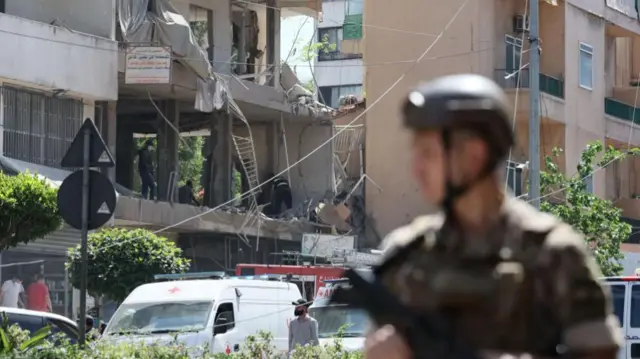
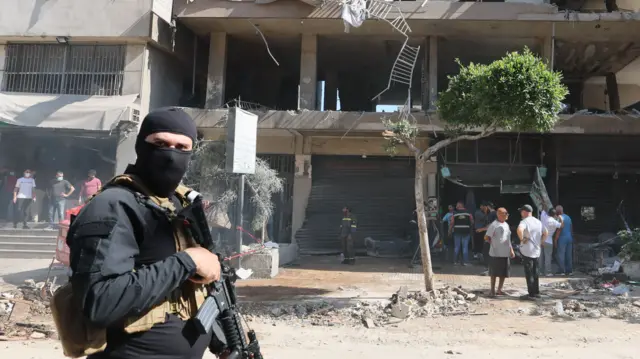
    A Lebanese soldier in army uniform is pictured holding a rifle in front of a damaged apartment building.Image source, EPA/Shutterstock

    Three people were killed in an Israeli strike on Beirut's southern suburbs on Sunday, according to Lebanon's civil defence agency.

    The civil defence agency said in a statement carried by Lebanon's state-run National News Agency (NNA), that "the bodies of three martyrs were recovered from under the rubble".

    NNA reports that the number of those injured in the strike has reached 15, while significant damage was caused to buildings and shops.

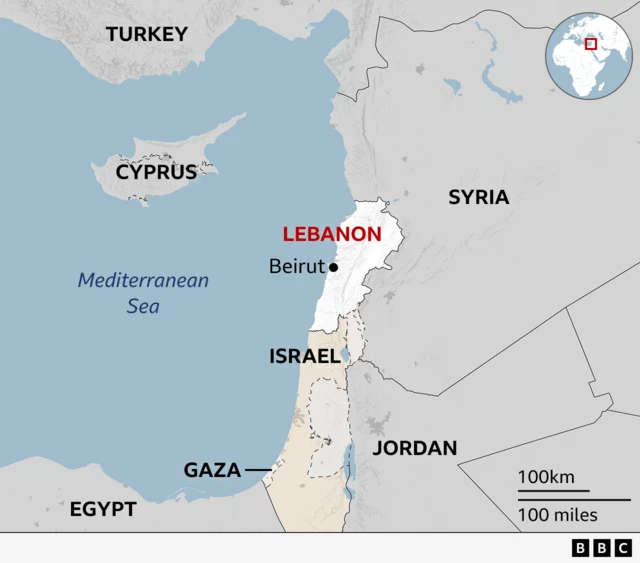
    A map showing the location of Lebanon and Beirut
  9. 'Let's not blow it': Trump says Israeli attack on Beirut 'should not have happened'published at 15:54 BST
    Breaking

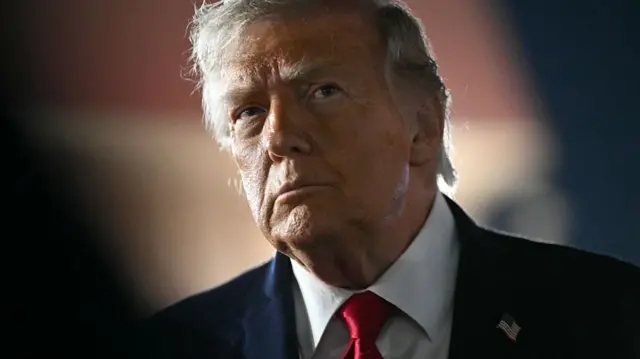
    S President Donald Trump speaks to the press before boardingImage source, Getty Images

    US President Donald Trump says Israel's strike on Beirut earlier on Sunday "should not have happened".

    "Particularly on a special day when we are so close to a Peace Deal with Iran," he writes on Truth Social.

    He says Israel has a "right to defend itself" but the attack it was responding to was "very small and meaningless".

    He adds that the US and Iran are "very close to a Deal that will bring peace to the region, including to Lebanon, and all sides should stand down".

    Trump says there should be no more attacks by Israel or "any other party", adding that this could be the "beginning of a long and beautiful peace — Let’s not blow it!".

  10. Analysis

    Strikes on Beirut put imminent US-Iran deal in doubt but by no means rules it outpublished at 15:51 BST

    Sebastian Usher
    Global affairs correspondent, reporting from Jerusalem

    Lebanese security forces at the site of an Israeli airstrike on 14 JuneImage source, EPA
    Image caption,

    Lebanese security forces at the site of an Israeli airstrike on 14 June

    Iran's chief negotiator has said that Israel's attacks on Beirut in Lebanon show the US is not fulfilling its commitments.

    Mohammad-Bagher Ghalibaf made his comments after Israeli forces struck Hezbollah targets in the southern suburbs of Beirut, in response to rocket fire by Hezbollah into northern Israel.

    It comes as the US was indicating that an initial deal with Iran to end their war could be signed today.

    Israel's offensive against Hezbollah in Lebanon almost reignited the Iran war last week after Tehran fired missiles into Israel in response to the Israeli military hitting Beirut.

    President Trump quickly intervened to demand that both sides hold their fire, which they did.

    He may have to do the same again now. The situation in Lebanon will be one of the toughest issues to be negotiated if and when the US and Iran sign an initial agreement.

    In the past two days, both sides have shown a commitment to finalising that deal imminently. The latest flare up puts that in doubt but by no means rules it out.

  11. Fresh Israeli strikes on Lebanon amid reports of imminent US-Iran dealpublished at 15:37 BST

    Lebanese army soldiers stand guard as people clear the rubble at the site of an Israeli airstrike that targeted a building in Beirut's southern suburbs on June 14, 2026Image source, Getty Images
    Image caption,

    Images show damage to buildings in the southern suburbs of Beirut following an Israeli strike on Sunday

    Israel has carried out a fresh strike in Beirut's southern suburbs amid reports of an imminent deal between Iran and the US.

    The Israel Defense Forces (IDF) says it struck a Hezbollah command centre in the Dahieh suburb of Beirut following "Hezbollah’s launch of aerial targets toward Israeli territory" earlier on Sunday.

    Iran's chief negotiator Mohammad Bagher Ghalibaf warned that the latest strike shows the US is not fulfilling its commitments and either lacks the will or ability to do so.

    Iran has long insisted Lebanon be covered by the peace deal being negotiated with Washington. Ghalibaf said there was "no point" in talking about continuing "down this path".

    The strike on Lebanon's capital comes after US President Donald Trump said on Saturday that a deal to end the war with Iran would be signed on Sunday.

    Writing on Truth Social, he said the deal would see the Strait of Hormuz immediately opened "to all" and would guarantee Iran is never able to build a nuclear weapon.

    However, Iran's foreign ministry has expressed caution over the timeline for signing the deal, warning that we will "have to wait and see about the exact date".