Summary

  1. Starmer more interested in appeasing backbenchers on welfare, says Badenochpublished at 13:41 BST

    Leader of opposition Kemi BadenochImage source, Pool

    Leader of the opposition Kemi Badenoch says she is "not surprised" John Healey has resigned, calling his decision "the honourable thing".

    She says she asked the PM about defence spending at PMQs yesterday, and Starmer - according to Badenoch - exposed that he was "not going to put money into defence to the amount that was required".

    "I am glad that he [Healey] agrees with me," she says, but calls his letter "shocking" in suggesting current spending plans could leave troops at risk.

    Badenoch says Starmer is "putting in less than half of the minimum required", with last year's strategic defence review suggesting about £28bn was required.

    She says he is "more interested in saving his job" by appeasing backbenchers with welfare spending than "putting the national interest first".

    Badenoch says the country needs to spend 3% of GDP on defence by the end of this parliament - claiming her party would fund this by reinstating the two-child benefit cap and implementing a sovereign defence fund.

  2. Other defence ministers told to stay in position by Healeypublished at 13:34 BST

    Jack Fenwick
    Political correspondent

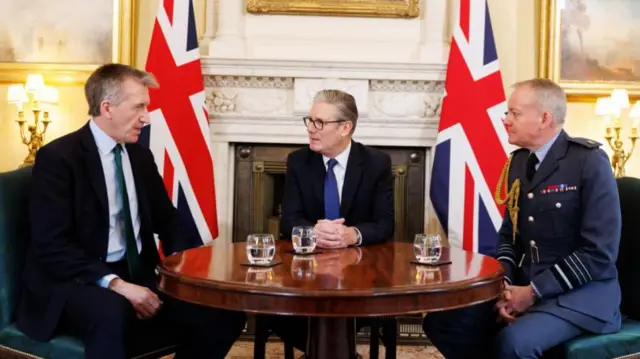
    BBC News understands that John Healey has asked the government's other defence ministers to stay in post to minimise disruption.

  3. Healey told Starmer that a 0.08% increase was not enoughpublished at 13:28 BST

    Jonathan Beale
    Defence correspondent

    The BBC understands that John Healey had been pressing the prime minister for a larger increase in defence spending than he was offered.

    The deal the prime minister offered on Monday did not include a timetable to reach 3% of GDP.

    Having promised to reverse what he called the "hollowing out" of the armed forces, the settlement John Healey was offered on Monday was not enough.

    In other words, it would have meant further cuts.

    Healey was being offered an extra £13.5bn over the next four years - which defence sources said would really mean a £10bn increase alongside some "treasury trickery".

    The offer was well short of what Healey had been asking for - and well below the estimated £28bn needed to avoid large cuts.

    It’s understood that Healey told the prime minister that what amounted to a 0.08% increase would not be enough to keep the country safe.

  4. This is a wake-up call - Ed Daveypublished at 13:24 BST

    Headshot of Davey who speaks. Background is blurryImage source, Getty Images

    "Healey's resignation is a wake-up call for Starmer and Burnham," Liberal Democrat leader Ed Davey says.

    In a post on X, he adds: "Stop repeating the mistakes of the Conservatives and get serious about funding our armed forces properly.

    "We cannot afford years more political chaos while our national security is put at risk."

  5. Starmer putting welfare before defence, says shadow defence secretarypublished at 13:23 BST

    Headshot of James who sits and smiles, with a green and black background behind him. He has white hair and wears a grey suit, pink shirt and gold and black tie

    Shadow Defence Secretary James Cartlidge says John Healey has shown "integrity" by resigning and tells the prime minister he is "paying the price" for prioritising welfare over a stronger military.

    In a video posted online, he says Healey was "left with no choice" as the government was offering him "such a tiny amount of money" for the armed forces.

    "This is not good enough," he adds.

  6. BBC Verify

    By how much has the UK's defence spending been increasing?published at 13:19 BST

    By Ben Chu

    On 25 February 2025, Prime Minister Keir Starmer announced that UK defence spending would rise to 2.5% of GDP in 2027, funded by aid spending being cut from 0.5% of GDP to 0.3% in the same year.

    And the government said that, including spending on the UK’s security and intelligence agencies, the overall defence budget would reach 2.6% of GDP by 2027.

    The UK’s estimated Nato-qualifying defence spending - which is the spending that the military alliance counts as meeting its members’ commitments - was 2.3% of GDP in 2024 and 2.4% in 2025.

    In February 2025, Starmer also stated an "ambition" to increase defence spending to 3% of GDP "in the next parliament".

    At a summit in The Hague in June 2025, the UK and other Nato members committed to spending 3.5% of GDP spending on defence by 2035.

    John Healey’s resignation letter as defence secretary suggests the planned Defence Investment Plan intends to increase defence spending in 2030 to 2.68% of GDP.

    That implies an 0.08% increase on the existing 2027 commitment of 2.6% of GDP - around £2.4bn in today’s money.

  7. Analysis

    The exasperation is clearpublished at 13:08 BST

    Chris Mason
    Political editor

    What is already becoming very clear is the exasperation, frustration and anger that has led to this moment.

    Senior figures in the armed forces were making it clear that the funding being suggested was nowhere near enough.

    As had been widely reported, the figure in question was an increase of around £13.5bn in the next four years.

    Plenty reckoned this was inadequate, not least because in their view it wasn’t even £13.5bn - but actually around £10bn, with the remainder disparagingly dismissed as accounting trickery from the Treasury.

    Let’s see how the Treasury and No 10 respond.

    An ally of the - now former - defence secretary says: "Healey has been one of the most loyal Labour men for over 30 years. He’s only ever wanted a successful Labour government."

  8. 'You have been unable to commit the resources the nation needs'published at 13:02 BST

    We can now bring you more excerpts from John Healey's resignation letter - in which he accuses PM Keir Starmer of failing to commit the resources the military needs.

    Excerpt from Joh Healey’s resignation letter: This new era for defence required further investment through the Defence Investment Plan. The excellent and extensive cross-government work that completed in January – overseen by you, me and the Chancellor – confirmed the scale of the challenge and the rising demands on defence.Since then, you have been unable, and the Treasury has been unwilling, to commit the resources that the nation needs to defend the country at this time of rising threats.
    Excerpt from Joh Healey’s resignation letter: However, your DIP financial settlement – which I was first given in full on Monday afternoon this week – falls well short of what is required for defence and the country at this dangerous time.
    Excerpt from Joh Healey’s resignation letter: You know what defence needs. You made the argument for this powerfully in your speech at the Munich Security Conference back in February. Without a DIP that meets the moment in this way, I am being forced to make decisions that would reduce the readiness of our Forces and increase the risk to personnel on operations, and could make the country less safe.
  9. Healey sixth minister to resign in less than a monthpublished at 13:00 BST

    Headshot of Healey walking holding red folder in front of black iron fenceImage source, Getty Images

    John Healey is the sixth minister to step down in the past month.

    Health Secretary Wes Streeting left his post on 14 May. He said it was clear Sir Keir would not lead Labour into the next general election, criticising his government's "drift" and lack of "vision".

    Two days before, Jess Phillips resigned from her position as safeguarding minister.

    "I'm not seeing the change I think I, and the country expect, and so cannot continue to serve as a minister under the current leadership," she wrote.

    On the same day, junior ministers Miatta Fahnbulleh, Alex Davies-Jones and Zubir Ahmed also resigned from the government.

  10. Ex-minister and soldier Tugendhat: 'This is the right letter to send'published at 12:58 BST

    Tom TugendhatImage source, Reuters

    Former security minister - and soldier - Tom Tugendhat says John Healey's resignation "states clearly this administration has failed" in defending the nation.

    "I’ve criticised every party for the state we’re in but the truth is now clear: the complacent confidence in peace is over. We must rearm."

    The Conservative MP adds: "This is the right letter to send."

  11. Analysis

    Another crisis for the prime ministerpublished at 12:53 BST

    Henry Zeffman
    Chief political correspondent

    John Healey's resignation letter is a stinging criticism of the defence spending plans we were expecting to be unveiled in the coming days.

    The essence of the resignation - which comes as a real shock - is that the plans are inadequate.

    Essentially, Healey is arguing that this plan - which has been haggled over in government for months now - would increase the risk to Britain's armed forces when they are on military operations.

    That is about as serious a charge as a defence secretary can make. It is also a very grave political crisis for a prime minister.

    Media caption,

    BBC political correspondent on John Healey's resignation

  12. Analysis

    This is a surprise - but the funding battle has taken its tollpublished at 12:50 BST

    Jonathan Beale
    Defence correspondent

    The surprise in John Healey’s resignation is that he never looked like a quitter. He has always been a loyal minister and Labour Party man.

    Unlike other recent defence secretaries, he studiously avoided briefing against other ministers or the Treasury. When he met journalists he frustratingly hid his own frustrations.

    He mostly said the same in private as he did in public. But the government’s failure to move as fast as other European nations, or as fast as he had promised, has clearly taken its toll.

    The government’s claim to be a leading member of the Nato alliance sounded increasingly hollow – with the UK dropping from the fourth largest spender to 14th within five years.

    Allies were asking when the UK’s words would be matched by actions. Defence industry were asking the same questions too.

    Healey made mistakes too. He thought the government’s promise to increase defence spending to 2.5% of GDP earlier than planned would be enough.

    Senior defence officials were exasperated when they’d heard he’d said he wouldn’t be asking for any more. He soon had to.

    Healey also cut out other ministers in his department from key conversations and decisions. But with his resignation the government has still lost a hard working, dedicated loyal minister.

    The prime minister will look weaker. But in his last act as defence secretary, the question is has John Healey strengthened the hand of the armed forces?

  13. Healey takes defence 'more seriously' than Starmer or Reeves, Cleverly sayspublished at 12:43 BST

    Headshot of Cleverly in front of dark blue backgroundImage source, Getty Images

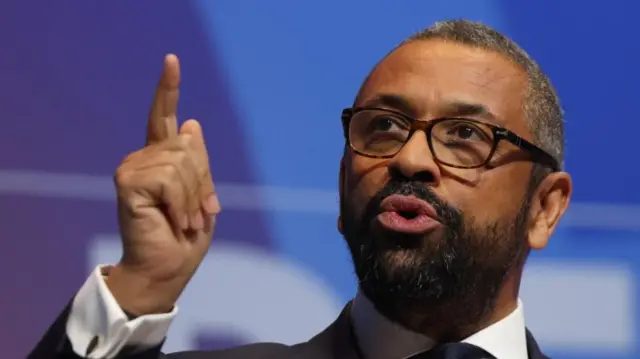
    In a post on X, Conservative MP and former foreign secretary James Cleverly says he has "always respected John Healey.

    "He clearly takes defence of the realm and defence of our interests more seriously than either Keir Starmer or Rachel Reeves."

  14. 'Good on Healey. Shame on them,' says Reform's Robert Jenrickpublished at 12:39 BST

    Headshot of Jenrick in front of blue backgroundImage source, Getty Images

    Reform UK's Robert Jenrick says "good on Healey", in reaction to his resignation.

    In a post on X, the MP writes: "This Government has all the money in the world for Ed Milliband’s mad plans, foreign aid, and benefits for foreigners. But nothing for our armed forces.

    "Good on Healey. Shame on them. Reeves and Starmer should go too. And with them this wretched Labour Government."

  15. What is the defence investment plan?published at 12:35 BST

    John Healey says the financial settlement for the Defence Investment Plan (DIP) offered by the prime minister "falls well short of what is required for defence and the country and this dangerous time".

    The DIP, which has not yet been released, will lay out government defence spending.

    It will explain how new equipment and defence infrastructure will be funded over the coming decade, following a review of Britain's capabilities in June last year.

    But publication has been delayed after the MoD reportedly asked for an extra £28bn over the next four years, following an internal assessment last year.

    On Wednesday, Starmer told the Commons it was due to be released ahead of a Nato summit early next month.

    Speaking on Monday, Healey told MPs that Starmer "is determined that we publish the defence investment plan before the Nato summit".

    A British Ajax armoured fighting vehicleImage source, PA Media
    Image caption,

    A British Ajax armoured fighting vehicle

  16. Healey says he has 'no other option' but to resignpublished at 12:23 BST
    Breaking

    More now from Healey's letter:

    He outlines areas he is proud of, including leading on support for Ukraine during its war with Russia, and establishing Britain as a leading voice in Nato.

    However, he complains about funding for the long-awaited Defence Investment Plan. He says the DIP financial settlement - "which I was first given in full on Monday afternoon this week" - falls "well short of what is required for defence and the country at this dangerous time".

    Quote Message

    After explaining to you that I would not be able to accept a DIP settlement that does not give our Forces the resources they need, I am now left with no other option than to submit my resignation as your Defence Secretary."

  17. Healey says PM and Treasury not giving military the money it needspublished at 12:21 BST
    Breaking

    The start of Healey's letter, saying he is writing with "great regret and reluctance"
    Image caption,

    The start of Healey's letter, saying he is writing with "great regret and reluctance"

    John Healey has resigned as defence secretary in a letter to Prime Minister Keir Starmer. Here are some of the key lines - we'll have more soon:

    "This new era for defence required further investment through the Defence Investment Plan. The excellent and extensive cross-government work that completed in January-overseen by you, me and the Chancellor - confirmed the scale of the challenge and the rising demands on defence.

    "Since then, you have been unable, and the Treasury has been unwilling, to commit the resources that the nation needs to defend the country at this time of rising threats.

    "As I've outlined to you, there are credible ways of meeting the mid-term funding challenges, working multi-nationally and as other European nations are doing, to allow us to protect our ability to deliver the missions of our Labour Government.

    "You know what defence needs. You made the argument for this powerfully in your speech at the Munich Security Conference back in February. Without a DIP (Defence Investment Plan) that meets the moment in this way, I am being forced to make decisions that would reduce the readiness of our Forces and increase the risk to personnel on operations, and could make the country less safe."

  18. Defence Secretary John Healey resignspublished at 12:15 BST
    Breaking

    This is breaking news - we'll have more details in our next post.