Summary

  1. Attacks on Lebanon in picturespublished at 23:49 BST

    Israel launched a new wave of attacks on southern Lebanon today, damaging and destroying buildings in the village of Hanouiyeh, as well as in Beirut.
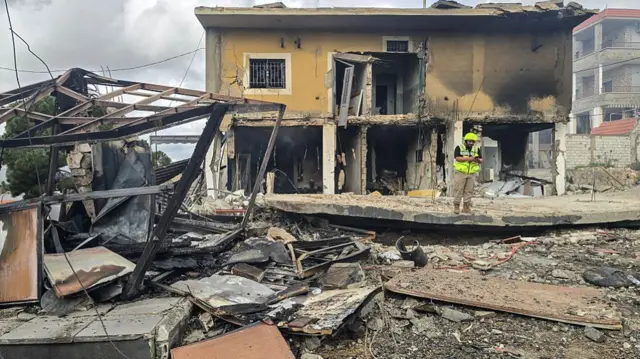
    a severely damaged house in front of a large pile of rubble and a collapsed structure, with worker standing nearbyImage source, AFP via Getty Images
    Image caption,

    A first responder works at the site of an Israeli airstrike in the southern Lebanese village of Hanouiyeh, east of Tyre, on 30 March
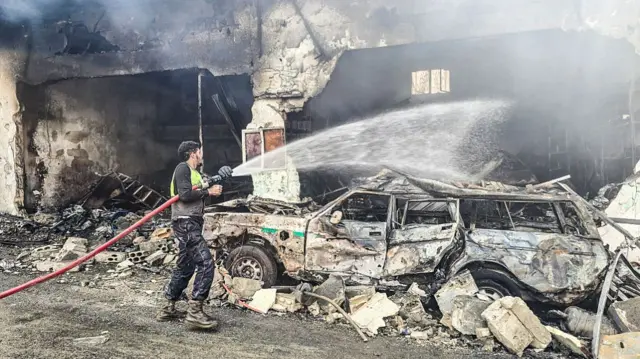
    a worker hoses a burned car and collapsed building with water in HanouiyehImage source, AFP via Getty Images
    Image caption,

    The Israeli airstrike in Hanouiyeh destroyed cars and buildings
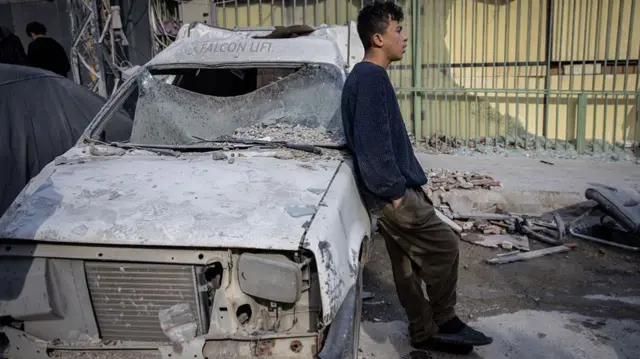
    a boy leans against a damaged car surrounded by rubble on a streetImage source, Getty Images
    Image caption,

    A boy leans on a car damaged in an Israeli airstrike in Beirut, Lebanon
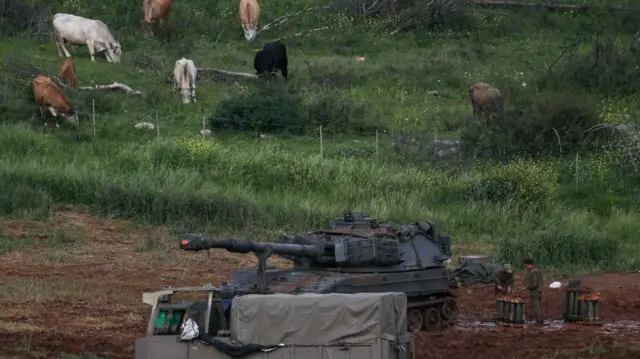
    Israeli tanks and soldiers standing near a grassy hillside where cattle are grazingImage source, Reuters
    Image caption,

    A heard of cattle next to Israeli soldiers and an artillery unit, after Israel launched a new campaign in southern Lebanon on 30 March
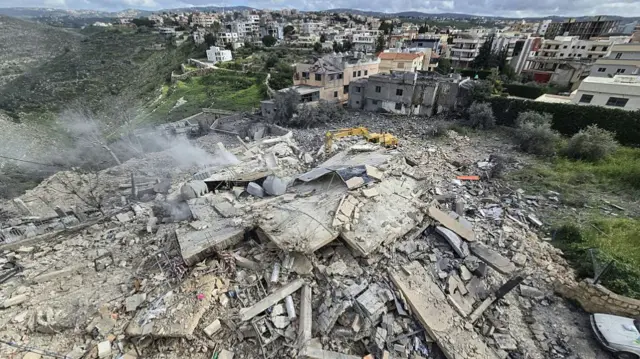
    a hillside covered in collapsed buildings and rubble, with village and hills int he backgroundImage source, AFP via Getty Images
    Image caption,

    More damage from an Israeli airstrike in the village of Hanouiyeh
  2. Iran again denies it is negotiating with the USpublished at 23:23 BST

    A spokesperson for Iran's foreign minister has once again denied there have been negotiations with US officials.

    Esmaeil Baqaei says Iran has "had no negotiations with America in these thirty-one days," referring to the duration of the war.

    "What has occurred is the submission of a negotiation request, accompanied by a set of proposals from America, which has reached us through certain intermediaries, including Pakistan," he adds in an online statement.

    "Our position is very clear. At present, as America's military aggression and invasion continue with full intensity, all our efforts and capabilities are devoted to defending Iran's essence.

    "We do not forget the betrayal that was inflicted upon diplomacy in two instances within less than a year."

  3. Netanyahu tells US media he won't 'put a schedule' on when Iran war's likely to endpublished at 22:49 BST

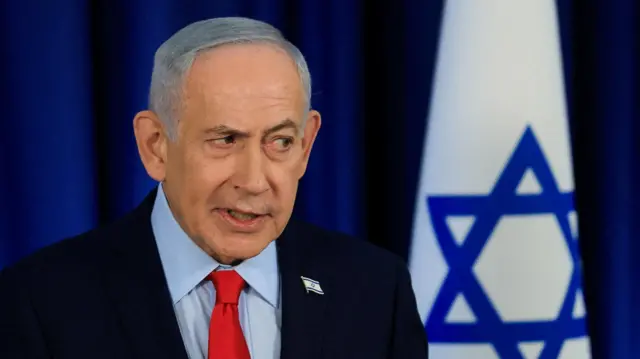
    Israeli Prime Minister Benjamin Netanyahu speaks during a press conference, amid the U.S.-Israel conflict with Iran, in Jerusalem, March 19, 2026.Image source, Reuters

    Israel's Prime Minister Benjamin Netanyahu has told US TV company Newsmax that he doesn't want to "put a schedule" on when the war with Iran is likely to end.

    Netanyahu says the war is "definitely beyond the halfway point" and Iran's Islamic republic will eventually "collapse internally", AFP news agency reports.

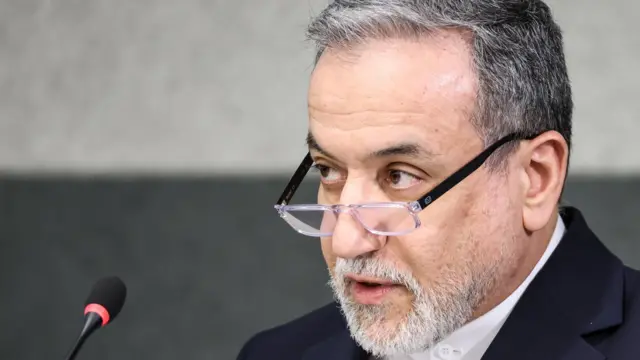
  4. 'High time to eject US forces,' Iran's foreign minister tells Saudi Arabiapublished at 22:23 BST

    ran's Foreign Minister Abbas Araghchi addresses a special session of the Conference on Disarmament at the United Nations, aside of U.S.-Iran talks in Geneva, Switzerland, February 17, 2026.Image source, Reuters
    Image caption,

    Abbas Araghchi pictured last month

    Iran's Foreign Minister Abbas Araghchi has told Saudi Arabia it is "high time to eject US forces".

    In a post on X, Araghchi says Iran "respects" Saudi Arabia and considers it a "brotherly nation".

    Iran's operations are aimed at "enemy aggressors who have no respect for Arabs or Iranians", he says.

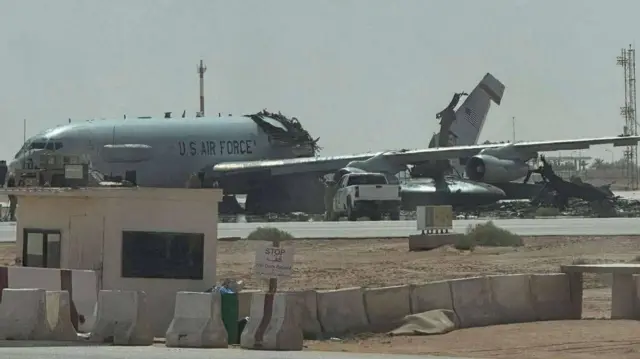
    Araghchi posted his comments alongside a picture that appears to show a destroyed plane with US Air Force markings. "Just look at what we did to their aerial command," he writes.

    US Central Command has not yet publicly commented on the incident. The BBC has asked for comment.

    a large grey aircraft with US Air Force markings is shown with a large part of its middle section missing and its tail at an angle.Image source, Facebook
    Image caption,

    Araghchi posted his message alongside an image similar to this one verified by the BBC on Sunday, showing a destroyed US command and control aircraft at an air base in Saudi Arabia

  5. UAE says it's countering missile attackspublished at 21:54 BST

    The United Arab Emirates' Ministry of Defence says its air forces are actively engaging with missiles and UAV (unidentified aerial vehicle) threats.

    Sounds being heard across the country are the result of "ongoing engaging operations", the country's defence ministry says.

    It urges the public to "remain calm" and follow "safety and security instructions".

  6. Wall Street closes as oil prices continues to risepublished at 21:33 BST

    The New York Stock Exchange is closed for trading today.

    Here are how things stood for the three main US stock market indexes at closing bell on Wall Street:

    • S&P 500 is down by 0.39%
    • Nasdaq is also down by 0.73%
    • Dow Jones is up, however, by 0.11%

    Oil prices continue to be high as the war enters its fifth week. The price of Brent crude oil is at about $114 (£86) a barrel. The price of Brent was at about $72 (£55) a barrel on 27 February, the day before the US and Israel struck Iran.

  7. Residents in Lebanese villages ordered to evacuate by Israeli militarypublished at 21:00 BST

    The Israel Defense Forces (IDF) has issued fresh evacuation orders for people in several Lebanese villages in the Bekaa valley region.

    They include Zalaya, Lbayya, Yahmour, Sahmer, Qalaya and Dalafi.

    In an update, IDF spokesperson Avichay Adraee says residents should move immediately north of the town of Qaraoun.

    Any movement south "may put your lives at risk", he adds.

  8. France requests meeting of UN Security Council after UN personnel deathspublished at 20:49 BST

    The United Nations Security Council will hold an emergency meeting tomorrow after the deaths of UN peacekeepers in southern Lebanon.

    French Foreign Minister Jean-Noël Barrot says he called for the meeting and that France condemns the deaths.

    In a post on social media, Unifil - the United Nations' peacekeeping force in Lebanon - says the personnel were killed "when an explosion of unknown origin destroyed their vehicle near Bani Hayyan".

    "These violations of security and these intimidations by soldiers of the Israeli army against UN personnel are unacceptable and unjustifiable, all the more so since deconfliction procedures had been respected," Barrot says in an X post translated from French.

    He adds that those sentiments had been communicated to the Israeli ambassador in Paris as well.

    Jeanine Hennis-Plasschaert, the United Nations Special Coordinator for Lebanon, also condemned the killings in a statement. She called for "an immediate truce", saying Lebanon has been made into "a shadow of its former self".

    "It is time to think in the long-term; it is time to move towards a process which builds, rather than destroys," she said.

  9. IDF confirms it has carried out strikes on Tehranpublished at 20:29 BST

    The Israel Defense Forces (IDF) says it has completed a wave of strikes in Iran's capital Tehran, targeting regime infrastructure.

    It comes after reports from sources who told the BBC strikes this evening in the city were heavy.

  10. BBC Verify

    What are the challenges of attempting to put US forces on Kharg Island?published at 20:25 BST

    By Thomas Spencer

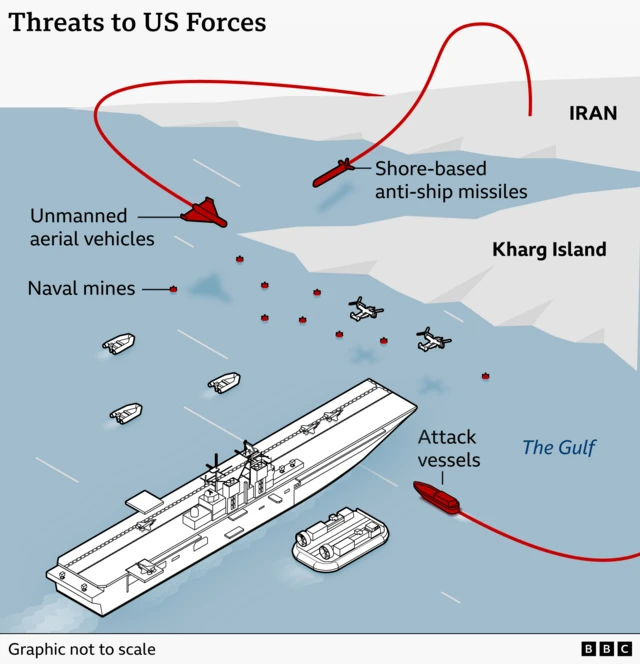
    BBC Verify has asked three experts what challenges US ground forces could face if they were to attempt an amphibious assault on Iran’s Kharg Island - a key export terminal for Iranian oil.

    Sidharth Kaushal, senior research fellow at the Royal United Services Institute (Rusi), said the US would first need to ensure the island's approaches were clear of any Iranian sea mines and neutralise coastal defence missiles before attempting to put troops on the ground.

    Alessio Patalano, a naval and war strategy expert from King’s College London, explained that Kharg would "become an ideal fixed target for Iranian missiles and drones" if US forces moved to take and hold positions there.

    But Mark Cancian, a retired US Marine Corps colonel and senior adviser at the Center for Strategic and International Studies, said the US has “good, though not perfect, air defences” to counter that threat.

    A BBC graphic showing how Iranian attack vessels, missiles, drones and mines could post a threat to any US landing operation on Kharg island
  11. US 'committed to finishing the job' in Iran, Rubio sayspublished at 20:07 BST

    US Secretary of State Marco RubioImage source, Reuters

    US Secretary of State Marco Rubio tells Al Jazeera the Strait of Hormuz will be open "one way or the other".

    He says they're still focused on their war objectives, which they aim to achieve in "weeks not months". These include destroying drone capabilities, as well as Iran's navy and air force, he says.

    "Now the United States is committed to finishing the job," he tells the news outlet, adding this "needed to be done now" because it could have been more dangerous in the future if Iran built more weapons.

  12. Iranian missiles headed for Israel - IDFpublished at 19:46 BST

    As Iran comes under attack, the Israel Defense Forces (IDF) say Iranian missiles are heading for their borders.

    In a post on social media, the military says defensive systems are working to intercept the missiles.

  13. Another evening of air strikes in Iranian capitalpublished at 19:42 BST
    Breaking

    Ghoncheh Habibiazad
    Senior reporter, BBC Persian

    Strikes are happening in Tehran, according to five sources in the city.

    Three sources in west Tehran say the strikes are heavy.

    "Five, six strikes one after another nearby," one source tells me.

    Two other sources are also reporting strikes in the neighbouring city of Karaj.

    Iranian outlets have also reported explosions in some parts of Tehran.

  14. Analysis

    White House briefing offers few answerspublished at 19:31 BST

    Bernd Debusmann Jr
    White House reporter

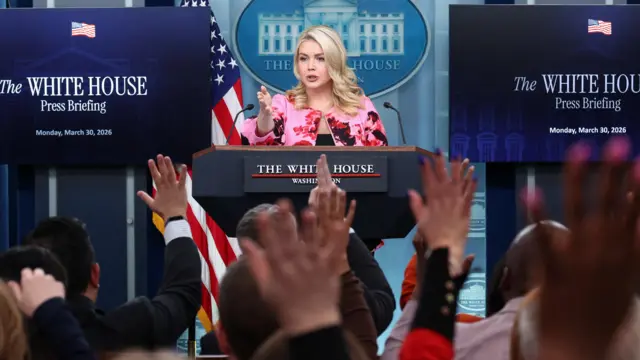
    We've just wrapped up a brief and largely uninformative briefing from White House Press Secretary Karoline Leavitt, leaving many questions about what happens next.

    For one, there's still little clarity on how or when this conflict might end. Leavitt insisted that the four to six-week timeline "feels right" and that talks are hapening behind the scenes - and going well.

    However, we don't know who those talks are with, and Leavitt admitted Iranian officials are struggling to communicate after strikes on the country's command and control systems.

    There was also little detail on the administration's thinking about deploying ground troops to seize Kharg Island and help secure the Strait of Hormuz, or entering Iran to secure highly enriched uranium - the Trump administration's main reason for launching Operation Epic Fury.

    Leavitt again mentioned the president having "optionality" on military options, which will do little to assuage the concerns of many Americans uneasy with the prospect of US soldiers fighting another conflict in the Middle East.

  15. Recap: Leavitt insists peace talks continue despite denial from Iranian officialspublished at 19:18 BST

    White House press secretary Karoline Leavitt holds a briefing at the White HouseImage source, Reuters

    We've just heard from White House Press Secretary Karoline Leavitt, who gave an update on the war in Iran during a news briefing.

    Here's a recap of what she said.

    On military action:

    • The US has struck more than 11,000 military targets so far and "decimated" the navy, destroying more than 150 vessels
    • Trump hasn't ruled out boots on the ground in Iran, she said, adding that diplomacy is still Trump's first choice

    On peace talks:

    • Leavitt insisted that talks between the US and Iran are going well and remain under way
    • She warned that if Iran rejects this "opportunity" to make a deal with the US, the military is ready to provide Trump "every option" to make Iran pay a "grave price"
    • The Iranians the US is talking to seem "more reasonable behind the scenes" than the previous leaders, she said
    • As Iranian officials continue to say they aren't in negotiations with the US, Leavitt insisted they are and "the American people are smart enough not to take the word of a terrorist regime"
  16. Analysis

    Is Trump threatening a war crime in attacking civilian infrastructure?published at 19:06 BST

    Tom Bateman
    US State Department correspondent

    US President Donald Trump's threat to blow up electricity plants, oil wells and water desalination plants in Iran could amount to a threat to commit potential war crimes, according to terms set out in international treaties and convention on the laws of war.

    He gave the ultimatum in his Truth Social post this morning, in which he said such action would be "retribution" for the regime's killing of Americans for 47 years.

    It's not the first such threat he's made during this war, and amounts to an extraordinary shift by the United States away from the 20th Century rhetoric of a so-called rules-based world order.

    The deliberate destruction of energy infrastructure could have a devastating effect on civilian life - even if the plants are also argued to have a military or government purpose.

    Luis Moreno Ocampo, founding chief prosecutor of the International Criminal Court (ICC) - to which neither the US nor Iran are party - told me last week that Trump's bombing of Iranian power plants, as well as attacks by both Iran and Israel on energy infrastructure, would not amount to legitimate targets.

    Under the Rome Statute, which established the court, "intentionally directing attacks at civilian objects... which are not military objectives" is defined as a war crime, Moreno Ocampo said.

    In 2024, the ICC indicted two of Russia’s highest-ranking officials for alleged war crimes over Russia's attacks on energy plants in Ukraine.

    Brian Finucane, a former government lawyer at the US State Department, says in a social media post , externalthat the "categorical and retributive framing" of Trump’s warning today "makes clear that this a threat to commit war crimes".

    Trump has previously said he doesn't "need international law" and is guided instead by his "own morality".

    When asked about these claims regarding potential war crimes, a White House official tells the BBC: "The terrorist Iranian regime has brought upon a 'devastating impact on civilian life' for 47 years by brutally killing its own people for merely speaking out against its oppressive rule.

    "By achieving the military objectives stated under Operation Epic Fury, President Trump is making the entire region safer and more stable by eliminating Iran’s short- and long-term threats to our country and our allies."

    At the White House briefing earlier today, Leavitt told reporters: "Of course this administration and the United States Armed Forces will always act within the confines of the law."

    She declined to answer a question about what objective the bombing of a desalinisation plant would achieve.

    You can see more on this issue in a piece I wrote last week: Iran war shows norms of international conflicts have been overturned.

  17. How does the US explain Iran saying they are not in talks?published at 19:03 BST

    While the US says it is in talks with Iran, Iran says it is not in negotiation. Leavitt is asked how the administration plans to explain that difference.

    "I think the American people are smart enough not to take the word of a terrorist regime that has chanted 'death to America' for 47 years at their word," Leavitt replies.

    With that, the news briefing has now ended. We will bring you analysis and recaps soon.

  18. Trump's first choice is still diplomacy, says Leavittpublished at 19:00 BST

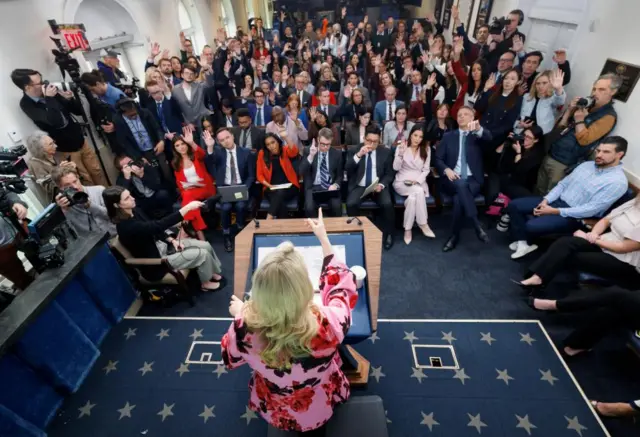
    Description Reporters raise hands as White House Press Secretary Karoline Leavitt holds a press briefing in the James S. Brady Press Briefing Room at the White House in Washington, D.Image source, Reuters

    A reporter asks the press secretary about the build-up of US troops in the Middle East, questioning whether Trump wants to end the war or increase operations.

    Leavitt says the president wants to achieve the objectives he has set out, and that the Pentagon's job is to provide maximum force.

    She emphasises that diplomacy is still Trump's first choice.

  19. Leavitt asked about Trump's threat to 'possibly' destroy 'all desalinisation plants'published at 18:58 BST

    Leavitt is asked about Trump's threat earlier today to "possibly" destroy "all desalinisation plants" in Iran, and why the president would threaten an action that would likely be considered a war crime.

    Desalinisation plants, which convert salt water into drinking water, are crucial for civilian water security in the region.

    "Of course this administration and the United States Armed Forces will always act within the confines of the law," Leavitt says.

    "But with respect to achieving the full objectives of Operation Epic Fury, President Trump is going to move forward unabated, and he expects the Iranian regime to make a deal with the Administration."

    When asked again what objective bombing a desalinisation plant would achieve, Leavitt does not answer.

  20. Leavitt says Trump 'declined to rule out' troops on the groundpublished at 18:54 BST

    Asked about a possible "boots on the ground" operation in Iran, Leavitt says Trump "has obviously declined to rule them out".

    She says the Pentagon aims to provide the president with options, but that doesn't mean he has made a decision.

    On whether the president would seek Congress's approval before sending troops to Iran, she says the administration would always follow the rule of law and that Trump has great respect for Congress.

    She adds that some members of Congress have received "courtesy briefings" on the war when requested.

    For context: The US Constitution gives Congress the power to formally declare war.